AI in Warehouse Management: Improving Accuracy, Safety, and Decision-Making
Learn how AI enhances warehouse performance through smarter forecasting, streamlined processes, and real-time operational insights.
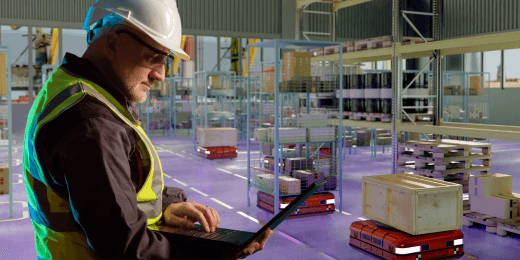
Learn how AI enhances warehouse performance through smarter forecasting, streamlined processes, and real-time operational insights.
Published 28 Apr 2026
Article by
7 min read
AI in warehouse management refers to using artificial intelligence to make warehouse processes faster and more accurate. It includes machine learning and data analytics to improve inventory management, order picking and packing, demand forecasting, and routine task automation.
By adding AI-driven tools, warehouses can work more efficiently, reduce operational costs, and keep inventory records more accurate. AI also supports robotics for automated material handling, enabling faster and more reliable order fulfillment.
AI-powered technology is changing how modern warehouses operate. Here are some practical benefits it brings to warehouse management:
Boost efficiency: AI handles routine tasks and improves workflows, reducing processing time and ensuring operations run smoothly around the clock.
Maintain better inventory accuracy: Real-time data helps keep stock levels precise and reduces costly mistakes.
Speed up order fulfillment: AI improves picking and packing routes, helping teams deliver faster without losing accuracy.
Reduce operational costs: Automation and predictive maintenance reduce labor and equipment expenses.
Make decisions with confidence: AI analyzes past and real-time data to give actionable insights that support smarter planning and resource use.
Use space wisely: AI evaluates storage patterns to improve warehouse layout and maximize storage capacity.
Increase worker safety: Robotics and AI tools limit exposure to repetitive or high-risk tasks, helping reduce injuries.
Many companies use AI to automate key warehouse tasks and support more informed decision-making.
Some of the most common AI technologies used in warehouses and their application include:
ML algorithms continuously learn from large volumes of data and adapt over time. They can forecast demand, balance inventory levels, and support predictive maintenance by spotting early signs of equipment issues.
Deloitte reports that AI forecasting and smart inventory tools can reduce excess inventory by up to 35% and speed up automated replenishment cycles.
Computer vision uses cameras and sensors to interpret visual data from the surrounding environment. In a warehouse, it can help with inventory tracking, quality control, and safety monitoring. Many teams implement it as part of Logistics 4.0 strategies for smarter, automated processes.
Robotics help with repetitive tasks such as picking, packing, and transporting goods. This can improve efficiency by up to 70% and achieve order accurate rates of around 99.5%. With AI, robots can better adapt to new tasks and environments.
AMRs are intelligent robots that can navigate warehouse floors on their own using sensors and AI algorithms. These robots can pick, transport, and sort items while avoiding obstacles, greatly reducing manual labor and easing congestion.
Predictive analytics uses historical and real-time data to anticipate demand, identify trends, and spot potential disruptions. It’s also useful for monitoring equipment and preventing failures before they occur.
IoT connects devices and sensors for real-time visibility of inventory, equipment, and processes. When paired with AI, warehouses gain quicker insights and more adaptive operations.
NLP powers voice-directed picking systems and chatbots that help workers get relevant information or instructions quickly. Warehouses can utilize NLP to improve the accuracy and speed of order fulfillment.
Digital twins create virtual models of warehouse operations that mirror real-world conditions. Teams can use these models to test warehouse layout changes, equipment placement, and staffing plans before making adjustments in real life. McKinsey notes that one major logistics provider increased its warehouse capacity by nearly 10% using digital twin technology.
Edge AI processes data directly on devices such as cameras, robots, and sensors to enable faster decision-making. In a warehouse, it can detect objects, monitor stock levels, and spot potential hazards in real time without relying on a central server.
While AI offers clear value in warehouse operations, implementing it comes with several challenges. Understanding these obstacles can help businesses plan more effectively and ensure smoother adoption.
Significant upfront costs: Hardware, software, integrations, and staff training require noticeable investments before benefits appear.
Compatibility with existing systems: Older warehouse management systems may not communicate well with new AI tools. Ensuring the two work together is crucial for uninterrupted operations.
Insufficient or poor-quality data: Effective AI relies on accurate and well-structured data. Many warehouses struggle with incomplete, inconsistent, or siloed information that limits performance.
Employee hesitation: Workers may worry about job changes or feel unsure about new technology. Clear training and communication help build confidence.
Technical complexity in deployment: Installing and configuring AI solutions involves careful planning and expertise. Skilled teams are required to ensure successful implementation and integration.
Exposure to cyber threats: Connecting more devices and systems increases the risk of cyber attacks. Strong security measures are need to protect operational and customer information.
Ongoing system maintenance: AI models require regular updates, monitoring, and specialized support to remain effective. Without proper maintenance, accuracy and reliability can drop over time.
Limitations in scaling operations: AI may strain existing infrastructure as the business grows. Planning for upgrades early is essential to maximize ROI.
Shortage of skilled professionals: Many organizations struggle to find or develop in-house AI and data skills, slowing both adoption and long-term effectiveness.
Regulatory and ethical considerations: AI raises concerns about data privacy, worker monitoring, and regulatory compliance. Organizations must establish policies to address these issues responsibly.
Adopting AI in a warehouse works best with a clear, phased approach. Below is a step-by-step approach to ensure successful adoption and maximize the benefits of AI technologies.
Examine existing warehouse processes to identify inefficiencies or repetitive tasks.
Ask frontline teams for feedback on pain points and areas that slow them down.
Set measurable objectives such as increasing order accuracy, reducing processing time, or enhancing quality checks.
Research AI tools that solve the challenges you’ve identified, such as automated picking, predictive maintenance, or edge AI systems.
Compare vendors based on experience, past results, and compatibility with your current systems.
Run small pilot programs to test performance and gather feedback before a full-scale rollout.
Provide training sessions that explain how AI tools work and how they support daily tasks.
Use manuals, workshops, and on-the-floor demonstrations to encourage familiarity with new systems.
Promote continuous learning as AI tools evolve.
Introduce AI tools gradually to avoid operational disruptions.
Define roles clearly, so workers understand how AI supports their daily tasks rather than replacing them.
Monitor early performance closely to catch issues and quickly make adjustments.
Measure performance against your original goals using clear KPIs.
Use real-time data to evaluate what’s working and where the system needs refinement.
Share results with teams to reinforce progress and highlight wins.
Update AI models regularly with new data, so they remain accurate over time.
Conduct periodic reviews to identify opportunities for improvement.
Encourage staff feedback to refine processes and ensure the technology continues to fit real operational needs.
Assess what infrastructure, bandwidth, storage, and support you’ll need as AI use grows.
Plan for additional AI tools or upgrades that align with expanding warehouse operations.
Make sure long-term AI plans fit broader business goals and resource planning.
SafetyCulture is a mobile-first operations platform adopted across industries such as manufacturing, mining, construction, retail, and hospitality. It’s designed to equip leaders and working teams with the knowledge and tools to do their best work—to the safest and highest standard.
Streamline processes, eliminate bottlenecks, enhance resource utilization, and build an agile and scalable infrastructure with SafetyCulture. Strive for operational excellence to boost competitive advantage, foster sustainable growth, and deliver long-term value.
✓ Save time and reduce costs
✓ Stay on top of risks and incidents
✓ Boost productivity and efficiency
✓ Enhance communication and collaboration
✓ Discover improvement opportunities
✓ Make data-driven business decisions
In this article