
A Guide to Effective Maintenance Scheduling
A dive into what maintenance scheduling is, why it’s important, the types, and best practices for teams to keep in mind.

Published 7 Nov 2025
Article by
6 min read
What is Maintenance Scheduling?
Maintenance scheduling is the process of planning and assigning specific maintenance tasks to equipment, systems, or facilities at predetermined times to prevent breakdowns and ensure reliability. It involves coordinating resources, labor, and tools, to complete work efficiently and minimize downtime. Effective maintenance scheduling helps organizations optimize performance, extend asset lifespan, and reduce unexpected repair costs.
Importance
Maintenance scheduling is important because it helps teams maintain consistent performance and reliability across all operations. By preventing unexpected breakdowns and aligning maintenance with production goals, it supports smoother workflows and higher efficiency. This proactive approach not only reduces costs and downtime but also empowers teams to achieve operational excellence through better planning, resource management, and continuous improvement.
Simplify maintenance scheduling for your business with SafetyCulture
Streamline your operations with usage-based maintenance using our intuitive management software.
What to Consider
There are various components that go into maintenance scheduling, and teams need to cover all bases. That way, teams perform maintenance properly and on time. This helps reduce downtime while increasing the lifespan of equipment.
Some key components of maintenance scheduling to consider are the following:
Asset Assessments
Asset assessments involve evaluating the condition, performance, and criticality of equipment to determine what maintenance is needed and when. This process helps identify high-priority assets that require frequent attention and those that can operate with less intervention. By understanding each asset’s status, teams can create a maintenance schedule that maximizes reliability and minimizes unnecessary work.
Task Definition and Frequency Setting
Task definition and frequency setting establish what maintenance actions should be performed and how often they should occur. These tasks are based on manufacturer recommendations, operational data, and historical performance trends. Clearly defining tasks and their timing ensures consistency, reduces errors, and supports a structured approach to preventive maintenance.
Resource and Personnel Allocation
Resource and personnel allocation ensures that the right people, tools, and materials are available when maintenance work is scheduled. Proper allocation minimizes delays, improves productivity, and helps avoid overlapping tasks or underutilized resources. It also allows teams to coordinate effectively, ensuring that skilled personnel handle the most critical maintenance jobs.
Using Modern Tech for Scheduling and Tracking
Using modern technology for scheduling and tracking involves integrating digital tools such as Computerized Maintenance Management Systems (CMMS) or Internet of Things (IoT)-based platforms. These systems automate scheduling, send reminders, and provide real-time updates on task progress and asset health. Leveraging technology enhances accuracy, visibility, and decision-making, helping teams achieve operational excellence through data-driven maintenance management.
Achieve operational excellence
Cultivate a culture of excellence with our digital solutions that enhance efficiency, agility, and continuous improvement across all operations.
Types of Maintenance Scheduling
There are different ways for teams to schedule maintenance, depending on the type of equipment and operations they handle. Below are some of the main types of maintenance scheduling and when it would be best to use them:
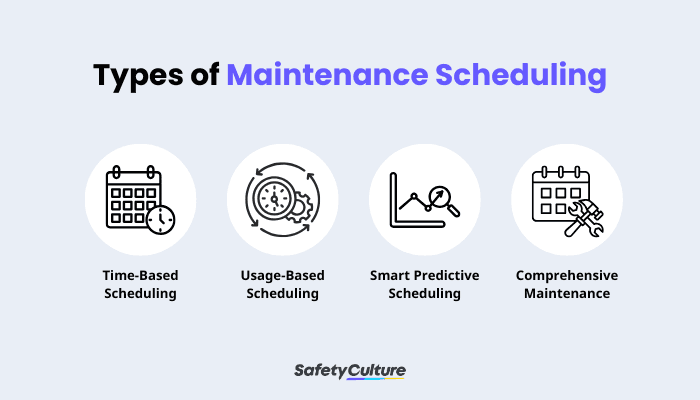
Types of Maintenance Scheduling
Time-Based Scheduling
Time-based scheduling involves performing maintenance at fixed intervals, such as weekly, monthly, or annually, regardless of equipment condition. It is best used for assets with predictable wear patterns or when manufacturer guidelines recommend regular servicing. This approach ensures consistent upkeep, but may lead to unnecessary maintenance if the equipment is still in good condition.
Usage-Based Scheduling
Usage-based scheduling plans maintenance based on how much an asset is used, such as hours of operation, production cycles, or mileage. It is ideal for equipment that experiences variable workloads, where wear and tear depend on usage rather than time. This method helps align maintenance efforts with actual operational demand, improving efficiency and reducing wasted resources.
Condition-Based Predictive Scheduling
Condition-based predictive scheduling relies on real-time monitoring tools and sensors to assess the health of equipment and predict when maintenance is needed. It’s most effective for critical or high-value assets where unexpected failures can be costly or dangerous. By tracking indicators like vibration, temperature, or oil quality, organizations can perform maintenance only when necessary, extending asset life and reducing downtime.
Preventive, Corrective, and Predictive Maintenance
Preventive maintenance is planned ahead to avoid equipment failure, corrective maintenance occurs after a breakdown, and predictive maintenance uses data to anticipate issues before they happen. These approaches can be used together, depending on asset importance and operational needs. Combining them helps balance cost, reliability, and performance, ensuring a comprehensive and flexible maintenance schedule and strategy.
Best Practices
Scheduling maintenance across an organization can be a tricky task, especially when managing multiple assets. That’s why it’s crucial for teams to follow these best practices:
Integrate Systems
Integrating maintenance scheduling with other systems, such as asset, inventory, procurement, and production management, creates a seamless flow of information. This integration allows teams to coordinate resources, avoid stock shortages, and align maintenance with operational priorities. A connected system enhances visibility, efficiency, and communication, driving continuous improvement in maintenance management.
Prioritize Predictive and Preventive Maintenance
Prioritizing predictive and preventive maintenance ensures that issues are addressed before they cause costly breakdowns or safety risks. Predictive maintenance uses data and sensors to anticipate failures, while preventive maintenance follows scheduled intervals to keep assets in good condition. Focusing on these proactive strategies increases equipment reliability, reduces downtime, and supports long-term operational efficiency.
Utilize a Solution to Automate Scheduling
For many, maintenance tasks are already talked about beforehand and repeated regularly. Following this, it would be best to utilize a maintenance scheduling platform. Automating the scheduling itself helps predictive and preventive maintenance tasks be carried out efficiently and as planned, standardizing tasks and intervals.
Involve Frontline Teams
Involving frontline teams in maintenance scheduling helps capture valuable insights from those who work directly with equipment every day. Their input ensures that schedules are realistic, task priorities are accurate, and potential problems are identified early. Collaboration between technicians, operators, and planners leads to safer operations, better resource use, and stronger team accountability.
Maintain Flexibility
Maintaining flexibility in maintenance scheduling allows teams to adjust plans when unexpected equipment issues or operational changes arise. A rigid schedule can cause delays or missed priorities, while adaptable scheduling ensures continuous productivity. Flexibility also enables better alignment between maintenance needs and production demands, improving overall workflow efficiency.
Track KPIs
Tracking maintenance Key Performance Indicators (KPIs) such as downtime reduction, maintenance cost management, and schedule compliance provides measurable insight into maintenance effectiveness. Regularly reviewing set KPIs and their achievement rate helps identify areas for improvement and supports data-driven decision-making. Consistent KPI tracking strengthens accountability and helps optimize performance across the maintenance program.
Ensure Efficient Maintenance Scheduling with SafetyCulture
Why Use SafetyCulture?
SafetyCulture is a mobile-first operations platform adopted across industries such as manufacturing, mining, construction, retail, and hospitality. It’s designed to equip leaders and working teams with the knowledge and tools to do their best work—to the safest and highest standard.
Streamline processes, eliminate bottlenecks, enhance resource utilization, and build an agile and scalable infrastructure with SafetyCulture. Strive for operational excellence to boost competitive advantage, foster sustainable growth, and deliver long-term value.
Save time and reduce costs
Stay on top of risks and incidents
Boost productivity and efficiency
Enhance communication and collaboration
Discover improvement opportunities
Make data-driven business decisions
Related articles
Facility Management
Maintenance

The Ultimate Guide to Warehouse Layout Optimization
Learn effective strategies in warehouse layout optimization to maximize space, streamline flow, and support efficient production operations.
Facility Management
Maintenance

Workplace Management: The Ultimate Guide
Learn how workplace management drives safe, efficient operations through frontline visibility, consistency, and continuous improvement.
Facility Management
Maintenance

A Guide to Retail Facility Management
Improve store performance with effective retail facility management, and learn its key components, challenges, and top solutions for success.