ISO 4406: Understanding the Standard and Ensuring Compliance
Explore the ISO 4406 standard, how to interpret cleanliness codes, and strategies to ensure hydraulic system reliability and efficiency.
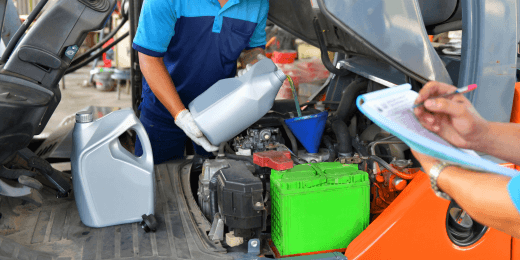
Explore the ISO 4406 standard, how to interpret cleanliness codes, and strategies to ensure hydraulic system reliability and efficiency.
Published 5 May 2026
Article by
6 min read
ISO 4406 is an international standard that classifies, quantifies, and communicates the level of contamination in hydraulic and lubricating fluids. It involves measuring particulate levels at three specific size ranges and reporting them as a three-number code. The result enables professionals to determine the cleanliness of hydraulic fluids and set targets for acceptable contamination, ensuring the machine’s reliability and longevity.
Originally developed in 1987, ISO 4406 replaced NAS 1638 to address the inconsistencies in reporting particle contamination in fluids used for hydraulic systems. ISO’s fluid cleanliness standard is now used across various industries and has undergone several revisions (i.e., 1999, 2017, 2021) to harmonize with emerging technologies, lubrication management systems, and calibration standards.
Although ISO 4406 certification is not a mandatory regulatory requirement, companies that adopt practices to improve fluid cleanliness enjoy the following benefits:
Improved equipment reliability and performance – Meeting cleanliness targets can guarantee fewer repairs and subsequent downtimes, even in demanding conditions.
Better equipment and fluid life – Contamination causes abrasive and corrosive wear on components, negatively affecting the fluid and the entire equipment.
Higher cost savings and reduced downtimes – Keeping equipment in optimal condition reduces repair costs and minimizes the risk of operational interruptions.
Better support for workplace safety – Accidental oil leaks or bursts may lead to part seizure or binding and overheating, resulting in unsafe conditions for workers.
Enhanced customer trust and market access – Certification shows a company’s commitment to high quality and global standards, enhancing credibility with customers and suppliers.
Fluid contamination is a leading cause of equipment failure. Everyone who works with fluid-powered machinery should have a good grasp of the ISO 4406 cleanliness code to protect equipment and prevent costly downtime.
The process begins by counting the number of solid particles suspended in a metalworking fluid sample and classifying them by size. Here are the most common tools and techniques used, offering an accurate measurement of the contamination:
Automatic Particle Counters (APC) use light sensors to detect and count particles as they flow through.
Microscopic Analysis (ISO 4407 Method) captures particles on a filter, which are then manually counted under a microscope.
Gravimetric Analysis weighs dried particles that have been collected on a filter to measure the total amount of contamination.
Pore or Mesh Blockage measures how quickly a filter clogs to estimate the number and size of particles.
Online Particle Monitors are installed directly into fluid systems to provide continuous, real-time tracking of contamination.
Not all contaminants in fluids are equally harmful. Smaller particles may pass through components without damage, while larger ones may cause severe wear and clogging. These are the size ranges:
≥4 µm(c) are fine, almost invisible particles that can accelerate wear in sensitive components.
≥6 µm(c) are mid-sized contaminants that commonly interfere with clearances in bearings and hydraulic controls.
≥14 µm(c) are large debris that can immediately block, score, and damage cylinders, actuators, and filtration systems.
Standardizing a fluid’s cleanliness level in this manner simplifies comparisons, allowing professionals to set accurate targets and monitor conditions more efficiently. Each number in the code corresponds to the following:
First number: ≥4 µm
Second number: ≥6 µm
Third number: ≥14 µm
The codes range from zero (0 to 0.01 particles) to 24 (80,000 to 160,000 particles). For example, a code of 19/17/14 would mean:
≥4 µm(c) – 2,500 to 5,000 particles per milliliter
≥6 µm(c) – 640 to 1,300 PPM
≥14 µm(c) – 80 to 160 PPM
Acceptable contamination levels differ by application, but these benchmarks are among the most widely adopted in various industries:
Sector | Acceptable Levels | Equipment |
Manufacturing | 18/16/13 to 19/17/14 | Injection molding machines Hydraulic presses |
Construction | 19/17/14 to 20/18/15 | Excavator boom, arm, and bucket Mobile and tower cranes Bulldozer blades and ripper |
Aerospace | 14/12/9 or cleaner | Flight control systems Landing gear and breaking systems Actuators and thrust reversers |
Automotive | 18/16/13 or better | Robotic assembly arms Power steering and braking systems |
Although ISO standards are not legally mandated, many companies adopt them to ensure greater asset reliability, workplace safety, and operational efficiency. Here are the key components of compliance with ISO 4406:
Accurate sampling and testing ensure the right conclusions are drawn, helping in choosing the right intervention. Some tip for efficient sampling and testing are the following:
Use dedicated, contamination-free sampling bottles.
Take samples from active fluid lines, not stagnant reservoirs.
Follow chemical safety protocols.
Wear appropriate Personal Protective Equipment (PPE) such as gloves and goggles.
se fume hoods when handling fluids.
Managing contamination is crucial for preventing the buildup of particles that can cause component damage. The following are some of the most common interventions:
High-efficiency filtration systems: Traps particles before they circulate
Proper seals and desiccant breathers: Prevents dust, dirt, and moisture from entering tanks and reservoirs
Proper fluid handling: Prevents cross-contamination when topping up systems
Accurate documentation not only proves compliance during audits but also supports root-cause analysis. In addition, having the ability to link equipment to related inspections (e.g., checks of heat exchangers, filter elements, reservoirs) and direct interventions (e.g., lubricant replacement) strengthens maintenance accountability.
Contamination can still occur, even with the strictest controls in place. Having corrective actions ready can prevent costly failures and repercussions of non-compliance. These are the most common:
System flushing and filter replacement
Oil reclamation or replacement
Component repair or upgrade
Technology has transformed how organizations align their operations with standards like ISO 4406. Leveraging digital tools ensures proactive control, increased data integrity, and scales capabilities for long-lasting compliance. These digital tools often have features that can help with the following:
Real-time Monitoring – Detect contamination or abnormal fluid conditions and prevent potential equipment failures by continuously monitoring fluid levels in tanks and reservoirs.
Robust Analytics – Support quick decision-making, corrective actions, and continuous improvement with data-driven insights.
Asset Management – Keep a detailed record of hydraulic equipment and filtration to ensure timely maintenance, inspections, repairs, and replacements for more reliable operations.
Digital Checklists and Audit Trails – Enforce consistent sampling, testing, and contamination control procedures with standardized checklists and Standard Operating Procedure (SOP) templates, improving traceability, increasing accountability, and supporting compliance.
Incident Reporting – Speed up response to contamination issues and minimize damage and downtime by integrating sensors that provide real-time alerts when levels go past safe thresholds.
Ensuring compliance with ISO 4406 standards can be difficult, but with a digital solution, it can easier and smoother for all. One such tool organizations can use is SafetyCulture, an operations improvement platform that can streamline asset management, equipment monitoring, inspections, and communication all in one place.
Optimize your organization’s operations and workflow with SafetyCulture. Our digital platform enables you to:
Simplify processes by automating manual and repetitive tasks
Maintain safety, quality, and compliance standards with digital checklists
Create powerful workflows by integrating your existing systems and software
Gain greater visibility and transparency with real-time reporting
Take advantage of our comprehensive features to transform your organization’s capabilities towards operations excellence.