The Science and Strategy Behind Integrated Pest Management
Discover how IPM reduces reliance on chemicals, protects human health, and supports environmental sustainability.
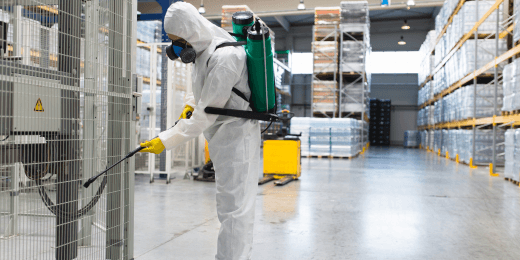
Discover how IPM reduces reliance on chemicals, protects human health, and supports environmental sustainability.
Published 21 Nov 2025
Article by
7 min read
Integrated pest management is an ecologically balanced strategy for controlling pests, focusing on prevention and observation. It integrates biological, cultural, physical, and chemical methods to keep pest populations at low levels while minimizing pesticide dependency, optimizing yield sustainability, and ensuring compliance with environmental and food safety regulations.
Pesticide use generates significant hidden environmental and social costs, estimated to reach billions annually in the US alone. These include detrimental impacts on public health, pesticide resistance, crop damage, wildlife losses, and groundwater contamination. Adopting IPM strategies for pest control isn’t just vital; companies can also gain the following key advantages:
Reduced environmental impact - Integrating biological, cultural, and physical controls reduces environmental contamination. This lessens harm to non-target species and biodiversity while protecting soil, water, and air quality.
Lower health risks - Reducing chemical use lessens exposure risks for farm workers, consumers, and surrounding communities. This directly results in safer working environments and improved public health outcomes.
Enhanced economic efficiency - Targeted pest control only when necessary prevents costly, unnecessary applications. This promotes better resource allocation and delivers long-term savings by minimizing resistance and reducing crop losses.
Sustainable resistance management - IPM's focus on prevention creates balanced ecosystems that resist outbreaks. Using diverse tactics preserves the long-term effectiveness of chemical controls, ensuring sustainable pest management options.
Improved risk mitigation and resilience - IPM fosters stronger agroecosystems by balancing pests and beneficial species. This enhances resilience against environmental stresses, contributing to sustainable production systems that cope with climate variability.
Implementing an integrated pest management program is more than just pest eradication; it’s a strategic approach rooted in understanding and balancing ecosystems. IPM maintains productivity while fundamentally safeguarding long-term environmental and agricultural resilience.
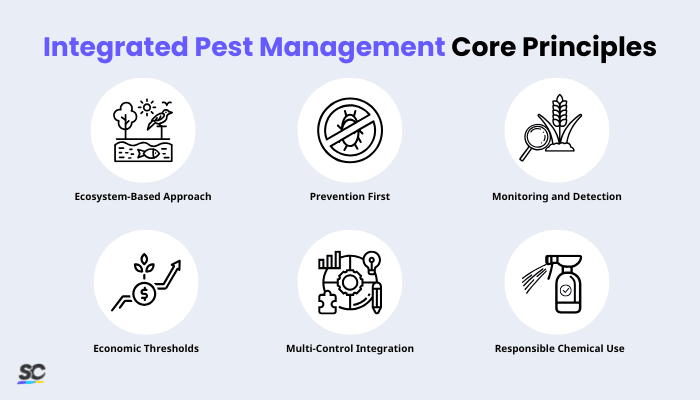
Integrated Pest Management Core Principles
Every pest problem exists within a larger ecological system. When the ecosystem is healthy, it can naturally regulate pests through balance and biodiversity. Because this is a priority, companies should keep the following in mind:
Protect biodiversity by encouraging the presence of natural pest predators and pollinators.
Sustainable resource use requires the efficient management of land, water, and biological resources to uphold enduring productivity and resilience.
Compliance with safety regulations is also vital, ensuring practices align with global environmental and agricultural standards.
One of the most effective integrated pest management strategies is to nip the infestation in the bud. IPM promotes practices to eliminate pest habitats and breeding grounds. Here are some examples:
Crop rotation breaks the pest life cycle by depriving host-specific pests (insects and pathogens) of their required food source and habitat.
Proper sanitation eliminates the food, water, and shelter that pests need to survive and reproduce.
Resistant plant varieties are less susceptible to specific pests or diseases due to antibiosis, antixenosis, and tolerance.
Regular observation and data-driven assessment are at the heart of IPM, allowing early detection and ensuring control measures are applied only when necessary. Here are some effective ways to track pest activity:
Visual inspections of crops, storage areas, and facilities for damage, droppings, or live insects.
Manual traps (e.g., pheromone, sticky, and light traps) capture and record pest presence and population trends.
Digital monitoring using smart sensors, remote cameras, or mobile apps.
Rather than reacting to every pest sighting, consider the economic and ecological cost of taking action. The concept of “action threshold”—the point at which pest damage justifies intervention—prevents unnecessary pesticide use, focusing resources where they’re most needed.
This potent form of biocontrol strategically combines various methods, delivering sustainable efficacy and permanent results. Here are some integrated pest management examples:
Integrated Pest Management Techniques | Specific Examples |
Biological Control | Beneficial nematodes (microscopic worms) prey on the soil-dwelling larvae of grubs, cutworms, and root weevils while maintaining healthy soil ecosystems. |
Mechanical Method | Fine mesh netting over the greenhouse openings physically blocks flying insects, like aphids, whiteflies, and thrips, from reaching plants. |
Cultural Practice | Fungus gnats thrive in moist environments. Improving drainage and adjusting watering schedules can eliminate the breeding grounds of these gnats naturally. |
Targeted Chemical Application | Spot spraying (i.e., applying chemicals only on infested zones) effectively contains the threat while minimizing environmental impact. |
Precision and safety are top requirements in IPM. The goal isn’t to eliminate all pests but to manage them responsibly. Here are some specific ways to guarantee each consideration:
Minimizing chemical exposure requires establishing buffer zones or unsprayed areas between treated fields and nearby homes, water sources, or pollinator habitats.
Health risk reduction involves requiring applicators to undergo safety training and certification to prevent short- and long-term health issues while maintaining effective outcomes.
Precision application employs GPS-guided sprayers or agricultural drones to target affected areas only.
Integrated pest management is a systematic process involving multiple interconnected components. Together, they build a robust, long-lasting control program that effectively manages pest populations while promoting sustainability, safety, and cost efficiency.
Here’s a simple and easy-to-follow integrated pest management guide:
Accurate identification prevents unnecessary treatments and supports targeted and effective interventions. Ensure responses are based on evidence, not assumptions, by identifying pests, monitoring their activity, and maintaining detailed records of sightings, damages, and control measures.
Prevent overuse of pesticides and focus control efforts where they are most needed by distinguishing between the presence of a few pests and a true infestation. Establish this threshold based on pest type, crop sensitivity, or facility standards, and review it periodically as conditions change.
Focus on stopping pests before they become a problem without increasing reliance on chemical interventions. Implement strict hygiene measures, proper waste management, and regular facility maintenance to eliminate entry points and breeding sites.
Select the most appropriate combination of integrated pest management methods (e.g., biological, mechanical, cultural, and chemical controls) based on current monitoring data. Continuous data analysis enables adaptive management and long-term pest suppression.
Act on the selected tactics safely and efficiently, promoting timely and effective pest management with minimal disruption. Take note of these best practices for implementation:
Rotate control methods to avoid resistance.
Integrate compatible techniques that complement each other.
Utilize calibrated equipment to ensure the precise amount of control agent.
Verify the applicator's training and certification so plans are executed correctly.
Apply treatments under optimal weather conditions to reduce drift or runoff.
Results after applying the control measures must be evaluated to determine effectiveness. Comprehensive pest management documentation provides a foundation for analysis, continuous improvement, and compliance with safety and quality standards.
The program must be an ongoing process that builds a knowledgeable team capable of proactive and consistent test management. All personnel involved should understand the basic IPM principles, new technologies, and regulatory updates through regular pest management workshops, certification programs, and refresher courses.
AGnVET, one of Australia’s biggest and most successful agribusinesses, leveraged robust digital solutions to transform the operations across numerous branches and field operations. The system improves safety through automated inspections, while simultaneously empowering agronomists with continuous monitoring and real-time data analysis for rapid, informed action.

“Safety is a priority area of focus and not just something we talk about. We strive every day to build a proactive safety culture.”
The wellbeing of AGnVET’s employees directly impacts the communities they serve. Our people are not just numbers; they have families, partners, and lives outside of work.
SafetyCulture is a mobile-first operations platform adopted across industries such as manufacturing, mining, construction, retail, and hospitality. It’s designed to equip leaders and working teams with the knowledge and tools to do their best work—to the safest and highest standard.
Track pest populations, document control measures, and schedule interventions using customizable inspection and audit templates. Monitor application effectiveness and safety protocols and drive better decision-making, thanks to accurate data gathered and analyzed in real-time. Support IPM programs and day-to-day activities, upholding operational excellence, compliance with regulations, and true environmental sustainability through a unified platform.
✓ Save time and reduce costs
✓ Stay on top of risks and incidents
✓ Boost productivity and efficiency
✓ Enhance communication and collaboration
✓ Discover improvement opportunities
✓ Make data-driven business decisions