Demolition Hazards: Understanding Risks and Safety Measures
Explore how companies identify, assess, and control demolition hazards, guaranteeing worker protection from start to finish.
Explore how companies identify, assess, and control demolition hazards, guaranteeing worker protection from start to finish.
Published 27 Oct 2025
Article by
7 min read
Demolition hazards are occupational risks encountered while demolishing buildings or structures, often during the initial stages of a construction project. Hazards like falling debris, dust, noise, and exposure to materials like asbestos must be effectively mitigated to prevent injuries, minimize site delays, and ensure compliance with regulations.
Building demolition and excavation are inherently high-risk activities. The potential for catastrophic incidents, driven by hazards like structural collapses, severe falls, and exposure to toxic materials, makes the proper management of hazards in this construction project essential for the following reasons:
Enhances worker safety - Teams can identify and control risks before they cause harm when they understand these hazards. Workers are better equipped to correctly use Personal Protective Equipment (PPE), follow safety procedures, and maintain field awareness.
Increases cost savings - Accidents and project delays can be expensive due to medical expenses, equipment damage, and downtimes. Minimizing these risks ensures work proceeds smoothly.
Guarantees environmental protection - Chemical hazards associated with demolition, like asbestos, lead, or chemical residues, can be properly handled, contained, and disposed of when sustainable demolition practices are followed, preventing environmental contamination.
Improves legal compliance - Companies that comply with occupational safety regulations and building codes avoid fines and legal issues. More importantly, they can preserve their reputation for reliability and responsibility, which demonstrates their trustworthiness and professionalism.
Boosts operational efficiency - Thorough hazard assessment is the foundation of efficient operations. When site dangers are clearly understood, teams can safely sequence tasks, allocate resources effectively, and eliminate delays.
Recognizing the following site hazards is vital, not only to prevent accidents but also to ensure that workers are prepared to respond quickly in case of emergencies. Because the consequences are too severe, ignoring these safety concerns isn’t an option.
Structural collapse - Building or framework components can fail due to weakened materials, improper sequencing, or undetected damage. This demolition hazard has led to past fatalities, such as the Philadelphia building collapse, where a botched leveling project impacted a thrift store nearby, trapping and killing seven people under the rubble.
Exposure to toxic and hazardous substances - Older buildings often contain hazardous substances like asbestos, lead paint, or silica dust. The act of disturbing these materials during the operations allows the particles to become airborne and easily ingested or inhaled by personnel.
High-risk work at heights - Falls are the single leading cause of construction fatalities, accounting for over a third of all deaths. Because demolition frequently requires workers to operate on unstable scaffolds and partially dismantled structures, the risk of a catastrophic fall injury is exponentially increased.
Crushing from heavy machinery - Excavators, bulldozers, and cranes are essential project needs. Improper operation or poor visibility can create deadly situations with workers getting struck, pinned, or crushed. An unfortunate example of this happened in 2022, when two workers were killed when a crane toppled onto a street in New York.
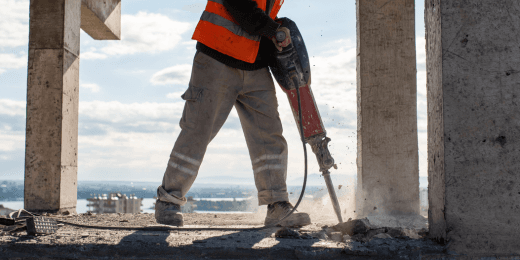
Exposure to harmful noise and vibration - Jackhammers and explosions produce high noise levels and ground vibrations that can affect workers and nearby structures. Long exposure can lead to permanent hearing loss and fatigue.
Hidden dangers from utilities and services - Improperly disconnected utilities can cause severe accidents during demolition. Contact with any live wires or ruptured gas lines can cause fatal explosions, such as the one in Durham, North Carolina.
Because demolition work hazards present such a critical risk in construction, the governing laws are necessarily strict. Regulations require that all work be thoroughly planned and closely monitored to guarantee safe project delivery. Here are specific requirements per country:
The Occupational Safety and Health Administration's (OSHA) 29 CFR 1926 Subpart T (Demolition) requires the following:
Engineering survey before demolition begins
Utility shut off and hazard removal
Comprehensive protection measures, including debris chutes, catch platforms, and PPEs
The Health and Safety Executive (HSE) oversees the Construction (Design and Management) Regulations 2015. The agency mandates these requirements:
Written planning and risk assessment
Competent personnel to perform the demolition
Notification and coordination with the agency
Safe Work Australia is the national body that sets standards based on the Work Health and Safety (WHS) Regulations 2011, while state-level regulators enforce specific guidelines:
Demolition work licensing
Safe Work Method Statement (SWMS) that outlines hazards, control measures, and emergency responses
Asbestos management before any razing or leveling begins
The European Agency for Safety and Health at Work (EU-OSHA) established the Directive 92/57/EEC (Temporary or Mobile Construction Sites Directive). Member states enforce the following:
Safety and health plan, detailing hazards and preventive measures during the demolition
Competent safety coordinator
Worker information and training
The Canadian Center for Occupational Health and Safety (CCOHS) and provincial regulators work together to ensure that safe construction, excavation, and demolition guidelines are observed.
Pre-demolition survey
Written work procedures
Supervision and PPE
The first and most critical step in any construction project is a comprehensive hazard assessment. In demolition, this systematic process determines the safety of the structure, the condition of materials, and potential risks to workers and the surrounding environment. Understand how this is done:
A thorough site inspection provides the foundation for safe planning, helping determine demolition hazards and control measures. Workers would know what they’re dealing with when they know these things about the structure:
Age
Design, such as hidden voids
Load paths and stability
Materials used
Any modifications made over time
Construction leads and safety managers should create a list of all possible dangers present at the sites. Overlooking just one may lead to serious injuries, equipment damage, or uncontrolled collapses during the demolition.
Not all risks are equal. While noise and vibration require consideration, they rank significantly lower than high-frequency, severe risks like falls from height. Evaluating the likelihood and severity of each identified hazard is crucial for efficiently prioritizing resource allocation and risk mitigation efforts.
The next crucial step involves tangible safety actions and worker competency. Personnel should recognize all potential demolition work hazards and control measures and be able to implement them effectively in the field. Here are some of the most critical controls:
Proper sequencing of demolition work
Safe handling of hazardous materials
Exclusion zones
Dust suppression systems
Even the most meticulous safety plans are useless without proper implementation. Recommended control measures only succeed when workers are trained and know exactly how to execute them. On-site safety training and mandatory daily briefings are non-negotiable requirements in any high-risk demolition environment.
Continuous, active supervision is equally vital. While trust in workers is important, managers must verify that safety protocols are being followed, not just preach them. This oversight is crucial for applying immediate corrections and efficiently activating emergency protocols when needed.
Comprehensive site hazard reporting promotes transparency and accountability, while coordination ensures that everyone on-site, from engineers and contractors to scaffold erectors and explosive blasters, understands the risks and their individual responsibilities.
Robust digital solutions have allowed Level 10 Construction to streamline safety processes and proactively prevent costly interruptions from unexpected dangers. By using mobile checklists, instant reporting, and digital sign-offs, the company successfully achieved 2.5 million man-hours with no lost time incidents.
“You are going to get better quality out in the field if you run a clean, quality and safe job. That’s just the way we see it.”
SafetyCulture is a mobile-first operations platform adopted across industries such as manufacturing, mining, construction, retail, and hospitality. It’s designed to equip leaders and working teams with the knowledge and tools to do their best work—to the safest and highest standard.
Systematically manage demolition hazards by centralizing risk assessments, scheduling inspections, and promptly flagging critical safety incidents. Ensure all safety protocols are consistently applied across multiple projects and sites by comprehensively documenting incident reports to uphold regulatory compliance. Support continuous monitoring and improvement of workplace safety practices during demolition projects through a unified platform.
✓ Save time and reduce costs
✓ Stay on top of risks and incidents
✓ Boost productivity and efficiency
✓ Enhance communication and collaboration
✓ Discover improvement opportunities
✓ Make data-driven business decisions