Lone Watchkeeping: Safeguarding Lives and Maritime Operations
Learn about lone watchkeeping and how it ensures vessels remain safe, alert, and compliant at all times.
Learn about lone watchkeeping and how it ensures vessels remain safe, alert, and compliant at all times.
Published 28 Apr 2026
Article by
4 min read
Lone watchkeeping refers to situations where one person is responsible for keeping watch or navigating. This can apply to ship bridges, engine rooms, or any safety-critical area. It’s common in maritime settings during night shifts or in low-traffic periods, and it demands constant alertness to spot hazards like collisions or groundings.
Although it’s legally permitted under minimum safe manning requirements, this job is widely seen as high-risk because all responsibilities—such as lookout, navigation, collision-avoidance, and alarm-response—fall on one worker. There’s little room for error if they're distracted or unwell.
The main goal of lone watchkeeping is continuous vigilance. It’s a vital part of maritime safety and is required under international standards like International Convention for the Safety of Life at Sea (SOLAS) and International Convention on Standards of Training, Certification and Watchkeeping for Seafarers (STCW). These outline that lone watchkeepers should be trained, equipped, and able to keep people and vessels safe.
Lone watchkeeping also supports compliance with ColRegs Rule 5, which demands an effective lookout using sight, hearing, and all available tools to assess collision risks. This helps protect both the crew and the vessel.
A lone watchkeeper is assigned when staffing levels, risk assessments, and procedures determine that a single qualified person can safely maintain the watch. You’ll see this in maritime bridge operations and in other workplaces where people are expected to work alone. These maritime scenarios include:
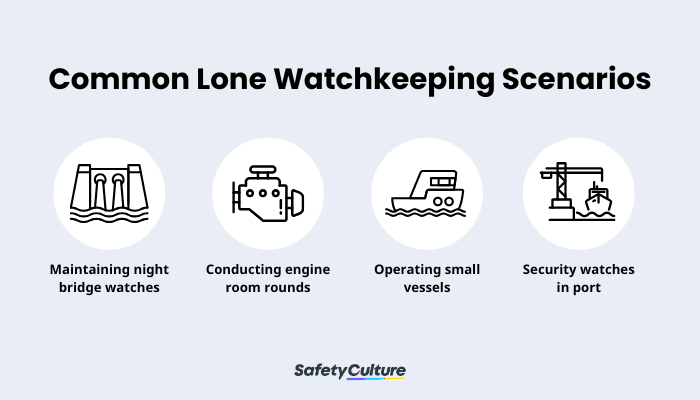
Maintaining night bridge watches: Where one officer handles lookout and navigation.
Conducting engine room rounds: When an engineer checks machinery spaces alone.
Operating small vessels: Where only one person works on tugs, fishing boats, or pilot boats .
Managing cargo or security watches in port: When one crew member manages gangway access or security rounds.
Doing any job alone already carries serious risks, but it’s even more demanding for someone responsible for maintaining a continuous lookout. Fatigue and microsleeps are common during long and dragging watches, raising the likelihood of missed hazards or collisions.
In the maritime industry, with only one person handling navigation, collision avoidance, communications, and alarm sounding, cognitive overload can happen. This can lead to slow reactions or poor decisions in critical moments. In low-visibility conditions, lone watchkeepers may miss other vessels or navigational dangers, delaying warnings needed to avoid collisions and groundings.
Ensure visibility over lone workers and manage their quality and safety with our digital solutions, built for and trusted by lone workers and leaders globally.
Though the STCW doesn't use the exact term “lone watchkeeping,” it states when one person on watch is enough and when more support is required. Anyone on watch must be properly trained, able to keep a good lookout, navigate safely, avoid collisions, and respond to emergencies adequately without immediate help. They must also be medically fit, rested, and free from fatigue, alcohol, and drugs, with enough rest hours in between shifts to stay alert.
National maritime authorities then implement these rules through their own requirements. For instance, the Australian Maritime Safety Authority (AMSA) follows STCW and adds region-specific rules around coastal traffic density, environmental protection, and risk unique to Australian waters.
Technology can greatly improve lone watchkeeping safety, whether on the bridge, in the engine room, or anywhere someone is working alone. Tools like SafetyCulture can help address the challenges that come with this taxing job through:
A live map view and job timelines so duty officers can see active lone‑work jobs in real time, with users in distress clearly flagged and a full event timeline for each job
Custom job types based on risk, such as bridge watch, engine rounds, or night security patrols, with tailored durations and check‑in intervals
Discreet Bluetooth panic buttons to trigger a silent duress alert when a phone isn’t accessible.
Optional man-down detection to add another safeguard for solo watchkeepers
Inspections and digital checklists for standard bridge or engine‑round checks, incident reports, and documentation in one place.
SafetyCulture is a mobile-first operations platform adopted across the manufacturing, mining, construction, retail, and hospitality industries. It is designed to equip leaders and working teams with the knowledge and tools to do their best work—to the safest and highest standard.
Stay connected with your team and manage lone worker risks through location sharing and discreet panic alerts that can escalate to emergency services. Foster a culture of safety and transparency by enabling constant communication with lone workers, allowing them to perform tasks with configurable durations and check-ins.
Save time and reduce costs
Stay on top of risks and incidents
Manage compliance with safety standards
Enhance communication and collaboration
Monitor worker condition
Make data-driven business decisions