The Ultimate Guide to Fire Safety in Hotels
Learn fire prevention, preparedness, and response strategies to ensure guest and staff safety in hotels.

Learn fire prevention, preparedness, and response strategies to ensure guest and staff safety in hotels.
Published 28 Apr 2026
Article by
6 min read
Fire safety in hotels encompasses various procedures, systems, and practices designed to prevent fires, minimize their impact, and ensure the safe evacuation of guests and staff. It includes fire prevention measures, fire detection and suppression systems, emergency procedures, and regular staff training. Additionally, hotels must comply with local fire safety regulations and standards, which often require regular inspections and maintenance of fire safety equipment.
Each year, an estimated 3,900 hotel and motel fires occur in the United States, resulting in 15 deaths, 100 injuries, and approximately $100 million in property damage, according to the U.S. Fire Administration.
That's why establishing a robust fire safety protocol is very important. It offers numerous advantages for the hotel industry, including:
Compliance with Hotel Fire Safety Regulations: Hotels must follow fire safety codes, including installing fire extinguishers, alarms, sprinklers, and emergency lighting. Noncompliance can result in fines, legal issues, or closure.
Protection of Lives: Hotels host many guests and staff who may not know about escape routes or emergency procedures. Proper fire safety measures can save lives during emergencies.
Prevention of Property Damage: Fires can cause significant damage to property, including buildings, furniture, and equipment. Fire safety regulations help prevent this damage by ensuring proper prevention and response measures are in place.
Enhance Reputation and Guest Confidence: A hotel that prioritizes fire safety measures shows a commitment to guest and staff well-being. It can enhance its reputation, attract more customers, and increase revenue.
Insurance Benefits: Hotels with comprehensive fire safety systems often receive lower insurance premiums, as insurers recognize the reduced risk. This proactive risk management is financially advantageous.
From front desk to housekeeping, get complete business visibility, guarantee guest safety, and help your teams deliver their best work.
According to the same report by the U.S. Fire Administration, cooking remains the primary cause of fires in hotels and motels. Apart from cooking, there are various hotel hazards that can endanger guests, staff, and property.
Here are some of the most common dangers to watch for:
Faulty Electrical Appliances: Malfunctioning or poorly maintained appliances like irons, hairdryers, or heaters can spark or overheat, creating a fire hazard in guest rooms or service areas.
Human Mistakes: Simple oversights—such as mishandling electrical cords, leaving candles unattended, or misusing appliances—can unintentionally start fires.
Kitchen-Related Incidents: Fires can quickly ignite in kitchens or areas where guests prepare food, especially if cooking equipment is left unattended or misused.
Insufficient Fire Safety Measures: Hotels lacking well-maintained fire detection and suppression systems (such as smoke alarms, sprinklers, or extinguishers) are more vulnerable to serious fire emergencies.
Smoking-Related Risks: Improperly discarded smoking materials, like cigarette butts or matches, can easily start fires, particularly in guest rooms or near flammable furnishings.
Flammable or Combustible Materials: Improper storage of items like cleaning chemicals, fuels, or paper goods can increase the risk of fires, especially in housekeeping or storage areas.
Excessive Clutter: Accumulated items in hallways, rooms, or storage spaces can fuel fires and obstruct escape routes during an emergency.
Electrical Devices and Equipment: Overloaded outlets, damaged wiring, or unsafe use of electrical devices can lead to short circuits and fire outbreaks.
Building Layout Challenges: Complex or unfamiliar layouts can slow down evacuation and make it harder for guests and staff to locate emergency exits in the event of a fire.
Keeping your hotel safe from fire hazards requires proactive steps and a strong commitment to prevention. For example, Black Rhino Group, a leading operator of hospitality venues across Victoria and South Australia, has strengthened its fire safety and compliance measures across its 40+ locations by digitizing processes such as fire extinguisher and equipment checks.
You can improve fire safety in your hotel by taking steps such as:
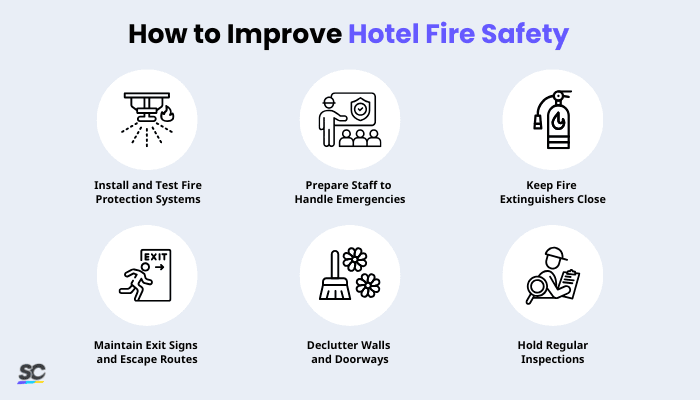
How To Improve Hotel Fire Safety
Installing smoke detectors, sprinkler systems, and fire alarms is one of the most effective ways to safeguard your hotel. These systems act as an early warning and response tool if a fire breaks out.
Testing them regularly is as important as confirming they’re working as intended. A faulty alarm or sprinkler could cost precious time during an emergency.
Prepare your team to respond swiftly and effectively in case of fire breakouts. Equip them with the confidence to assist guests and use emergency equipment when needed.
Hold periodic emergency drills and encourage employees to report any potential fire hazards or concerns immediately so that they can be addressed promptly. This proactive approach can help prevent fires from occurring in the first place.
Place fire extinguishers throughout the property where risks are highest, like in kitchens, laundry rooms, and near electrical panels. They need to be easy to locate and ready to use at all times.
Staff members should be confident in using extinguishers safely and effectively. Regular checks guarantee that the extinguishers are in working condition when needed.
Exit signs should always be evident, visible, and adequately illuminated to guide guests and staff in an emergency. Well-maintained signage can make all the difference during an evacuation.
In addition, escape routes should be free of blockages so people can exit without delay. Periodic checks help ensure these critical pathways are kept open and safe.
Clutter in hallways, near doors, or along walls can feed a fire and block escape routes. Keeping these areas clear helps prevent fires from spreading and allows for fast evacuations.
Make it part of your daily routine to inspect for and remove unnecessary items. Encourage all staff to take responsibility for keeping shared spaces clutter-free.
Your hotel should schedule inspections for electrical systems, smoke alarms, sprinkler systems, and fire extinguishers to avoid potential risks. These inspections help identify and fix minor problems before they become dangerous.
Always keep detailed records of these checks, including any repairs or maintenance done. This documentation is essential for safety compliance and shows your commitment to fire prevention.
SafetyCulture is a mobile-first operations platform adopted across industries such as manufacturing, mining, construction, retail, and hospitality. It’s designed to equip leaders and working teams with the knowledge and tools to do their best work—to the safest and highest standard. Efficiently manage and streamline health and safety processes across the organization, including incident management, safety audits and inspections, risk assessment, waste management, and more, using a comprehensive manufacturing software solution.
Save time and reduce costs
Stay on top of risks and incidents
Boost productivity and efficiency
Enhance communication and collaboration
Discover improvement opportunities
Make data-driven business decisions