Understanding Mechanical Excavation in Modern Construction
Learn about mechanical excavation, how it can be safely used across construction operations.
Learn about mechanical excavation, how it can be safely used across construction operations.
Published 28 Apr 2026
Article by
6 min read
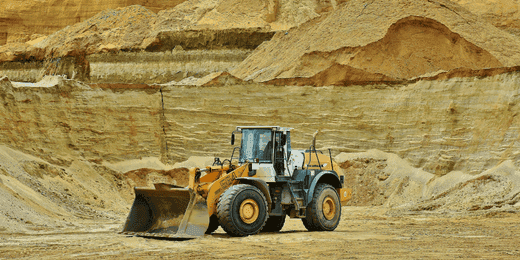
Mechanical excavation refers to earthworks performed to remove soil, rock, or debris using powered machines instead of manual labor. Commonly used machines include excavators, backhoes, and trenchers with specialized attachments to improve speed and accuracy for industrial projects.
While both manual and mechanical methods remain relevant in modern construction, it is important to understand their key differences. This helps construction leaders assess the current project and determine the best excavation method while considering excavation safety throughout the process. Here are the key differences to consider:
Factor | Manual | Mechanical |
Method (Main Difference) | Human physical labor with hand tools (e.g., shovels, picks) | Powered machines that are capable of removing large quantities of soil quickly |
Speed or productivity | Slow and labor-intensive with a low excavation rate | Fast and no manual labor is needed to complete earthworks in higher volume |
Precision and control | High-precision,ideal for delicate or confined areas | Moderate precision,best for large areas of land |
Cost profile | Lower equipment cost, but has higher labor costs for larger projects | Higher costs for equipment rental or purchase, but has lower labor needs |
Safety considerations | Lower risk of injury from using heavy machinery, but higher physical strain on workers | Requires safety protocols for machine operation and presents risk of accidents from machine handling |
Suitability by project size | Best for small jobs, tight spaces, or environmentally fragile locations | Ideal for large, deep, or high-volume excavation |
Accessibility and logistics | Works best where vehicles or machines can't reach, minimal space required | Needs a large area for equipment to mobilize and operate |
Mechanical excavation methods can vary based on soil conditions, digging depth, and construction requirements. By understanding the different types and uses of mechanical excavation, operators can ensure construction safety, productivity, and superior results.
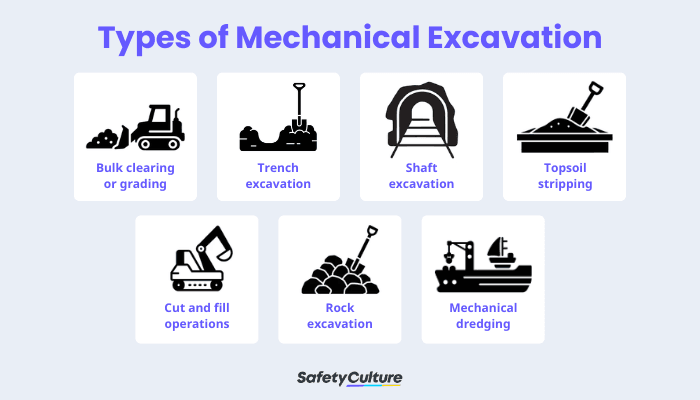
Large-scale removal of soil or rock over a wide area prepares sites for large buildings, highways, airports, and industrial facilities. The following are the most common equipment needed for mass clearing:
Hydraulic excavators
Bulldozers
Scrapers
Dump trucks
For large-scale sites requiring earthworks plant hire, working with a specialist contractor ensures the right machinery and qualified operators are matched to each project's conditions.
This involves digging long, narrow pits in the ground. Creating trenches is primarily for installing utilities such as water pipes, gas lines, sewers, and electrical cables. Heavy machinery needed includes:
Trenchers
Excavators with narrow buckets
Backhoes
In contrast to the horizontal profile of trenching, creating a shaft involves vertical digging to create deep structures. It is meant for structures such as lift shafts, wells, and manholes to provide access to underground infrastructure. Shaft excavation requires equipment such as:
Telescopic dipper arm excavator
Shaft boring machine
Vertical shaft sinking machine
Removing the upper layer of soil containing organic material is usually done before construction. The fertile soil collected is then stockpiled for future landscaping or rehabilitation. The task requires equipment such as:
Mini-excavators
Scrapers
Skid-steer loaders
This method involves removing material from elevated areas and relocating it to lower sections to create level platforms on sloping terrain. Equipment needed for this operation are:
Crawlers or hydraulic excavators
Dump trucks
Motor graders
As the name implies, this process removes hard rock or heavily compacted material. It is often used for road construction, tunnels, and building foundations in rocky terrain, especially in mining. This type of excavation requires specialized machinery such as mobile crushers, excavators with rock breakers, rippers, and drilling rigs. This includes:
Excavators with rock breakers
Rippers
Drilling rigs
This involves the removal of sediment or sludge while it is still underwater to deepen waterways, build ports and harbors, and create flood control channels. Dredging equipment includes:
Clamshell or grab dredgers
Bucket ladder dredgers
Amphibious excavators or marsh buggies
While mechanical excavation eliminates many manual labor risks, using mechanical tools and machinery also presents working hazards. Understanding these risks is essential for preventing site incidents and ensuring a secure working environment.
Trenches or excavation walls can suddenly fail, crushing or burying workers. The CDC reports that this is a common hazard in trenching, since it can be caused by various events such as excessive vibration from equipment or changes in weather conditions. Here are some related safety protocols to take note of:
Conduct manual soil assessments to classify soil for proper designing sloping, benching, shoring, and shielding.
Conduct daily pre-shift trenching and excavation inspections or after weather events.
Use digital geotechnical tools or laser scanning to monitor wall stability with soil shift alerts.
Hitting buried gas lines,electric cables, or water pipelines is also a common occurrence during excavations. Beyond causing service disruptions, these incidents can trigger gas leaks, explosions, and electrocutions, which puts workers in danger. This can be prevented by:
Manually locating and marking utility services before the dig.
Hand digging in critical zones.
Employing digital underground mapping to visualize underground paths.
Excavated pits are confined spaces where oxygen deficiency and toxic gas accumulation pose severe risks. Mitigate the risk of asphyxiation or poisoning through extensive training, so workers know how to:
Regularly test oxygen and gas levels before and during work.
Utilize digital gas sensors that trigger alerts when hazardous conditions develop.
Wear proper PPE, specifically respiratory protection and ventilation systems, such as self-contained breathing apparatus (SCBA).
Excavators, loaders, and dump trucks pose a risk of striking workers, overturning, or collapsing trench edges. Additionally, poor visibility and blind spots increase the incidence of collisions. These specific controls can help prevent site injuries:
Designate trained spotters with clear signals for guiding equipment.
Standardize communication rules (e.g., right-of-way, eye-contact confirmation, radio signals)
Close off areas where workers should not enter during machine operations.
Unprotected edges pose a significant fall risk to personnel, while equipment or debris stored too close to the excavation can fall and injure workers below. These perimeter measures should be implemented:
Install edge protection and guardrails.
Keep spoil piles, tools, and equipment at least 2 feet from edges.
Use mobile apps that support excavation safety, with tools like real-time hazard capture, issue reporting, and corrective actions management.
SafetyCulture is a mobile-first operations platform adopted across industries such as manufacturing, mining, construction, retail, and hospitality. It’s designed to equip leaders and working teams with the knowledge and tools to do their best work—to the safest and highest standard.
Streamline safety oversight by digitizing inspections and providing real-time hazard reporting. Ensure equipment maintenance and shoring protocols are strictly followed, reducing site risks. Empower teams to manage compliance and mitigate accidents efficiently during earthworks that require mechanical equipment through a unified platform.
✓ Save and reduce costs
✓ Stay on top of risks and incidents
✓ Boost productivity and efficiency
✓ Enhance communication and collaboration
✓ Discover improvement opportunities
✓ Make data-driven business decisions