Published 10 Feb 2026
Article by
4 min read
What is Food Safety Training Plan Template?
A food safety training plan template is used to provide tailored training programs to ensure food safety compliance is being practiced. The template is designed to include relevant knowledge of proper food handling and hygiene protocols to uphold food safety standards and prevent the spread of foodborne illnesses.
Benefits
This template equips employees across different food establishments with the knowledge and skills with best practices for good food handling and safety. With the use of a food safety training plan template, employees and organizations will be able to:
Maintain food quality and safety: Following the template helps employees adhere to food safety guidelines by checking cleanliness, proper storage, and temperature controls in the production area. This reduces the risk of contamination or other issues that could affect food quality.
Prevent foodborne illnesses: Proper food-handling processes outlined in the template reduce contamination from bacteria, viruses, and allergens to decrease the risk of food poisoning.
Ensure compliance with industry regulations and standards: Using the template can verify that food safety regulations and standards are met by checking that best practices are covered during training.
Improve business reputation and integrity: Having a record of completed training modules or refreshers shows commitment to upholding food safety practices to strengthen customer trust.
What to Include in a Food Safety Training Plan Template
A food safety training template includes various features to help businesses and employees deliver consistency for safe food handling. It can be tailored to meet the needs of roles, but common features of the template include:
Training details
This section discusses the details of food safety training. It should include elements such as:
Training logistics: It specifies the duration of training, where it is being conducted, and the frequency of participation.
Training method: Details the approach or format used to train employees. Some examples of training methods include formal lectures, on-the-job shadowing, hands-on demonstrations, and e-learning modules.
Training customization: This section also adjusts the training plan based on specific business or employee needs.
Core topics and modules
This section is about essential and relevant topics that should be covered. Some of these are:
Basic food safety principles: It includes personal hygiene, cross-contamination prevention, and temperature control.
Foodborne illnesses: Discusses common foodborne pathogens, allergens, food poisoning symptoms, and other precautions.
Food handling procedures: This involves food handling practices such as receiving and storage, preparation and cooking, and cleaning and sanitizing food.
Regulatory compliance: A good template also covers national and local regulations, supported by safety audits and inspections. This includes discussion about the USA’s Food Safety Modernization Act and EU’s Food Safety Policy.
Employee expectations: It communicates employees' roles and responsibilities in food safety, which cultivates accountability for upholding excellence.
Feedback and Improvement
This section presents suggestions to improve the food safety training plan. This includes:
Feedback collection: It includes feedback from training managers to assess the effectiveness of training methods and note down observations.
Areas of improvement: It is where the training manager can list potential updates based on revised regulations and how training modules can be improved in the future.
How to Use the Food Safety Training Plan Template
To fully maximize the benefits of a food safety training plan template, here’s a step-by-step guide on how to use it correctly:
Provide the necessary details on the title page. This usually includes the name of the training manager, the date when the training is being conducted,and the scope.
Verify that the training manual and visual aids are ready. Go over the different sections such as basic food principles, food handling practices, and documentation requirements.
Attach any media annotations and notes to provide detailed annotations of any issues or areas for improvement within the training plan.
Complete the training plan template with a sign-off.
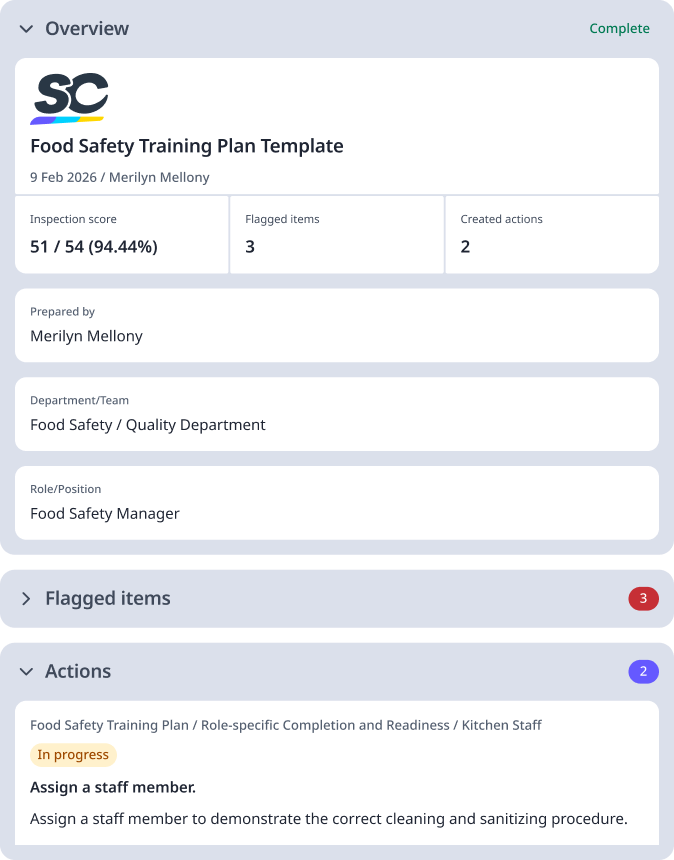
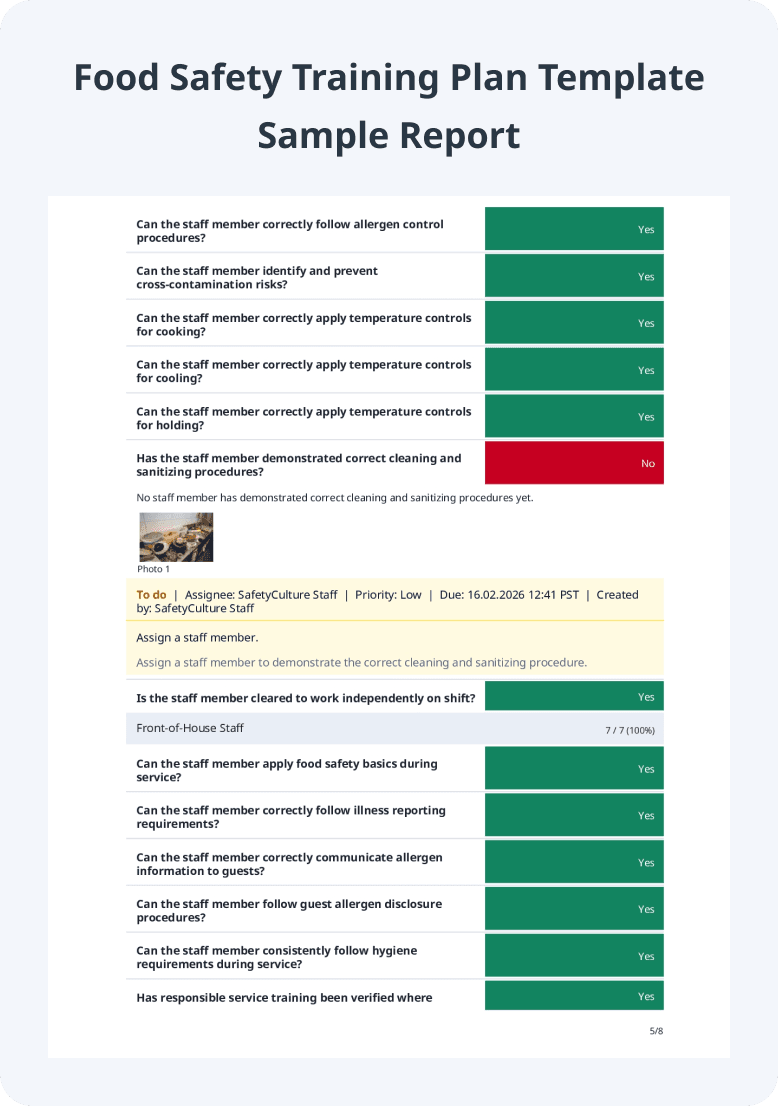
Sample Food Safety Training Plan Template Report
Here is a sample report demonstrating the structure of a food safety training plan template: