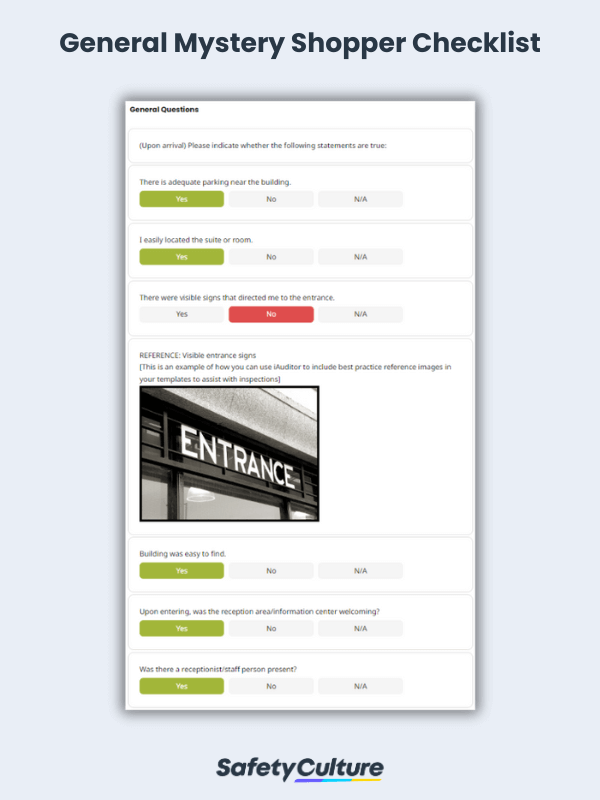
Publicado 30 Apr 2026
Artigo por
SafetyCulture Content Team
5 min de leitura
O que é uma lista de verificação para clientes mistério?
Uma lista de verificação para clientes mistério é uma ferramenta usada por compradores secretos para avaliar e registrar feedback da experiência do cliente. É um método usado por empresas ou organizações para finalidades de pesquisa de mercado interno ou competitivo. Uma lista de verificação para clientes mistério avalia lojas de varejo, hotéis e restaurantes em áreas como atendimento ao cliente, limpeza, qualidade do produto, layout geral do estabelecimento, segurança e muitas outros aspectos para garantir a conformidade com os regulamentos ou diretrizes de serviço.
Businesses and organizations use these checklists for two main purposes: internal quality checks and competitive market research. They're commonly used to evaluate the performance of retail stores, restaurants, hotels, and other customer-facing establishments.
Also referred to as mystery shopper forms, these checklists usually cover multiple areas of an establishment. This includes customer service and staff behavior, cleanliness, product quality, overall layout, and compliance with safety regulations, service guidelines, and business procedures.
Mystery Shopper Checklist Benefits
The global mystery shopping services market was valued at over $2.3 billion in 2025 and is projected to reach $3.6 billion by 2034. This is a clear signal that consistent, structured customer experience evaluation is becoming a business priority. Here's what else organizations stand to gain:
Gain actionable customer feedback: A checklist gives mystery shoppers a clear framework for what to observe. With it, shoppers capture specific, documented observations that paint a full picture of the customer experience, making feedback easier for businesses to review, compare across locations, and act on.
Reinforce and verify policies: When a new policy rolls out across multiple branches or departments, it's hard to know whether it's being followed effectively. By covering the same criteria at every location, a checklist provides a straightforward verification process for businesses to consistently confirm compliance and identify where standards are falling short.
Get more value from every assignment: Without a checklist, mystery shopping visits can miss important details. A well-designed checklist ensures nothing falls through the cracks, enabling businesses to get consistent, comparable data they can use to track progress, spot trends, and make informed decisions.
Analyze the competition: Organizations also use mystery shopping to observe how rival businesses handle service, product presentation, and customer interactions. A checklist keeps those evaluations structured and objective, making it easier to make meaningful comparisons and identify areas where your business has room for improvement.
What Should a Mystery Shopper Checklist Include
A well-designed checklist goes beyond a basic list of observations. It’s built around the specific goals of the assignment and structured in a way that makes it easy to complete discreetly, consistently, and thoroughly. While the exact criteria will vary depending on the industry, the most effective checklists share a few common elements.
Physical environment: The establishment's physical space, including cleanliness, signage, layout, parking, and overall ambiance. These details help businesses determine whether their locations are on-brand and create the right first impression for customers.
Staff behavior and service quality: How employees interact with customers. This checks whether staff offered assistance, how knowledgeable they were about products, whether they followed company protocols, and how they handled any issues that came up during the visit.
Products and services: The checklist should also cover the availability and quality of what's being offered. Were the right products in stock? Was the checkout process smooth? Were alternatives offered when something wasn't available? These details give businesses a ground-level view of how well their operations are holding up in practice.
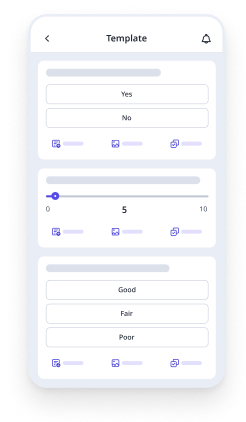
Clear rating or scoring system: Including a consistent rating scale (e.g., yes/no responses, numbered scores, or satisfaction levels) means businesses can track performance over time, benchmark across locations, and spot patterns that wouldn't be obvious from written notes alone.
Space for notes, photos, and recommendations: A legitimate checklist will always include room for the shopper to add context. Using written notes, photo attachments, and specific recommendations means a more actionable final report for the business.
How to Use a Mystery Shopper Checklist
Using a mystery shopper checklist effectively means capturing the right details so the final report is accurate, useful, and easy for businesses to act on. Here's how to get the most out of every assignment.
Review the checklist before you arrive. Take note of any specific instructions, such as requesting a particular product, testing a return process, or timing how long it takes to be greeted. Going in prepared means you won't miss anything important once you're on-site.
Follow the checklist in order. Work through the checklist systematically during your visit, moving from general observations to more specific ones. This keeps your evaluation consistent and ensures you cover every area without having to backtrack or rely on memory afterward.
Record observations as you go. Don't wait until you leave the location to fill in your notes. The more time that passes, the harder it is to recall specific details accurately. Use a discreet tool (e.g., mobile checklist app) to capture your observations in real time, and attach photos to back up your findings.
Complete reports accurately. The MSPA recommends that mystery shops be conducted at different times of day and across varying conditions to ensure coverage is representative.
Use the rating system consistently. Most checklists include a scoring or rating scale. Apply these consistently across every section rather than adjusting your standards as you go. Consistency is what makes the data comparable across locations and over time.
Write your report immediately after the visit. Complete your report while the experience is still fresh. Start by confirming the primary details (e.g., store location, staff names if noted, date and time of visit) before working through your observations from general to specific. Add written notes and recommendations, and attach any photos for more context.
Sample Mystery Shopper Checklist Report
Below is an example of what a completed mystery shopper checklist looks like:
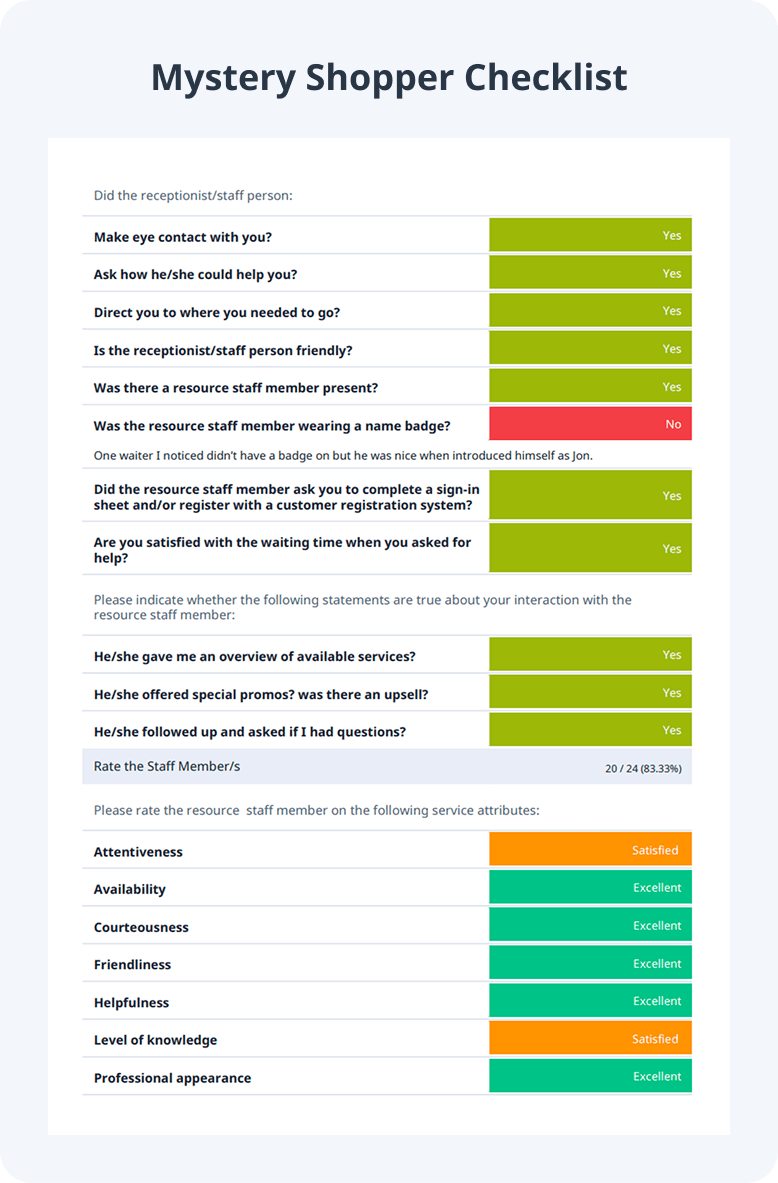
Preview Mystery Shopper Checklist Sample PDF Report

How Waldorf Astoria Delivered Consistent Service
Waldorf Astoria uses SafetyCulture to run 13 daily restaurant audits and 3 full hotel inspections, maintaining consistent brand standards across every corner of their property, every single day.

Ainda procurando uma lista de verificação?
Crie um modelo de lista de verificação personalizada instantaneamente com IA