Why Conduct Road Safety Audits Using Checklists?
The primary importance of conducting road safety audits lies in ensuring that highways and roads operate safely once they’re cleared for public use. This also contributes to efforts in minimizing hazards and risks that road users may face while on the road. In relation to that, these audits are also crucial in reducing collision and accident severity rates.
With ready-to-use road safety audit checklists, findings from the review can easily be stored for future reference. Decision-makers will also have increased visibility on critical aspects of safety.Further, these records can help engineers and construction project managers put more effort into highlighting safety when creating highway designs. This way, the potential costs of future accidents caused by unsafe roads and highways can be reduced.
What to Include in a Road Safety Audit Checklist
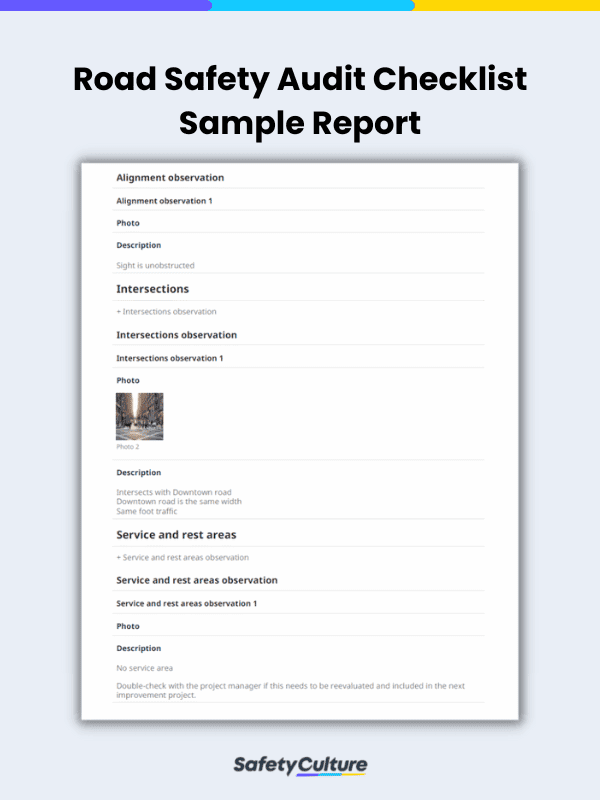
Road Safety Audit PDF Report | SafetyCulture
Depending on the road scheme and type of construction work to be done, your RSA checklist template can include simpler or more complex details based on your needs. Even so, the following are the most basic information and sections it must include:
Name of the road being audited
Date, time, and location of the audit being conducted
Who conducted the audit
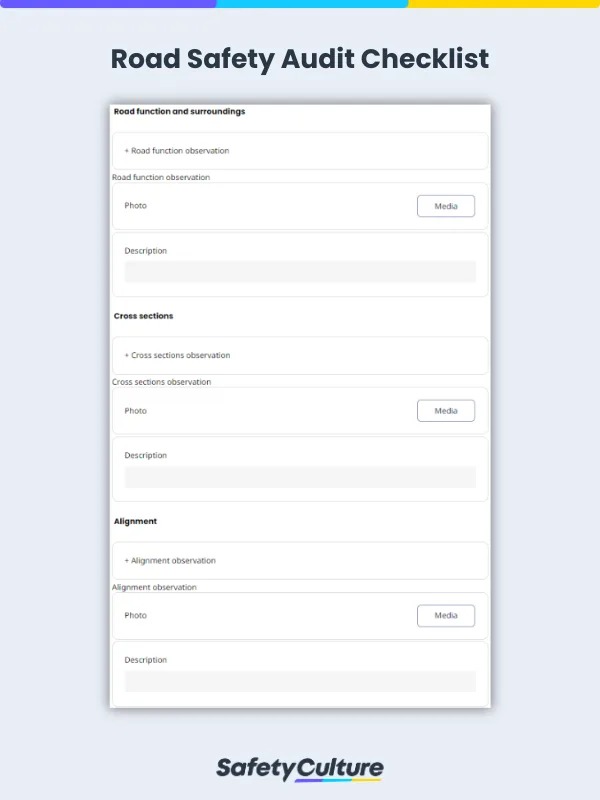
Road function and surroundings
Intersection
Cross-sections
Service and rest areas
Passive safety installations
Adequate lighting
Traffic signs and markings
Needs for vulnerable road users
Comments, recommendations, and sign-off for report completion
To make the audit more comprehensive, it’s also ideal to have the option to upload photo attachments, notes, and descriptions during each inspection.