Published 20 Jul 2026
Article by
4 min read
What is a Sustainability Audit Checklist?
A sustainability audit checklist helps you evaluate your organization's environmental, social, and economic practices in one structured document. It breaks the audit into clear sections, so your team can check compliance, spot gaps, and record evidence as you go, whether you're running a self-assessment or preparing for a third-party review. Instead of relying on scattered spreadsheets or memory, the checklist gives auditors a consistent way to score each area and flag where standards aren't being met.
Importance of Using a Sustainability Audit Checklist
A sustainability audit checklist gives your team one place to track sustainability performance instead of chasing updates across disconnected reports. Missed compliance checks and inconsistent reporting between sites are common problems without a shared framework, and a checklist closes that gap by keeping every location accountable to the same standard.
Using the checklist regularly also helps you set targets, track progress audit over audit, and adjust practices as new regulations arrive. This matters more now than it did a year ago: the EU's Corporate Sustainability Reporting Directive (CSRD) has expanded disclosure requirements, and the SEC's climate disclosure rules are pushing US companies toward more rigorous reporting. Aligning your checklist with frameworks like ISO 14001 or the GRI Standards makes it easier to show investors, customers, and regulators that your sustainability claims hold up.
What to Include in a Checklist for Sustainability Audits
Creating an effective checklist for sustainability audits requires careful consideration of various factors to ensure a comprehensive evaluation of an organization’s environmental, social, and economic practices. Here are key elements to include in this checklist, along with clear and comprehensive sustainability audit questions:
Title Page
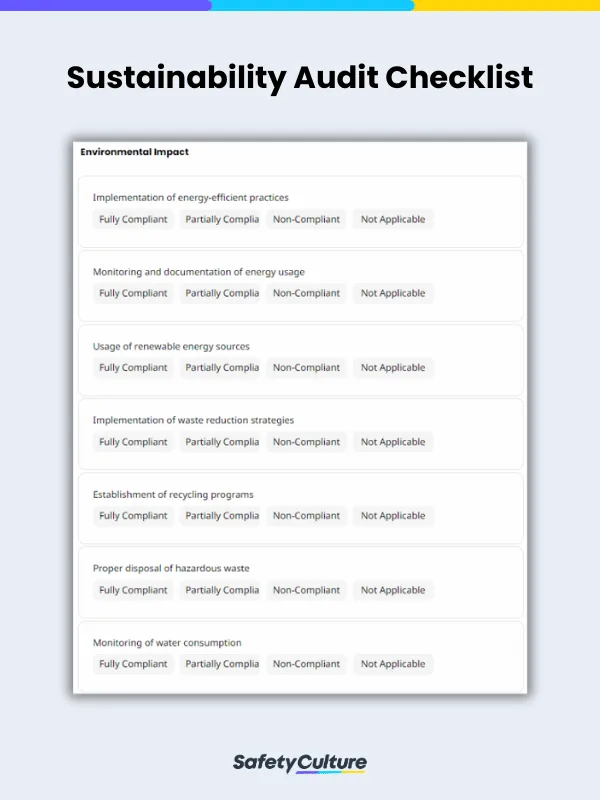
Environmental Impact
Social Responsibility
Economic Viability
Compliance with Regulations
Resource Management
Stakeholder Engagement
Innovation and Research
Risk Assessment and Mitigation
Performance Metrics and Reporting
Employee Training and Awareness
Certifications and Recognitions
Lifecycle Assessment
Adaptation to Climate Change
Continuous Improvement Plans
Completion Page
How to Conduct a Sustainability Audit Using a Checklist
Conducting a sustainability audit using a checklist involves a systematic and thorough assessment of an organization’s environmental, social, and economic practices. Follow these steps to effectively audit sustainability efforts:
Create a sustainability audit checklist tailored to the organization’s industry, size, and specific sustainability goals, covering key aspects mentioned in the previous section.
Form a multidisciplinary audit team with members possessing expertise in environmental management, social responsibility, and business operations and appoint individuals or a main auditor to lead specific sections of the checklist.
Gather data related to the organization’s sustainability indicators. Make sure to collect supporting documentation, such as financial reports, employee records, and evidence of compliance with relevant regulations.
Visit relevant sites within the organization to observe operations, assess environmental practices, and gain insights into sustainability practices.
Address each item in the checklist, record observations, and add relevant notes to identify areas of strength, weaknesses, and opportunities for improvement in the organization’s sustainability practices.
Compile the audit findings into a comprehensive report, clearly presenting the assessment results for each section of the checklist. Where necessary, include recommendations for improvement and corrective actions.
Share the sustainability audit results with relevant stakeholders, such as employees, management, investors, and customers, to highlight the organization’s commitment to transparency and continuous improvement.
Collaborate with key stakeholders to develop an action plan based on the audit findings.
Implement the action plan and monitor progress regularly.
Schedule regular reviews of the sustainability audit checklist to ensure its relevance and update it based on changes in regulations, industry standards, and organizational goals.
Sustainability Audit Checklist Example
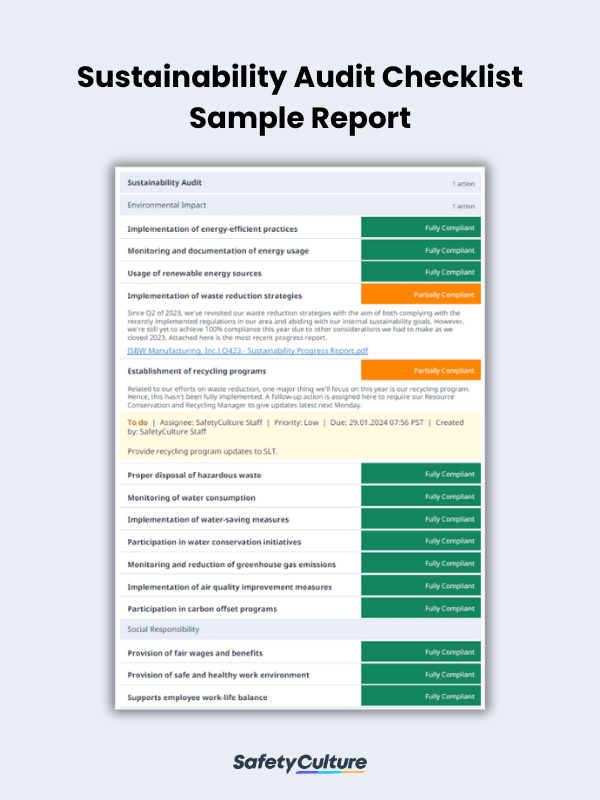
It’s also advisable to review how other organizations or entities conduct their sustainability audits and what their reports look like. To guide you, here’s a straightforward example of a sustainability audit checklist when filled out and exported into a report:

Still looking for a checklist?
Search, filter, and customize 60,000+ templates across industries and use cases.