
Best Practices
AI Is Coming for Hospitality—Will Guests Prefer It?
Share article
Great service and great hospitality go hand in hand. Loyalty comes when you deliver on your promises while being earnest about it.
Technology shouldn't replace the human connection, but help fill the gaps such as low-priority tasks and reminders.
First impressions matter the most in hospitality. Check-in is where the experience starts, and it sets the tone for everything that follows.
Imagine this: it’s your wedding day. You’ve already booked and paid for the hotel.
Then, everything starts going wrong. Your bags arrive late, staff ignore your calls and the food you paid for shows up an hour late.
This actually happened to a couple on their special night.
The hotel eventually apologized and refunded their stay. But the experience was already ruined.
It's stories like these that make you wonder—could a system that never forgets, never gets overwhelmed, and never has an off day have caught these issues before they snowballed? Especially since first impressions stick so much.
And in hospitality, you rarely get a second chance to make one.
If you market your hotel as luxury, you’re setting high expectations. When those expectations aren’t met, guests notice straight away. Keep someone waiting too long on the phone, they’ll remember it. Answer quickly but sound indifferent, they’ll notice that too.
Hospitality and service go hand in hand. When both are done right, you create a better experience, and give people a reason to come back.
For example, in hotel settings, loyal hotel customers stay 28% longer on average than non-loyal guests. And how do you earn loyalty? With good quality service.
In other words, service alone doesn’t create loyalty; satisfaction does. . And satisfaction is the bridge between what you deliver, and whether or not guests return.
This begs the question: can modern technology and AI help build that bridge, or is it something only people can do?
If hospitality efficiency is the end goal, there are five things to keep in mind. These come from SERVQUAL, a framework developed to measure what customers expect and how they judge service.
The framework breaks service quality down into five key areas:
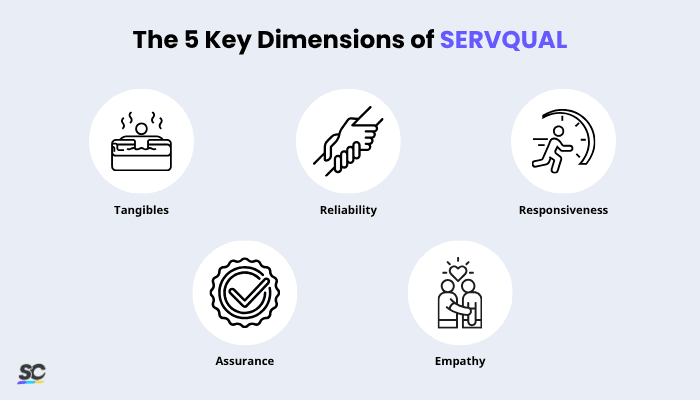
The 5 Key Dimensions of SERVQUAL
Tangibles: What customers can see and touch (such as your facilities, amenities) and how your staff present themselves
Reliability: How consistently you deliver on what you promised, accurately and on time
Responsiveness: How quickly and willingly your team helps customers when they need it
Assurance: How confident customers feel in your team, based on their knowledge, professionalism, and behavior
Empathy: How much your team cares for each customer and understands their individual needs
None of these are complicated. But when even one slips, guests feel it. And in hospitality, what the customer feels is what counts.
Cultivate a culture of excellence with our digital solutions that enhance efficiency, agility, and continuous improvement across all operations.
Think about it. Cloud notifications ping the front desk and a guest's room is ready before they reach the elevator. Digital forms flag a regular's allergy so restaurant staff remember without even asking. Sensors catch a faulty AC unit before the guest ever feels a thing.
That’s not magic. That’s technology. It's the 21st century, the hospitality industry shouldn’t be afraid to use these systems. Whether it's a chatbot handling common guest questions or automating routine tasks like bookings and inquiries, the basics don't need to take up your team's time anymore.
And this doesn’t mean that AI and modern technology should replace good hospitality—they’re there to ensure the small things don’t slip through the cracks.
In fact, hospitality middle managers lose over four hours a week to low-priority tasks. Those hours could’ve been spent serving guests instead.
With challenges like labor shortages, rising wages, energy costs and evolving customer needs, tech can be a real helping hand and take some pressure off your team.
Technology works best in:
Mobile check-ins
Internet of Things (IoT) smart rooms
AI chatbots for common questions and reservations
Data analytics for guest personalization
Digital courses and checklists for training
Technology won't fix everything, let alone a bad experience. But when used in the right places for the right things, it frees your team so you can focus on what actually matters: guest experience.
Important notice
The information contained in this article is general in nature and you should consider whether the information is appropriate to your specific needs. Legal and other matters referred to in this article are based on our interpretation of laws existing at the time and should not be relied on in place of professional advice. We are not responsible for the content of any site owned by a third party that may be linked to this article. SafetyCulture disclaims all liability (except for any liability which by law cannot be excluded) for any error, inaccuracy, or omission from the information contained in this article, any site linked to this article, and any loss or damage suffered by any person directly or indirectly through relying on this information.


