HACCP in hospitality: A practical guide for hotel and restaurant teams
From identifying critical control points to ensuring compliance with a HACCP plan, here's what every food and beverage manager needs to know.
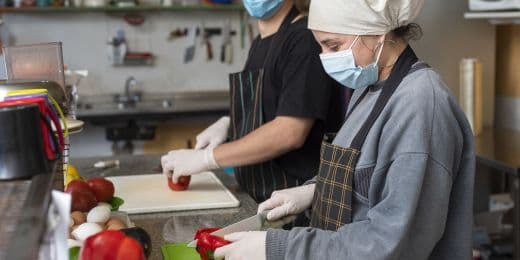
From identifying critical control points to ensuring compliance with a HACCP plan, here's what every food and beverage manager needs to know.
Published 3 Jul 2026
Article by
6 min read
Hazard Analysis and Critical Control Point (HACCP) is a preventive food safety system that identifies, monitors, and controls hazards at specific points in the food preparation process. In hospitality, it's the operational backbone of food safety compliance, from the moment ingredients arrive at the back door to the moment a dish reaches a guest.
Hospitality kitchens operate under conditions that amplify food safety risk: high volume, fast-paced movements, complex menus, and high staff turnover rates. Every shift brings new variables. However, it’s HACCP and HACCP plans that provide the structure that keeps those variables from becoming hazards.
The three main hazards a HACCP plan can prevent and control are:
Biological hazards: Bacteria like Salmonella and Listeria thrive in the conditions that hospitality creates: raw proteins stored near ready-to-eat foods, buffets held at inconsistent temperatures, cross-contamination during high-volume prep.
Chemical hazards: Cleaning chemicals used near food prep surfaces, allergen cross-contact from shared equipment or unlabeled ingredients, and pesticide residues from produce.
Physical hazards: Broken equipment, glass from shattered serviceware, bone fragments in processed fish or meat that can cause choking.
Having a HACCP plan ensures that proper food safety guidelines are reinforced and followed, while also standardizing certain quality metrics. And in the hospitality industry, that's non-negotiable. A failed inspection can result in immediate closure. A foodborne illness outbreak at a restaurant or hotel can cost not just physical harm to customers, but also reputational harm for the business.
Build from scratch or choose from our collection of free, ready-to-download, and customizable templates.
In most jurisdictions, yes, hospitality businesses are required to follow HACCP standards and have a HACCP plan in place. In the EU, EU Regulation EC 852/2004 requires all food businesses to put in place, implement, and maintain a permanent procedure based on HACCP principles. Meanwhile, in the UK, the UK Food Safety Act and associated regulations carry equivalent requirements.
On the other hand, in the US, the Food and Drug Administration (FDA's) Food Safety Modernization Act (FSMA) mandates preventive controls that apply HACCP principles across food service operations. Even where local law doesn't use the word "HACCP" explicitly, health inspectors assess compliance against HACCP-based standards.
Most HACCP guides describe CCPs in the abstract. In a working hotel kitchen or multi-site restaurant group, they look like this:
CCP | Example in hospitality | Critical limit |
Receiving | Temperature check on chilled deliveries | 41°F (≤5°C) for chilled; 0°F (≤-18°C) for frozen |
Cold storage | Refrigeration of raw proteins | 41°F (≤5°C); raw stored below ready-to-eat |
Cooking | Internal temperature of poultry, pork, ground beef | Minimum 165°F (74°C) for poultry; 145°F (63°C ) for whole cuts |
Cooling | Cooling of cooked stock or sauces for next-day service | From 140°F (60°C) to 68°F (20°C) in 2 hours; to 41°F (5°C) within a further 4 hours |
Hot holding | Buffet or bain-marie service | 140°F (≥60°C) throughout service |
Allergen control | Prep station for allergen-containing dishes | Segregated equipment; no cross-contact with allergen-free dishes |
The "danger zone," which is the temperature range between 40°F (4°C) and 140°F (60°C), is where bacterial growth accelerates the quickest. Every CCP in a hospitality operation is designed to keep food either well above or well below this range, for as short a time as possible when it must pass through it.
Temperature is the single most monitored variable in hospitality HACCP. The US FDA Food Code and UK Food Standards Agency guidelines set the following benchmarks that hospitality teams should build into their monitoring protocols:
Fridge storage: 41°F (≤5°C)
Freezer storage: 0°F (≤-18°C)
All types of poultry: Minimum internal cooking temp of 165°F (74°C)
Ground meat and sausages: Minimum 160°F (71°C)
Whole cuts (beef, pork, lamb): Minimum 145°F (63°C) with a three-minute rest time
Hot holding: 140°F (≥60°C)
Cooling after cooking: From 140°F (60°C) to 68°F (20°C) within two hours. to 41°F (≤5°C) within four hours
For managing food inventory across multiple cold storage units, automated temperature sensors that log readings continuously and escalate alerts when limits are breached eliminate the gaps that manual spot-checks create.
FISHBOWL, the fast-food restaurant chain, runs 130 real-time temperature sensors across its kitchens and delivery trucks. The system escalates automatically when temperatures drop, allowing the team to act before stock is compromised, saving $70,000 in annual stock losses while maintaining continuous HACCP documentation.
"We wanted to capture the magic sauce that makes FISHBOWL special…Day-to-day operations can feel like a whirlwind. We need support systems to manage daily tasks to keep pushing forward."
High staff turnover makes HACCP training a continuous operational obligation, not a one-time onboarding task. A kitchen operating at 70% staff retention means a meaningful proportion of the team handling food at any given time may have joined in the last six months. Every one of them needs role-specific HACCP knowledge before they work unsupervised.
Following this, HACCP training is required for everybody, and not just kitchen staff. This includes front-of-house staff, delivery workers, servers, and anyone else who would be touching food or communicating food information to others.
An effective HACCP training program for hospitality workers should include the following:
The hazards specific to your operation
The CCPs they're responsible for monitoring
What a critical limit deviation looks like
How to report issues
Allergen awareness relevant to your menu
The training should also walk employees through different situations so their problem-solving skills can be evaluated and improved if necessary. This typically involves recreating common problems on the floor, and digital training courses to supplement them.
Training frequency matters too. Annual refreshers are a minimum, but having quarterly ones for operations with high turnover or complex menus is more realistic.
However, it’s also essential to document every training done. An inspector who asks for evidence of HACCP training and gets a verbal assurance will treat it as non-compliant. Platforms that deliver and track food safety training make completion records available on demand, which turns an inspection question into a one-click answer rather than a paperwork search.
Connecting training outcomes to broader continuous improvement cycles turns HACCP training from a compliance tick-box into a system that gets better over time. SSP Group, which operates food and beverage outlets across over 100 airport locations in Australia, used SafetyCulture to do this by standardizing food safety training and inspections across all sites. With it, they achieved an 82% improvement in food safety understanding among staff and boosted compliance scores from 60% to nearly 100%.
SafetyCulture is a workplace operations platform adopted across industries such as manufacturing, mining, construction, retail, and hospitality. It's designed to equip leaders and working teams with the knowledge and tools to do their best work—to the safest and highest standard.
Efficiently manage and streamline health and safety processes across the organization, including incident management, safety audits and inspections, risk assessment, waste management, and more, using a comprehensive EHS software solution.
✓ Save time and reduce costs
✓ Stay on top of risks and incidents
✓ Boost productivity and efficiency
✓ Enhance communication and collaboration
✓ Discover improvement opportunities
✓ Make data-driven business decisions
In this article