Understanding Disability and Disaster Risk Preparedness
Learn about disability-inclusive approaches to disaster risk preparedness, why it’s important, and tips for creating a preparedness plan that includes everybody.
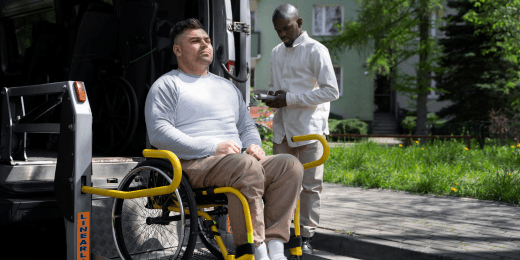
Learn about disability-inclusive approaches to disaster risk preparedness, why it’s important, and tips for creating a preparedness plan that includes everybody.
Published 27 Apr 2026
Article by
6 min read
Disability and disaster risk preparedness is the practice of planning for, responding to, and recovering from disasters in ways that actively include people with disabilities. The practice ensures policies, communication, infrastructure, and emergency procedures are accessible and account for diverse needs. The goal is to reduce risk and see to it that everyone can prepare for and respond to disasters safely and with dignity.
Disability-inclusive disaster-risk preparedness is important because people with disabilities are far more likely to be abandoned during evacuations when plans fail to account for their needs. Lack of preparation and trained responders during disasters can lead to evacuation procedures that assume everyone can move, hear, see, or communicate in the same way.
Inaccessible shelters, facilities, and services further increase risk by preventing disabled individuals from reaching safety or receiving timely assistance. When disaster plans are not designed to be inclusive, people with disabilities face delays, isolation, and life-threatening barriers that proper planning could prevent.
Inclusive disaster risk preparedness ensures that people with disabilities are fully considered in planning, response, and recovery efforts. Several international and national frameworks guide organizations in reducing barriers and promoting equitable participation during disasters.
Below are some of the most important frameworks and policies to consider when developing inclusive disaster risk plans.
The UN promotes disability-inclusive disaster risk reduction through the Sendai Framework for Disaster Risk Reduction 2015–2030.
Main principles:
Meaningful participation of persons with disabilities in disaster planning
Accessible early warning systems
Collection of disability-disaggregated data
Inclusion across preparedness, response, and recovery phases
The United Nations Office for Disaster Risk Reduction (UNDRR) works with governments and stakeholders to embed disability inclusion into all disaster risk management strategies.
The EU framework, guided by the European Disability Forum and the United Nations Convention on the Rights of Persons with Disabilities (UNCRPD), focuses on integrating disability inclusion into national and regional disaster risk reduction policies.
Reviews across Europe and Central Asia highlight gaps in participation, data collection, and implementation. The framework emphasizes aligning DRR policies with human rights obligations and involving organizations of persons with disabilities.
US policy strengthens disability inclusion in disaster planning through federal laws that mandate accessible emergency management and interagency coordination. These laws build on the Americans with Disabilities Act (ADA) to address evacuation, sheltering, communication, and recovery needs. The framework aims to reduce systemic barriers that place people with disabilities at higher risk during disasters.
Australia’s framework combines international commitments under the Sendai Framework and UNCRPD with national disability and emergency management policies.
Main principles:
Accessible communication
Inclusive emergency planning
Collaboration between emergency services and disability organizations
Person-centred preparedness
Building responder capacity to address diverse needs
This integrated framework strengthens national disaster preparedness while ensuring disability inclusion remains central.
Companies and organizations should create comprehensive disaster risk preparedness plans. However, some teams can overlook individuals with disabilities when creating these plans, which can have serious consequences. So, here are a few tips for teams looking to make their disaster plans more inclusive and ensure they account for everyone.
People with disabilities should be actively involved in disaster risk preparedness planning, not treated solely as beneficiaries. Their lived experience helps identify real risks, practical solutions, and gaps that planners may overlook.
Participation barriers such as inaccessible meeting spaces, unclear communication, and a lack of assistive support must be addressed. Providing accessible formats, sign language interpretation, and flexible engagement options allows broader involvement.
Raising awareness among planners, responders, and communities helps challenge assumptions about disability and capacity. Training and education improve understanding of diverse needs and reduce stigma during disaster preparedness and response.
Disability-disaggregated data is essential for understanding who is most at risk and where gaps exist. Accurate data support better planning, targeted resource allocation, and inclusive early warning systems. Without it, people with disabilities remain invisible in disaster risk assessments.
All disaster-related projects should apply universal design and accessibility standards from the outset. This includes accessible infrastructure, communication systems, shelters, and transportation. Highlighting accessibility from the start prevents exclusion and reduces the need for costly retrofits later.
The exact steps teams take in creating disaster risk preparedness plans can vary among teams. Plans must be customized to each organization’s location, population, and other factors. That said, most teams follow a set of key steps when creating a plan that includes persons with disabilities.
Risk assessments should explicitly consider how different disabilities affect exposure, evacuation, and access to support during disasters.
This includes identifying potential barriers such as:
Mobility limitations
Communication gaps
Dependence on assistive devices
Reliance on caregivers or support networks
Inclusive assessments help planners anticipate risks and design targeted mitigation measures. Teams can enhance their risk assessment procedures by using digital checklists and tools to ensure they cover all bases.
Early warning systems must deliver information in multiple accessible formats, including visual, audio, plain language, and assistive technologies. Messages should be timely, clear, and usable by people with sensory, cognitive, and psychosocial disabilities. Accessible communication reduces confusion and enables faster, safer decision-making.
Evacuation plans should account for diverse mobility, transportation, and support needs, rather than assuming self-evacuation is possible for everyone.
Shelters must:
Be physically accessible
Accommodate service animals
Allow space for assistive devices
Support personal care and assistance needs
Inclusive design prevents people with disabilities from being left behind or separated from essential supports.
Emergency responders need training to understand disability, avoid harmful assumptions, and communicate respectfully during crises.
Training should cover:
Respectful and clear communication
Avoiding harmful assumptions
Providing reasonable accommodations
Coordinating with disability support networks
Well-trained responders are better equipped to provide safe, dignified, and effective assistance.
SafetyCulture is a mobile-first operations platform adopted across industries such as manufacturing, mining, construction, retail, and hospitality. It’s designed to equip leaders and working teams with the knowledge and tools to do their best work—to the safest and highest standard.
Streamline processes, eliminate bottlenecks, enhance resource utilization, and build an agile and scalable infrastructure with SafetyCulture. Strive for operational excellence to boost competitive advantage, foster sustainable growth, and deliver long-term value.
✓ Save time and reduce costs
✓ Stay on top of risks and incidents
✓ Boost productivity and efficiency
✓ Enhance communication and collaboration
✓ Discover improvement opportunities
✓ Make data-driven business decisions
In this article