What is a Business Health Check?
A business health check is a comprehensive review of an organization's overall operational performance, financial stability, and strategic direction. It involves evaluating Key Performance Indicators (KPIs) against industry benchmarks and governance structures to pinpoint weaknesses, manage threats, and boost overall value. Ultimately, doing this helps companies make better decisions that fuel healthy growth in a competitive landscape.
What are the Key Components of a Business Health Check?
A company health check must look beyond operations and profits. Limiting the review to these areas creates dangerous blind spots in critical functions, ultimately breeding systemic inefficiencies that can lead directly to business failure.
Financial performance
Strong financial health supports every business decision. Evaluating these financial KPIs determines whether the business can sustain current operations and, more importantly, fund future growth:
Revenue growth and profit margins
Cash flow and working capital management
Debt-to-equity ratio and Return on Investment (ROI)
Compliance and risk management
The business must strictly comply with all legal obligations, including workplace safety and data privacy regulations. This disciplined approach protects employees, ensures reliable daily operations, and shields the company’s reputation from legal risk. Here are some points to evaluate:
Regulatory compliance through documentation
Workplace safety competency through training and certification
Risk assessment and mitigation plans
Operational efficiency
Well-oiled businesses are characterized by less waste, lower expenses, and high-quality output. Examining the following workflows ultimately drives operational excellence, which sustains customer satisfaction:
Production and delivery processes
Resource utilization (i.e., time, people, materials) and cost control
Technology integration for workflow optimization
Leadership and governance
Good leadership and governance provide direction, build trust, and ensure alignment with business goals. Neglecting this area may lead to poor morale, inconsistent strategies, and ethical lapses. Take note of the following during the business health checkup:
Strategic decision-making and planning
Board oversight and accountability
Communication and ethical leadership practices
Human resources and culture
A motivated, well-trained workforce can deliver better products and services. This area assesses several points to prevent high turnover, low morale, and poor performance. Here are some:
Employee satisfaction and retention rate
Training and competency programs
Organizational values and inclusivity
Customer and market position
A strong market position ensures sustainability and growth. The business could lose relevance and market share if these are not included during the corporate wellness scan:
Customer satisfaction and feedback
Brand reputation and market share trends
Competitor analysis and market adaptation
Innovation and growth potential
Continuous improvement drives long-term success and resilience in changing markets. This component deserves meticulous evaluation because it measures how the company adapts, innovates, and plans for the future. Check the following:
Research and development investments
Product or service improvement initiatives
Market expansion and diversification plans
What to Include in a Business Health Check Template?
A business health check template includes key components that help evaluate the overall health and performance of a business. With this in mind, your template should ideally cover the following:
Health and safety policies and procedures
Health and safety plans
Workplace training and safety management
Equipment and asset management
Performance and outcomes
Financial health and performance
A Step-by-Step Guide to Creating a Business Health Check Template
By following this guide, organizations can create a practical, data-driven framework that enhances safety, boosts efficiency, and supports better decision-making. When combined with regular reviews, this template becomes a foundational tool for achieving a safer, highly productive, and more resilient workplace.
1. Define the purpose and scope.
Clarify whether your business health check tool will be used for safety audits, operational reviews, or full-scale business diagnostics. Identify your target users to ensure the questions are practical and relevant. This step also helps you establish the boundaries of your assessment, preventing information overload while maintaining focus on key business priorities. A clear scope sets the foundation for a useful, time-efficient, and results-driven business health check.
2. Identify key assessment areas.
Next, identify the main areas your business health check should cover. These typically include health and safety policies, safety plans, workplace training, equipment management, and operational efficiency. Each area should directly relate to daily work activities and measurable business outcomes. By structuring your business health check questions into clear categories, you make it easier for managers to provide consistent and meaningful feedback. This also ensures a balanced evaluation of both safety performance and operational effectiveness.
3. Create consistent rating scales.
Establish a uniform rating scale to make your business health check questionnaire easy to complete and compare over time. Use a simple 1-to-5 scale ranging from Strongly Disagree to Strongly Agree. This allows participants to quickly rate the effectiveness of policies, systems, and processes in their workplace. A consistent scale not only standardizes responses but also makes trend analysis more reliable across teams or departments. By using consistent scoring, your template becomes a dependable benchmarking tool for business performance.
4. Develop clear, insightful questions.
Write clear, actionable, and practical business health check questions that reflect real workplace experiences. Use statements like Safety procedures improve workflows or Training reflects actual job conditions to gather meaningful insights. Avoid corporate jargon and focus on simple, relatable language. Ensure each question helps identify a specific challenge or success factor in operations. Build your question set to diagnose problems accurately and support targeted improvements.
5. Add comment fields for context.
Include a comments section beside each rating to capture explanations and context. Encourage users to describe why they rated an item low or high to uncover root causes. For instance, a manager might rate “3” for equipment management but note that maintenance delays are caused by vendor issues. This context transforms your checklist into a practical problem-solving tool rather than a simple scorecard. So, leverage this information to design effective improvement plans based on real feedback.
6. Make it interactive or digital.
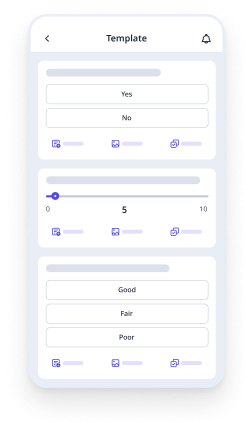
Transform your template into a digital format to improve accessibility and usability. Tools like Google Sheets and Microsoft Excel allow managers to download scores quickly and generate automatic summaries. This digital transformation not only saves time but also ensures consistent data capture across teams. Online versions can include built-in scoring, color-coded results, and charts for visual analysis. Making your template interactive enhances user engagement and aligns with modern workplace practices.
7. Test and refine the template.
Before launching your business health check checklist, conduct a pilot test with a small group of managers or supervisors. Collect feedback about the clarity of questions, time required, and ease of use. Testing allows you to identify confusing sections or redundant items and make improvements before wider rollout. Simplify where possible to ensure the tool feels practical rather than burdensome. Validate your final version to guarantee reliability and strong adoption across the organization.
8. Use the template for continuous improvement.
Implement your business health check template as part of a continuous improvement strategy. Schedule quarterly or biannual reviews to monitor progress and adjust plans accordingly. Analyze recurring patterns in scores and comments to pinpoint systemic issues. Share results with teams to encourage transparency and collective problem-solving.
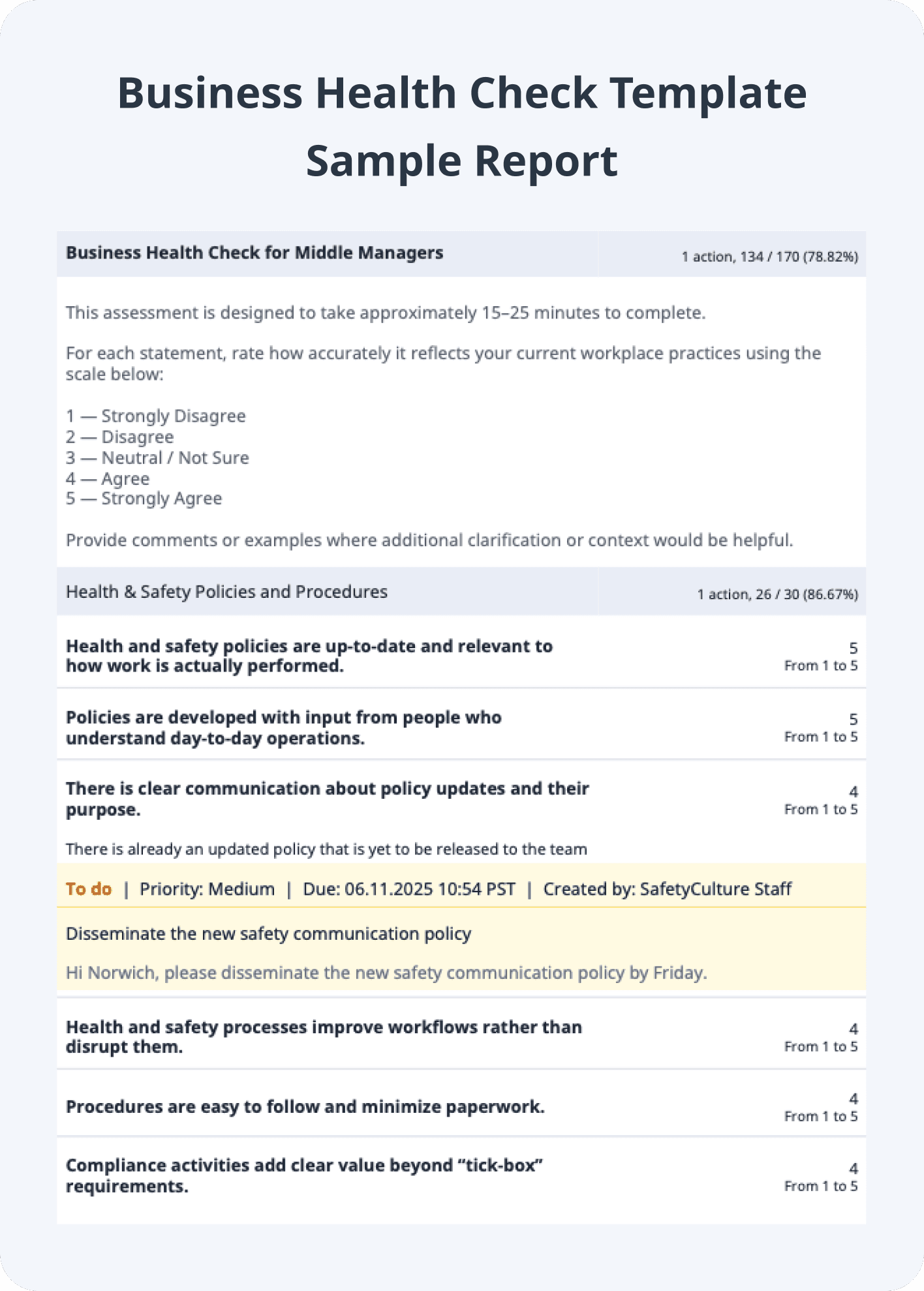
Business Health Check Template Sample Report
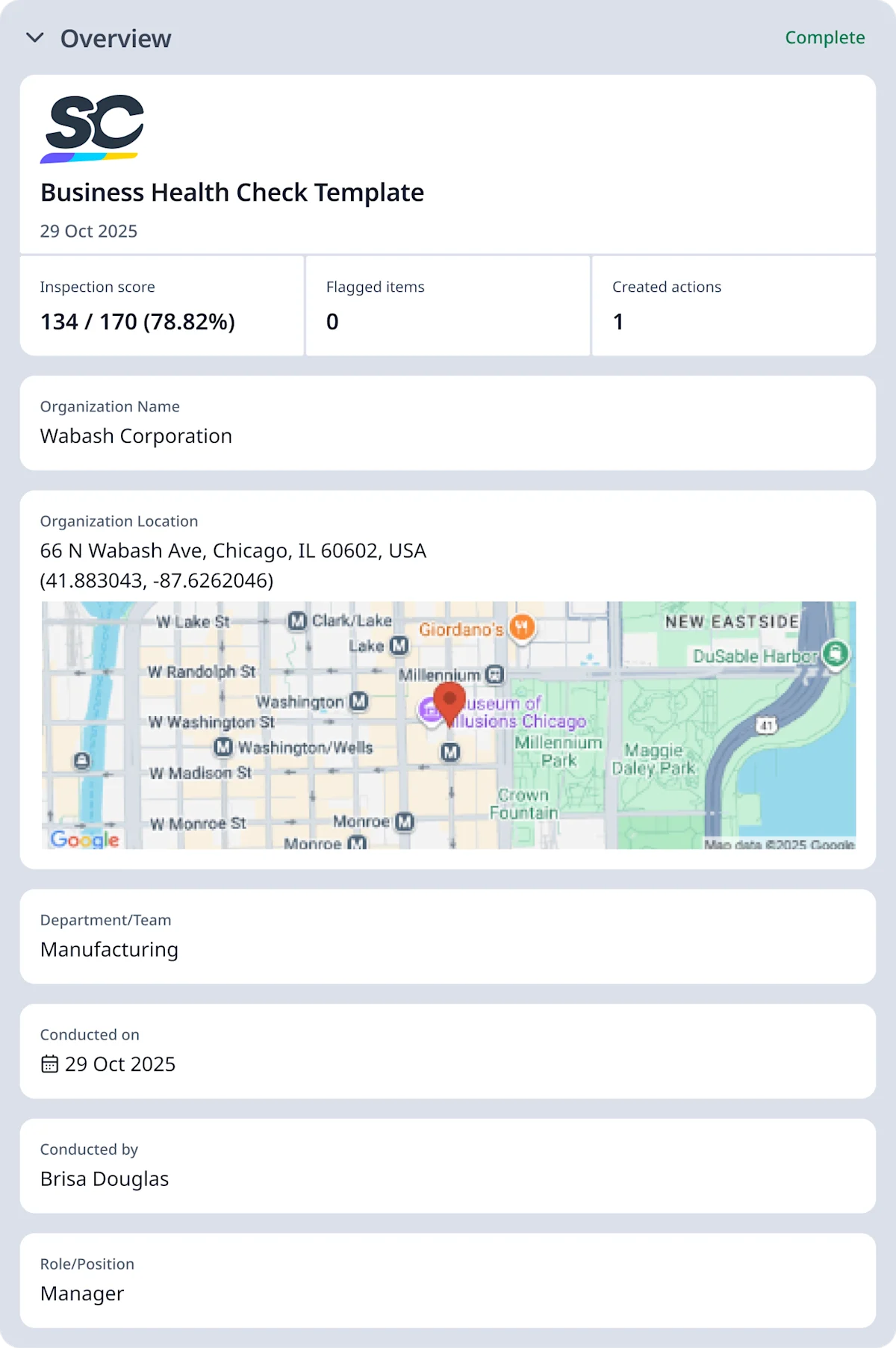
Check this sample business health check PDF report to see how key performance areas are analyzed and presented in a structured format. Use this example to understand how a completed business health check translates findings into clear insights, practical actions, and measurable improvement opportunities.
Preview Business Health Check PDF Report