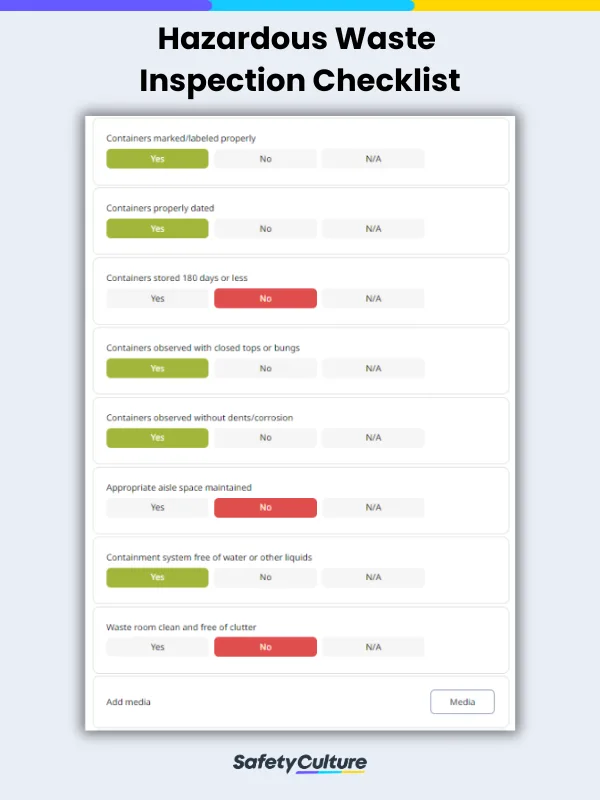
Download this comprehensive hazardous waste inspection checklist, serving as a guide in various industrial and facility settings. This checklist enables you to assess and confirm the different aspects and conditions of your organization’s hazardous waste management procedures, ensuring they meet safety, efficiency, and reliability standards.
By utilizing this checklist, you can perform the following tasks:
Fill in essential details regarding the hazardous waste management inspection, including information about the assets, date, inspector’s or personnel’s name, site name, and location.
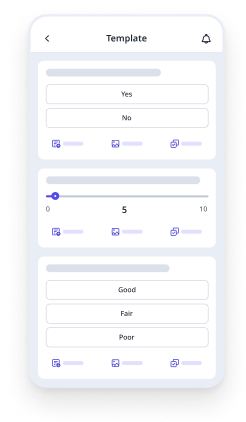
Thoroughly examine each component of the hazardous waste management process, indicating whether they are in satisfactory condition or require attention.
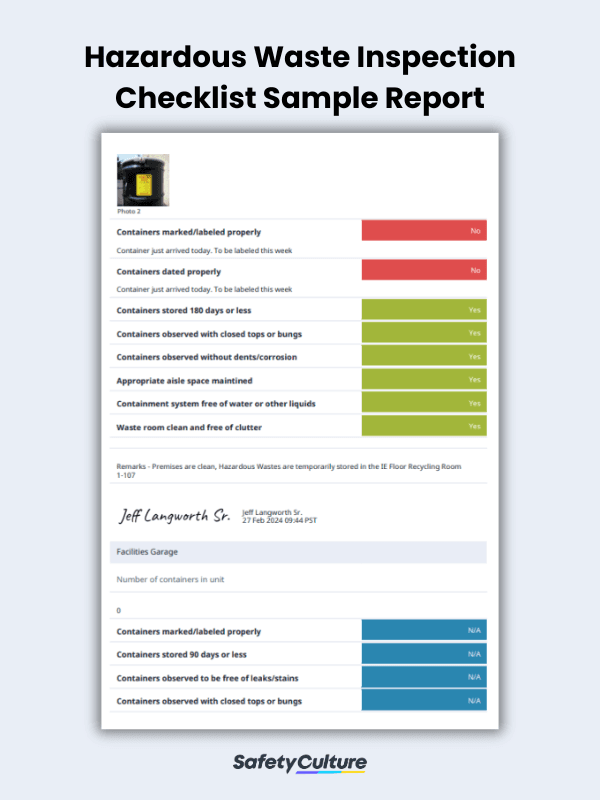
Incorporate notes and attach annotated media, such as photos, to provide additional context regarding your observations during the inspection.
Before finalizing the inspection report, include digital signatures and any necessary comments for proper endorsement and verification.
Export the completed checklist into a Hazardous Waste Management Inspection PDF, Excel, or Word file for systematic recordkeeping, securely storing it on the cloud.