FMEA Step | FMEA Example |
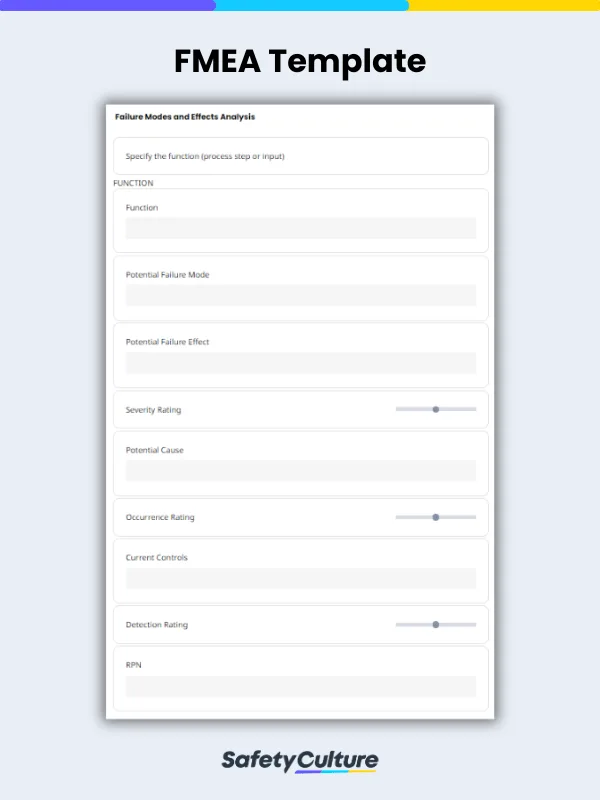
Process Step/Input - Utilize a process map to identify all the steps and key inputs on the process being analyzed | Pouring a concrete foundation for a building |
Potential Failure Mode - For each process step and key input, list all of the different things that could go wrong, AKA: Failure modes | The cured concrete doesn’t support the weight of the structure placed on top of it |
Potential Failure Effects - Anticipate the impact of the failure on the output of the process | The structure could collapse |
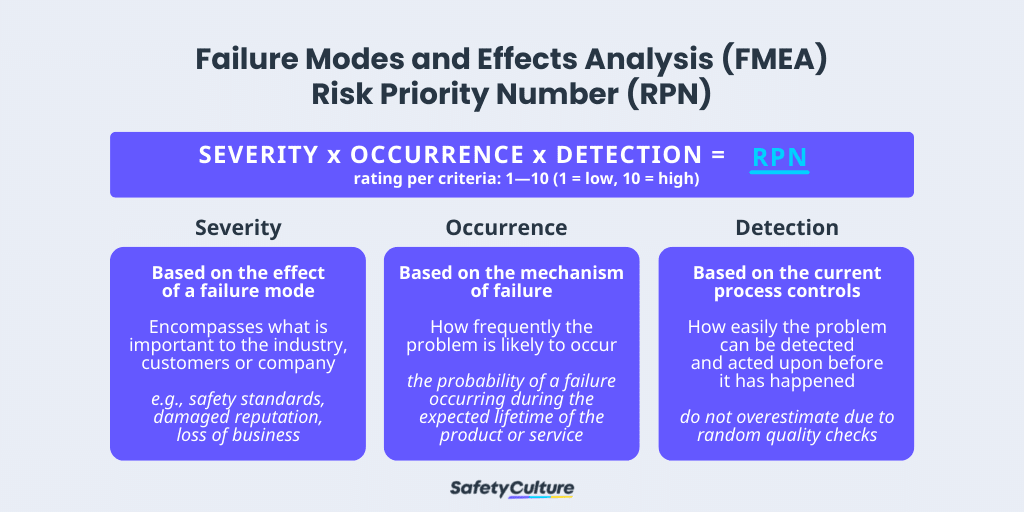
Severity Ranking - Assign a severity ranking to each effect that has been identified. This can range from 1 (low impact with almost no effect) to 10 (high impact with catastrophic results). Set criteria for each ranking from 1-10. | 10 Very High - This could result in catastrophic failure, injury, and damaged public opinion with little to no warning |
Potential Causes - Determine the root cause of each failure mode. Utilize root cause analysis tools such as 5 why and fishbone diagrams as well as employee experience | - Improper concrete mix - Not vibrating the concrete while it is poured - Undersized steel reinforcement |
Current Controls - For each potential cause, list the current control measures in place to prevent failures. These are things like procedures, tests, inspections, and other mechanisms | - Mix tickets verified by the foreman upon delivery - Field personnel designated for vibrating the pour - Steel design approvals by an engineer - Break tests performed on 7, 14, and 21 days |
Occurrence Ranking - Assign a probability to the likelihood or frequency of the failure mode occurring. This can range from 10 (very likely) to 1 (very unlikely). Have a set objective criteria for each rank between 1 and 10. | 5 - There have been occasions of this happening but it is not very frequent. |
Detection Ranking - This represents the likelihood of a failure mode being detected if it were to occur. A detection ranking of 10 is bad, it means there’s almost no chance it will be detected. A rank of 1 means it is almost certain. Define criteria for each number between 1 and 10 with the likelihood of detection getting less as the number goes up. | 3 - There is a high likelihood that this failure mode will be prevented or, worst case scenario, it will be detected prior to setting the structure. |
Risk Priority Number - This is the relative risk ranking. It is calculated by multiplying a failure modes severity x occurrence x detection. The mode with the highest RPN should be addressed first and so on down. | 150 - This falls at the low end of the priority ranking because, although the outcome is severe, the likelihood is low. |
Action Plan - Develop an action plan to reduce failure modes RPN. Include who is responsible, what will be done, and when it will be done by | It has been determined that the current detection and prevention methods are adequate to prevent the concrete from failing. The general foreman is to ensure all quality procedures are followed and all installation procedures are adhered to. However, out of an abundance of caution, we will have a second engineer review the mix designs and steel plans to ensure the structure will be adequately supported |
Recalculate RPN - Recalculate a failure modes RPN once action has been taken to reduce it to ensure they had a positive effect. | 90 - The ranking has come down due to a lower occurrence score. |