Published 9 Mar 2026
Article by
4 min read
What is a Continuous Temperature Monitoring Checklist ?
A continuous temperature monitoring checklist is a structured tool for tracking and assessing the effectiveness of temperature control technologies used in food storage and handling. It is designed to ensure these technologies operate properly 24/7, verify the logged and recorded temperature readings, and test the alert systems that notify relevant employees when failures occur.
Importance
A continuous temperature monitoring checklist is crucial for food safety because it implements processes for preserving, handling, and storing food items using remote and smart temperature-monitoring equipment. As such, this checklist highlights essential key benefits such as:
Improves operational efficiency: Using this checklist to monitor temperature equipment reduces human error and reliance on manual checks through automation and sensors.
Adheres to food safety compliance: Capturing real-time data from monitoring systems provides compliance with a food safety management system, such as Hazard Analysis and Critical Control Points (HACCP) guidelines.
Prevents foodborne illnesses: Effective temperature management helps prevent bacterial growth, which can cause foodborne illnesses such as Salmonella, staph infections, and E. coli.
Reduces food waste: This checklist helps identify equipment issues and failures, allowing staff to quickly transfer food items to a temporary container or location.
What Should Be Included in a Continuous Temperature Monitoring Checklist
The key components included in a continuous temperature monitoring system depend on the type of food being handled and stored. Here are some frequently included components:
Log assets and location
This section identifies the temperature-monitoring assets and technologies, as well as the temperature-controlled units. These units typically include walk-in coolers, refrigerators, freezers, chillers, and cold and hot holding storage units. It also notes the locations of food storage and highlights the high-risk areas.
Equipment and technologies
This essential component involves checking and inspecting temperature-monitoring equipment and technologies used in food handling and storage. Some of these are:
Temperature sensors and monitoring systems: These monitoring technologies provide accurate, real-time temperature data readings 24/7.
Temperature data loggers: These logging devices continuously record temperature and humidity within an environment to gather reliable data for analysis.
Gateway communicators: These help collect data for temperature-monitoring systems and automatically send it to cloud storage or online services.
Battery backups: These provide temporary power to the monitoring system and its technologies to ensure they continue running during power disruptions.
Temperature thresholds and alerts
This checkpoint monitors and alerts on temperature thresholds and deviations, serving as documentation to support a HACCP plan. It also includes:
Temperature thresholds: These define the safe temperature zones for freezing, chilling, cold holding, and hot holding in food storage units, as monitored by sensors to keep food out of the danger zone.
Alarm systems: These send out notifications when temperature-monitoring assets fail or when high or low temperature thresholds are exceeded, alerting relevant employees through messages and app notifications.
Best practices and corrective actions
It outlines best practices and corrective actions to manage temperature control. Some of these include:
Continuous documentation logs: These are collections of automated temperature readings logged at regular intervals before uploading to cloud storage.
Corrective improvements: These tag specific workers to provide action when temperature-monitoring technologies are not working properly or when deviations occur in temperature-controlled equipment.
How to Use this Checklist
Follow these steps to create an effective continuous temperature monitoring template that prevents bacterial growth in food:
Provide the necessary details on the title page. This usually includes the inspector's name, the date, and the facility's location.
Assess whether temperature-monitoring technologies such as sensors and data loggers are sending accurate readings and data.
Confirm gateway communications and backup installations for the technology being used.
Test and verify the activation of alert systems and notifications.
Attach any media annotations and notes to provide details on any issues or corrective actions for continuous temperature monitoring.
Complete the checklist with a sign-off.
Sample Continuous Temperature Monitoring Report
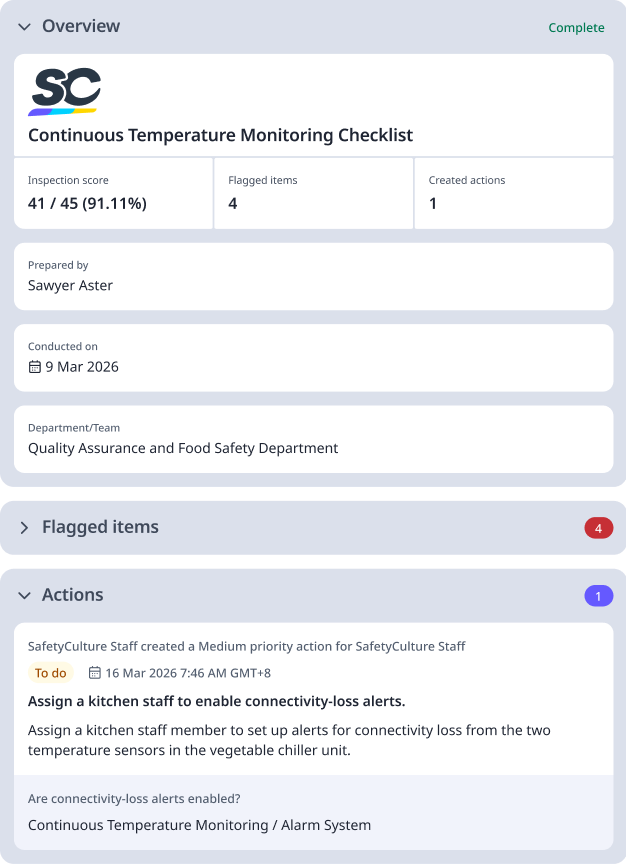
For reference, here is a completed continuous temperature monitoring checklist report:
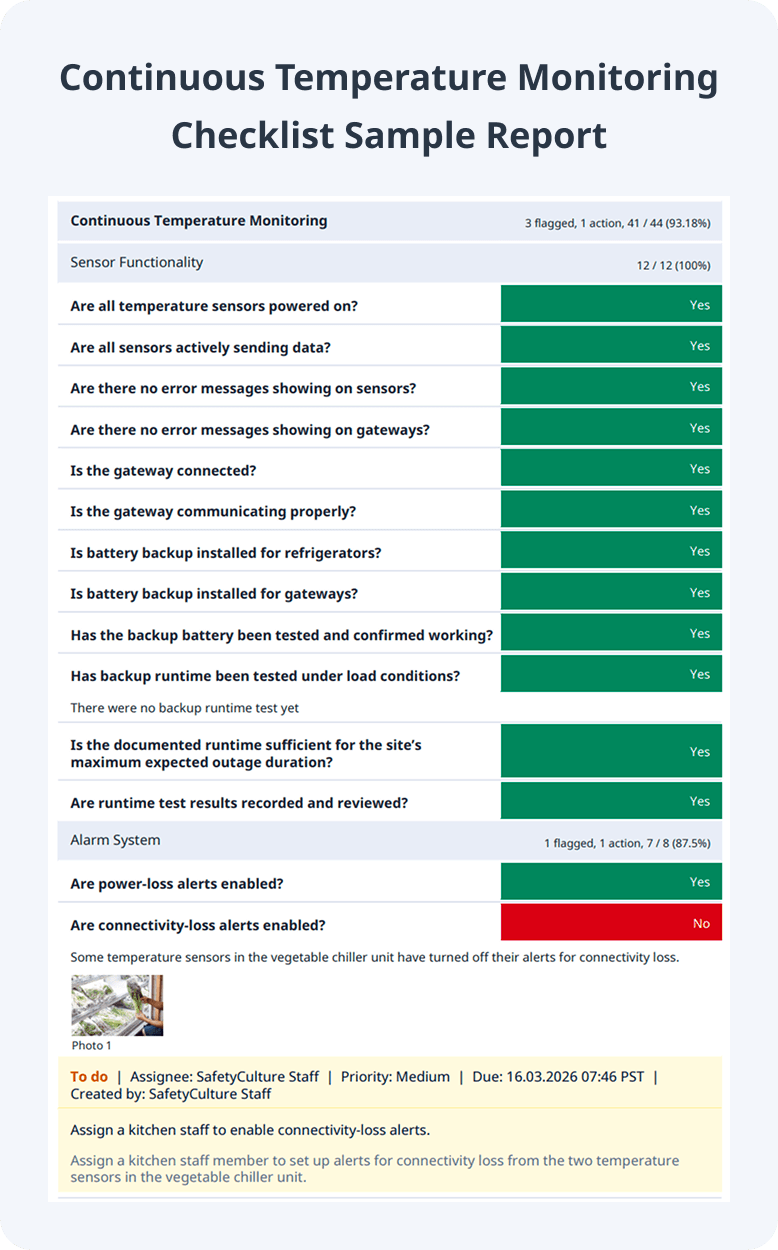
Preview Continuous Temperature Monitoring Sample PDF Report
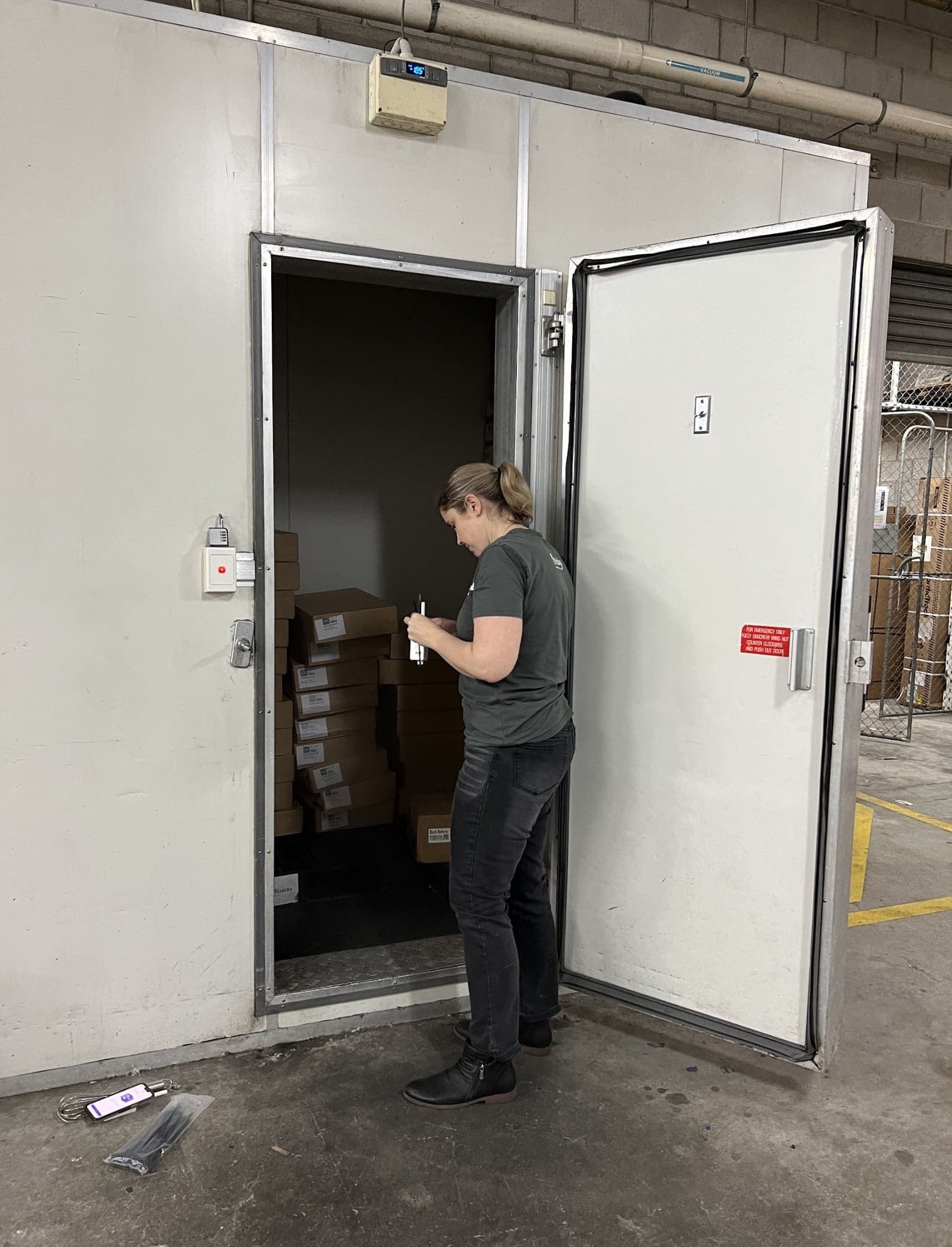
How Brooklyn Donut & Coffee Co Implements Sensors for Food Safety Standards

“SafetyCulture Sensors were really easy to implement. I was concerned it would be more complicated – especially in the coolroom fridges. Easy to set up on mobile and the implementation was self-explanatory on the app.”
Still looking for a checklist?
Search, filter, and customize 60,000+ templates across industries and use cases.