Use this total productive maintenance checklist to conduct consistent autonomous maintenance tasks and keep equipment at top performance. The checklist guides teams to catch equipment issues and document improvements at every step.
This checklist is also used for:
Maintaining lubrication, cleaning, and fastening standards
A total productive maintenance checklist is a structured guide used to evaluate the implementation of a TPM program across a site. It standardizes the assessment of equipment condition, process integrity, and worker compliance based on the approach. This ensures TPM practices are followed on the floor, preventing product defects, equipment breakdowns, and accidents.
Benefits of Using the Checklist
A total productive maintenance checklist keeps track of overall equipment effectiveness (OEE), across availability, performance, and quality. It allows plant managers to create auditable and referable records confirming that TPM measures are properly set to minimize lost productivity.
With effective TPM checklisting, the site can experience a strong OEE supported by:
Reduced unplanned downtime
Enhanced operator accountability
Faster root cause analysis
Improved consistency between shifts
What to Include in a Total Productive Maintenance Checklist?
A TPM checklist should cover equipment condition, operator standards, and team activity across every step of the autonomous maintenance program. Here's a guide to the key items to include for implementation:
Equipment cleanliness
Check main equipment surfaces for dust, dirt, oil stains, and waste
Confirm materials and tools are stored in designated positions
Inspect nuts, bolts, and moving parts for looseness, vibration, and overheating
Clean cylinders, solenoids, motors, and belts, and remove debris
Flag electrical components showing damage, overheating, or irregular noise
Lubrication checks
Clean lubricators, oil pumps, and filler caps, and confirm they are uncontaminated
Verify that oil volumes and drip rates are acceptable
Ensure lubrication points are clearly labelled and accessible
Check that the correct lubricant types and amounts are in use
Inspect lubrication pipes for blockages, damage, and proper support
Equipment surroundings
Confirm tools, instruments, and spare parts are placed in the correct locations
Verify guards, nameplates, and safety labels are properly displayed
Remove unnecessary objects from the work area
Separate defective products from good ones
Ensure aisles are clear and free of dust and debris
Contamination sources and hard-to-access areas
Document all sources of dirt, dust, and oil stains
Create an improvement plan for identified contamination sources
Upgrade guards and cleaning tools to reach hard-to-access areas
Confirm that cleaning areas are clearly allocated and assigned
Autonomous maintenance standards
Define cleaning standards for each equipment unit
Document lubrication standards with correct types, quantities, and labelled points
Verify fastenings are correctly tightened
Complete checking standards
Assess whether cleaning and lubrication levels from previous steps are maintained
General inspection records
Document findings on V-belts, chains, bearings, and shafts per inspection step
Record lubrication compliance and any deviations from standards
Note gearbox, pulley, and belt condition findings
Log pipe, hose, and pressure gauge inspection outcomes
Capture control panel, motor, and sensor inspection results
Skills training and team involvement
Create and compile one-point lessons (OPLs) with team leaders
Assess general inspection skill levels across all team members
Ensure all team members are involved in TPM activities
OEE tracking and focused improvement
Track availability, performance, and quality per shift
Compile best-of-shift results
Review OEE loss categories and assign improvement actions
Activity reporting
Record problems identified, actions taken, and carryover items
Log meeting, training, and practice sessions with participant counts
How to Use the Checklist
Plant managers and maintenance supervisors must complete these steps when conducting a TPM audit:
Fill in the basic details of the inspection for accountability. This includes the date, inspector name, the equipment or area being reviewed, and the current TPM step being assessed.
Work through each section of the checklist and evaluate equipment condition, lubrication state, surroundings, and operator compliance against the standards defined.
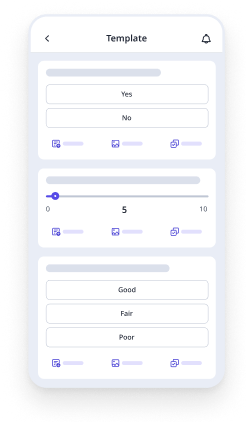
Assign a rating to each item and attach photos where equipment condition needs to be documented, particularly for contamination sources, hard-to-access areas, and general inspection findings.
Record any issues found during the inspection, including failed items, deviations from cleaning or lubrication standards, and safety concerns.
Assign corrective actions for all failed items and confirm completion.
Review OEE tracking data and log activity report details.
Provide an overall pass or fail assessment based on the step's scoring criteria and complete the checklist with a sign-off.
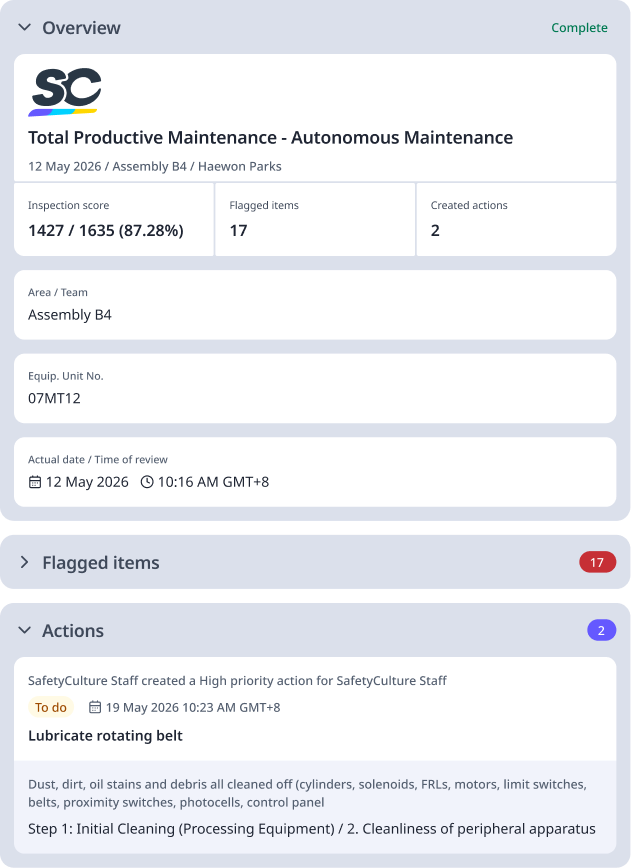
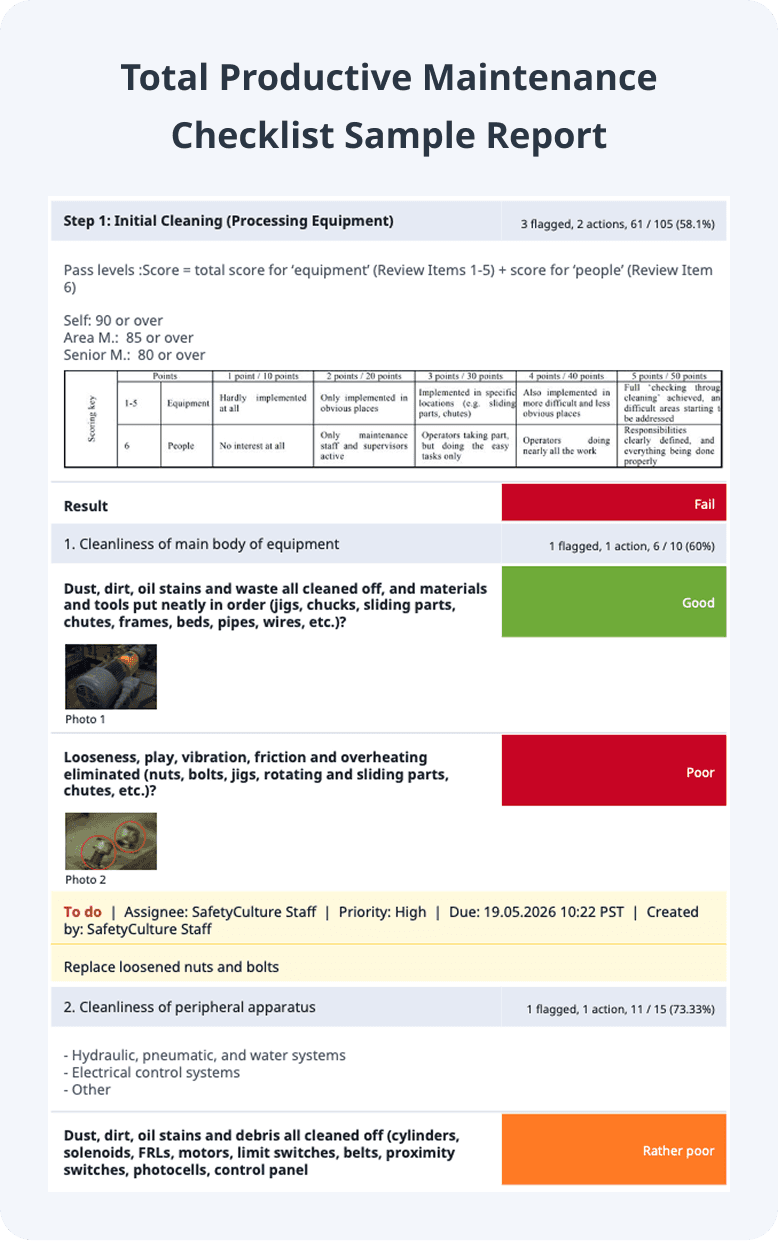
Sample Total Productive Maintenance Report
Below is an example of a filled and signed total productive maintenance checklist:
We used to spend a lot on hearing tests. Now, we can confirm we’re not exceeding the safe limits, and we could intervene early if something didn’t look right.
This TPM checklist aims to make it easier for organizations to establish pre-requisite level requirements and successfully meet TPM criteria. Use this template to create OEE baselines for equipment and ensure training and documentation for team members. It will also help teams set goals and establish processes to quickly achieve those goals and measure progress against TPM criteria.
This TPM templateis used by machine operators and quality managers to identify any of the Six Big Losses in OEE manufacturing. Use this template during daily operations to report any unplanned downtime, planned downtime, small stops, slow cycles, production defects and/or start-up defects. This TPM template can also be customized with SafetyCulture’s easy-to-use template editor to fulfill specific business needs.
Discover the best sports facility management software available today, the features that make them stand out, and why they might be the best pick for you.
Download a bathroom cleaning checklist to keep bathrooms clean and hygienic. Learn what to include, what products you need, and how to use one effectively.