Importance
A technical due diligence checklist can help investors outline and organize critical factors in analyzing whether the investment target is a good or bad one. It is often conducted alongside operational due diligence and commercial due diligence to provide a comprehensive assessment of the target company's operational and commercial health. As a risk assessment tool, it provides investors with a clear guide to the company's assets, liabilities, obligations, contracts, and other potential risks.
This checklist also protects buyers and investors from costly post-acquisition issues, providing them with accurate data to evaluate whether the asking price reflects the company's technology. It also verifies if the target company adheres to relevant regulations such as General Data Protection Regulation (GDPR), SOC 2, ISO 27001 and other relevant industry-specific frameworks.
What Should Be Included in a Technical Due Diligence Checklist?
A technical due diligence checklist should include sections across multiple coverage areas, from technological architecture to engineering team capabilities. The following are the common key components that reviewers need to assess for this checklist:
Organization and personnel
This section collects the employees and the structural aspects of a company's IT operations. This includes:
Organizational chart with quantity, type and location
List of employees with name, responsibilities, start date and compensation
Help desk approach and change management processes
Key support issues and challenges
Infrastructure and hardware
This component examines the organization's physical technology assets and hardware. Some of these include checking the:
CPUs and their location, including their status and identification of issues
Database management systems and network settings (LAN/WAN)
Telecommunication and connectivity setups
Stability, life expectancy and replacement or upgrades for hardware
Application and software
This field evaluates the software and applications that are running in the organization. It includes:
Operating systems and application development software
Database management systems
Security protocols and life expectancy for the technologies
Applications are in use, electronic interfaces and special processes
Release management and report writing capabilities
Projects and development activities
This section outlines the company's ongoing and planned IT initiatives. Inspectors should check the following:
Large-scale projects and mid-range enhancements
Software support backlogs
New technology research and development activities
Client requirements and consulting or contractor needs
Budget, capital, and contracts
This component connects IT activities to financial obligations and standards. It includes:
Budget allocation for personnel, software, hardware, supplies and data communication
Capital budget for immediate needs and anticipated needs
Ongoing and active contracts for licenses, maintenance and agreements
How to Use this Checklist
To complete an effective technical due diligence review, follow these steps to verify accurate documentation of the target company’s technical health:
Provide the necessary details on the title page. This includes the inspector, the date and time of the review and the name and location of the company being assessed.
Gather and document the necessary materials, including organizational charts, employee records, hardware and software checks.
Document the company’s ongoing and planned projects for IT, including the budget and capital about these projects.
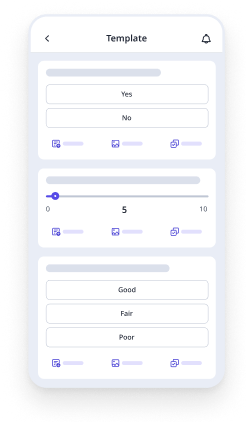
Attach media annotations, such as photos or notes, to support observed findings and highlight sections that require follow-up or action.
Provide corrective actions, if necessary, to address flagged items and identified risks.
Complete the checklist with a sign-off.
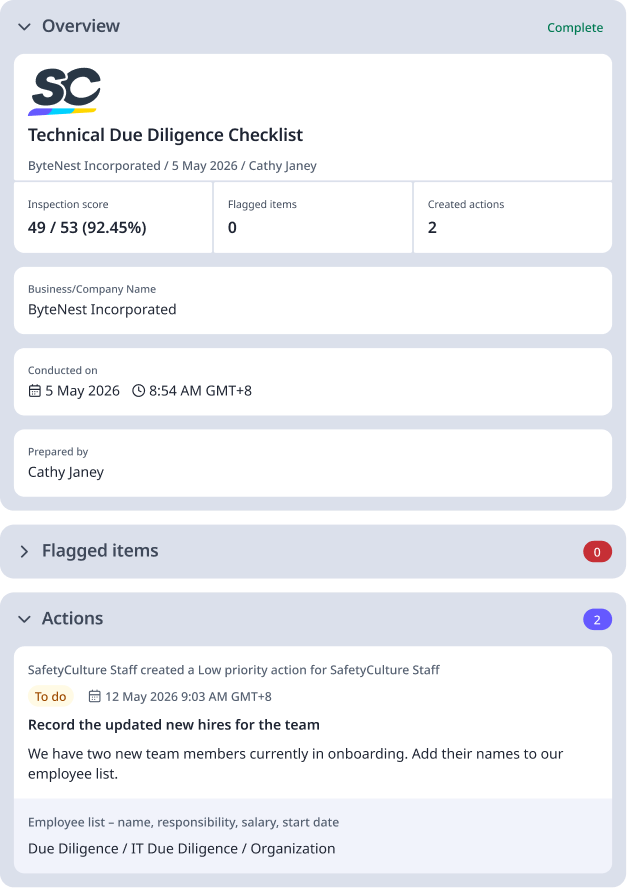
Sample Technical Due Diligence Report
For reference, here is a completed technical due diligence report:
Preview Technical Due Diligence Sample PDF Report