Use this digital checklist to conduct routine inspections of outdoor play areas and inspect for safety hazards to prevent accidents and injuries. This playground safety checklist is designed to monitor maintenance through standardized equipment checks to assess structural stability and provide corrective actions and repairs as needed.
This checklist can also be used to:
Document the condition of play equipment, including swings, slides, climbing structures and seesaws
Monitor the required depth and coverage of fall zones and protective surfacing standards
Evaluate the structural integrity of the play area
Identify any potential environmental hazards in the surrounding environment.
A playground safety checklist is a structured document that outlines essential inspection tasks, reminders, and other work for facility maintenance personnel to minimize, if not eliminate, safety hazards. It is used by facility managers, maintenance personnel, and safety officers to address risks and identify malfunctions.
Importance
The American Academy of Pediatrics states that inadequate supervision caused nearly half of playground-related injuries, making a playground safety checklist essential for preventing these incidents.This checklist also helps facilitate regular inspections of play areas and records safety hazards, allowing them to be addressed before accidents occur. Here are some of the key benefits of using this checklist:
Prevents injuries and accidents: Regular inspections help personnel identify equipment damage, sharp edges, broken parts, and trip hazards early, preventing them from accidents like falls, cuts and sprains.
Adheres to regulatory compliance: Using this checklist helps organizations demonstrate compliance with CPSC and ASTM International guidelines, especially ASTM F1487, which establishes the design and construction requirements for public playground equipment.
Boosts responsibility and accountability: This checklist records the signatures of the personnel who conducted the inspection. It serves as evidence for audits and protects them from liability.
Simplifies maintenance workflows: Marking damaged equipment with photographic documentation helps inspectors identify problems and prioritize repairs, minimizing delays.
Safeguards organizations from potential liability: With properly and completely logged inspections, organizations can protect themselves from disputes or legal claims from playground-related injuries.
Key Components of a Playground Safety Checklist
An effective playground safety checklist addresses all critical areas of a play environment, from equipment condition to its surrounding surfaces and site access. Here are some frequently included key components:
Play equipment condition
It assesses the physical condition of all play structures and equipment to identify any damage that could lead to accidents. These include:
Cracks, bends, warps, rusting or breakage of any components of play equipment
Splintering wood from wooden slides
Heat from metal slides when exposed to direct sunlight
Rust and the secure attachment of the chain swings.
Hardware and structural integrity
It reviews and monitors the stability and functionality of fasteners, supports and moving parts of play equipment. Some of these are:
Loose nuts, bolts, and caps or protruding bolts with sharp edges and missing caps
Broken support and anchors of play structures
Proper lubrication of moving parts
Protruding nails on play equipment, picnic tables and wooden fences
Surface and environmental hazards
It evaluates the ground and surrounding areas for hazards related to slips, trips, or exposure to dangerous materials. Some of the inspections include:
Tripping hazards such as footings, roots, rocks and etc
Slipping hazards such as sands or debris on walkways or pavement
Animal feces, poisonous plants and mushrooms on the sand and play area
Poor drainage areas and containers of standing water
Sharp edges and surface wear
This prevents children from coming into contact with surfaces or materials that could cause injury. It includes:
Sharp edges and points on toys, fences and play equipment
Chipping or peeling paint on toys, equipment and building surfaces
Pinching hazard from cracked toys
Boundary control and water
Fences, gates, and water areas must be inspected to prevent unauthorized access and reduce drowning-related emergencies. Some of these checks are:
Self-latching devices on gates and pool fences
Thorny plants or bushes on fences
Vandalism, such as broken glass or trash, within the surrounding areas
Standing water containers that could pose a drowning hazard
How to Use this Checklist
Follow these steps to create an effective playground safety checklist to prevent accidents and prioritize safety of the children:
Provide the necessary details on the title page. This usually includes the inspector's name, the date, and the playground’s location.
Inspect the physical condition of play equipment for any cracks, warping, rust, or splintered wood. Additionally, assess for structural damage, including sharp edges or loose components.
Examine the surrounding play area for environmental hazards such as tripping risks, slipping surfaces, animal feces and standing water
Check boundary controls, including pool fences and self-latching devices.
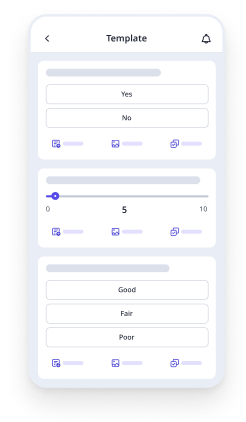
Attach any media annotations and notes to detail playground safety issues and corrective actions.
Complete the checklist with a sign-off.
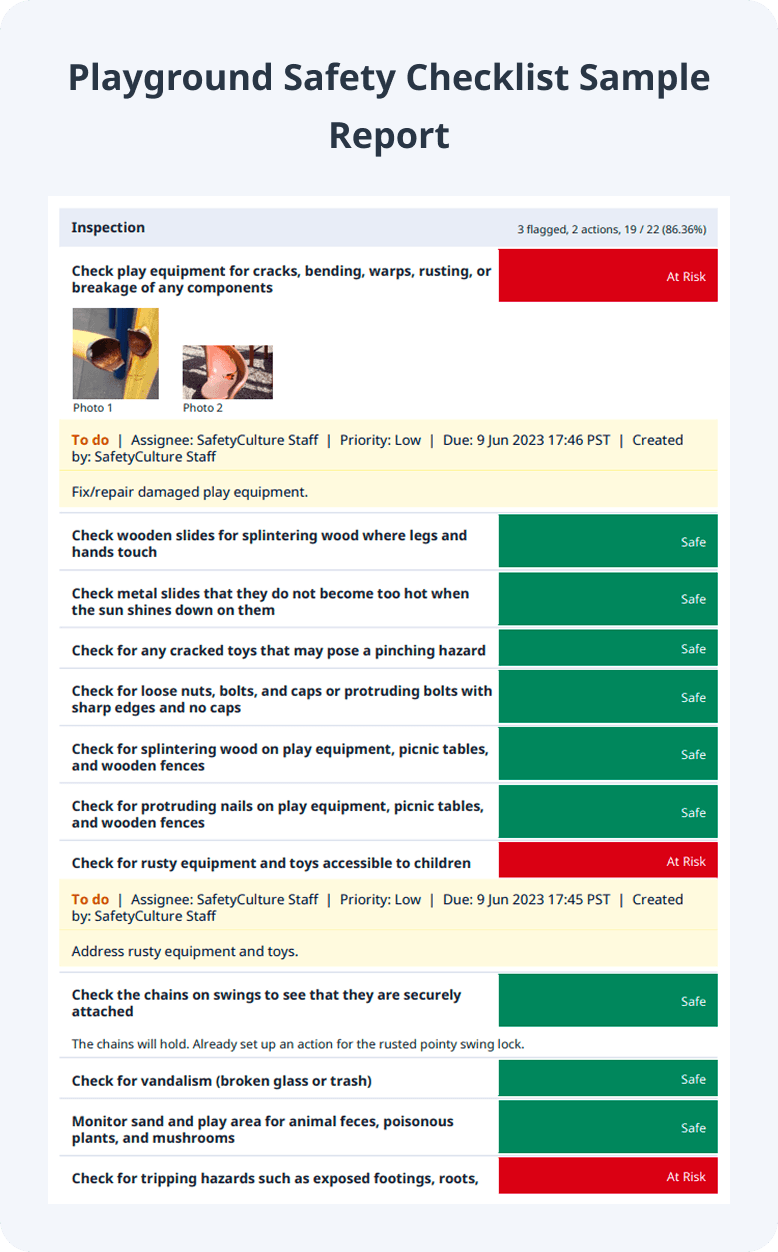
Sample Playground Safety Report
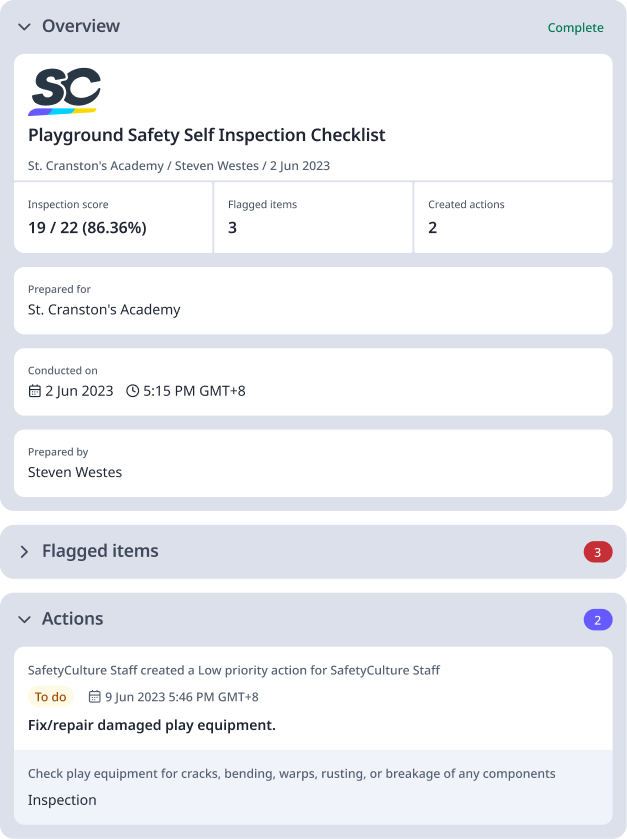
For reference, here is a completed playground safety report:
How Hamwic Education Trust Evaluates Playground Safety
“For the staff doing checks, it’s super handy and easy-to-use. They can simply pick it up and know what they have to do. So whether it’s checking the emergency lights, flushing the water pipes, checking the playground equipment or the power sockets: no detail gets missed. When you’re operating in a school environment where things inevitably get broken, misplaced, moved – that level of detail is crucial to keep staff and students safe.”
This Daycare Incident Report template can be used to gather necessary facts, photo evidence, and general information about any possible incident that may occur in the daycare. Use SafetyCulture to instantly generate reports and send copies to parents. Feel free to modify this daycare form template to suit your daycare needs.
A school risk assessment template is used to identify hazards in the school environment and their associated risks. It is used by the school management team to assess existing control measures if further actions are needed to eliminate the hazard. Use the following points below to utilize this form:
Identify any hazards present within school premises.
List down affected people (e.g., students, teachers, administrators, and other staff ).
Evaluate how these people might be harmed.
Determine the existing procedures and evaluate if it follows safe working practices.
Assess whether the existing controls are enough or recommend further action needs.
Assign action needs to appropriate personnel.
Sign off with a digital signature and timestamp to validate the assessment.