Why Use a Fire Extinguisher Checklist?
Monthly fire extinguisher inspections keep your team safe and your site audit-ready. A checklist helps you catch small problems — a cracked hose, a low gauge — before they become the reason an extinguisher fails when you need it most.
You're required to visually inspect portable fire extinguishers every month under OSHA's fire protection standards and NFPA 10, the standard that governs extinguisher inspection frequency. Skipping a month puts your fire safety program, and your team, at risk.
Fire extinguishers must be inspected monthly under NFPA 10 and OSHA 29 CFR 1910.157.
How to do Monthly Fire Extinguisher Inspections using a Checklist
Check these items every month to keep your extinguishers ready for an emergency and your records audit-ready:
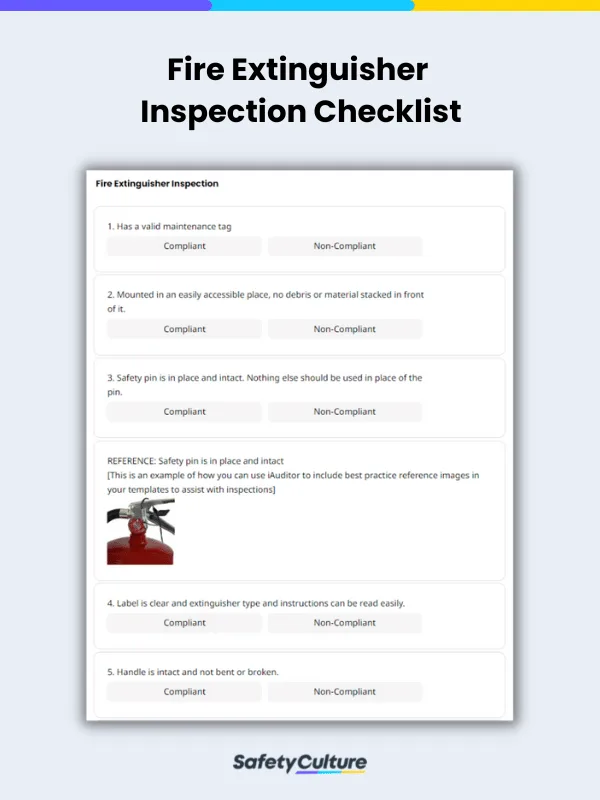
Make sure that the inspection tag is valid.
Confirm that the fire extinguisher is mounted in an easily accessible place with no debris or material stacked in front of it.
Ensure that the safety pin is intact and in place, and nothing else is used in place of the pin.
Verify that the label, extinguisher type, and instructions are clear and easy to read.
Check that the handle is intact, not bent or broken.
Inspect the pressure gauge to ensure it is in the green zone and not damaged or indicating recharge.
Examine the discharge hose/nozzle to ensure it is in good condition, not clogged, cracked, or broken.
Confirm that it is full by turning it upside down at least three times. This also prevents the contents from compacting.
Make sure that the fire extinguisher is located in its designated place by checking that the signs clearly mark its position.
Dust and wipe down the extinguisher to keep it clean.
Indicate the overall condition of the extinguisher as either pass or fail.
Once inspection is complete, sign and enter the date of the inspection in the annual maintenance tag.
What to Include in a Fire Extinguisher Inspection Checklist
A fire extinguisher inspection checklist helps you conduct and record your monthly and yearly checks without missing anything. Pair it with fire safety tips and a fire prevention week refresher to keep your team fire-ready year-round.
Here's what a checklist typically contains:
Information about the fire extinguisher
Record the extinguisher's exact location, serial number, manufacture and expiry date, type, size, and rating.
Details of the visual inspection
Check that the maintenance tag is signed and dated, the extinguisher is accessible, the safety pin is intact, and the handle isn't bent or broken. Confirm the label is clear, the pressure gauge reads green, the hoses are in good condition, and the extinguisher is full.
Confirmation of inspection
Sign and date the checklist to confirm you completed the inspection, and sign the extinguisher's inspection tag if it has one. This creates a clear record for your next safety audit.
Prefer Digital Over Paper?
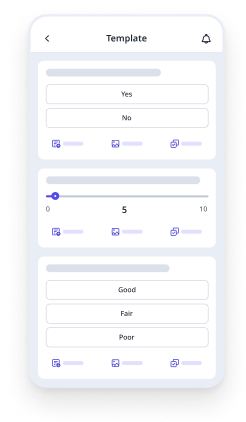
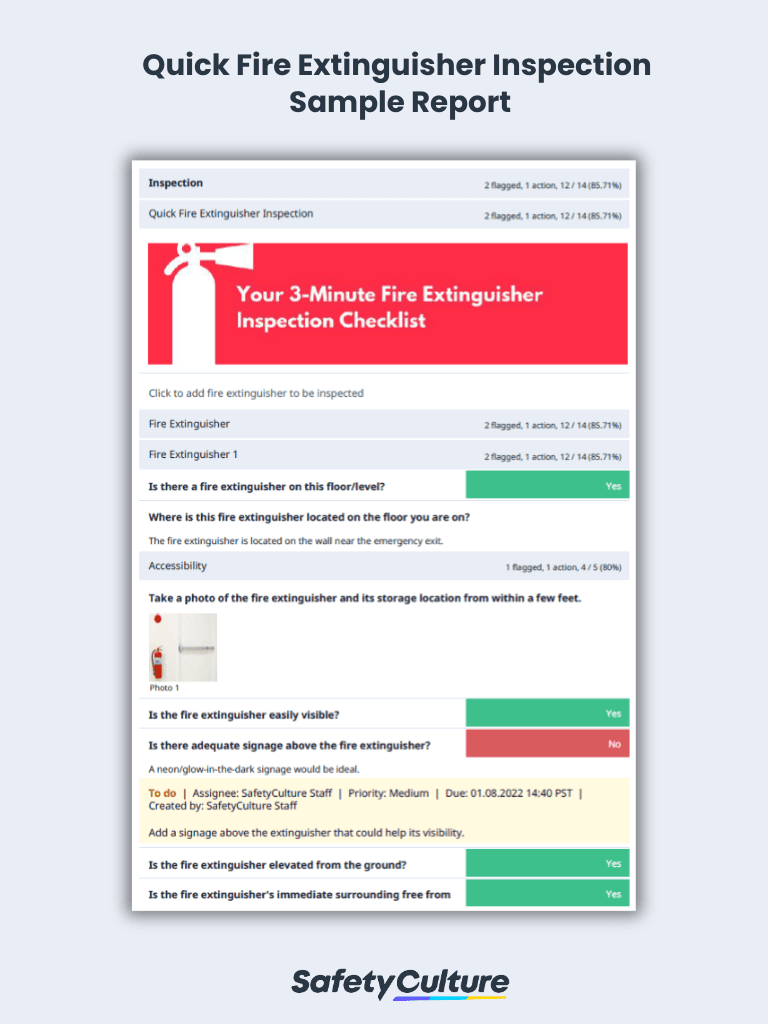
Use SafetyCulture to generate inspection reports automatically — capture photos on your phone, assign corrective actions on the spot, and skip the paperwork entirely. Still want a reference? Here's what a completed monthly fire extinguisher inspection looks like, plus a PDF sample you can download.
Fire Extinguisher Inspection Sample PDF Report