Published 12 Jun 2026
Article by
8 min read
What is a Restaurant Checklist?
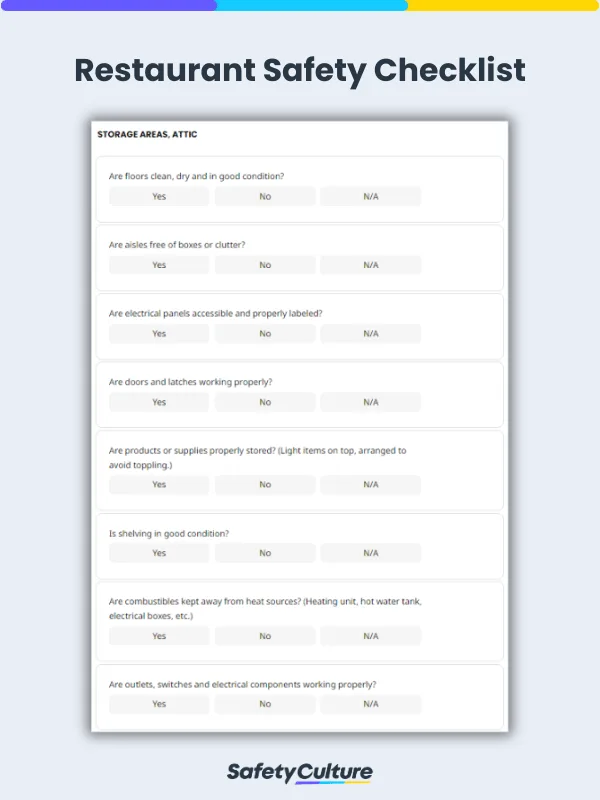
A restaurant checklist is an evaluation tool used by restaurant managers to identify and resolve issues that may impact the business quickly. This tool includes all restaurant activities and procedures and ensures compliance. Restaurant checklists can help improve daily operations, employee training, store cleanliness, food safety, and customer satisfaction standards, especially because working in the fast-paced world of the food service industry can be challenging.
Stay on top of everything that is happening in your restaurant by utilizing restaurant checklist templates across topics including restaurant procedures, kitchen cleaning, food hygiene inspections, management site visits, customer satisfaction surveys, and more.
Essential Restaurant Checklists
Restaurant checklists include different focuses in day-to-day operations. Here are some of the most common checklists used by restaurant managers :
Restaurant Opening Checklist
This checklist can be used daily by the store manager or shift supervisor before the commencement of operations. Opening checklists usually include the following:
Front of house (FOH) opening tasks
FOH tasks focus on making the dining area guest-ready:
Set and inspect all tables, chairs, and place settings to the correct standard
Wipe down and sanitize tabletops, menus, and high-contact surfaces
Check that lighting fixtures, sound systems, and electrical components are working
Walk the floor, restrooms, and entrance for any cleanliness issues before doors open
Back of house (BOH) opening tasks
BOH opening centers on food safety and equipment readiness. Refrigerators should be at or below 40°F (4°C) and freezers at 0°F (-18°C) before service starts. Core tasks:
Verify and log all refrigeration and freezer temperatures
Confirm food storage areas are labeled and FIFO (first in, first out) is followed
Check prep surfaces and equipment are clean, sanitized, and functional
Inspect cooking equipment — fryers, ovens, grills — before the first order
Manager opening duties
Opening managers are accountable for sign-off across both areas. That means checking FOH and BOH are ready, briefing the team on reservations or specials, reviewing any outstanding issues from the previous shift, and confirming cash drawers and POS systems are operational.
Restaurant Closing Checklist
Before closing the restaurant doors, it is important to quickly inspect all items and create a report of any issues you had for the day. This checklist covers important things to do before leaving the premises.
Front of house (FOH) closing tasks
Clear and reset all tables; remove linens for washing
Sanitize tabletops, chairs, and menus
Clean and restock restrooms; check locks on all doors
Log any breakages or lost-and-found items before clearing the floor
Back of house (BOH) closing tasks
Cover, store, and label all food properly, then log refrigerator temperatures before close
Clean and sanitize all prep surfaces, cutting boards, and utensils
Degrease all cooking equipment — grills, fryers, and flat tops
Remove all garbage and replace bin liners
Manager closing duties
Managers closing the shift confirm all equipment is off, all doors and windows are locked, the alarm is set, and a written handover report of any incidents or maintenance issues is logged for the incoming team. That handover record is one of the most overlooked — and most useful — parts of the closing process.
Restaurant Cleaning Checklist
This checklist helps staff to make sure your restaurant is clean, sanitized, and in order.
Daily cleaning tasks
Daily cleaning covers every surface and piece of equipment that comes into contact with food or people during the shift. This includes sanitizing all prep surfaces, cleaning the pass and expo area, wiping down high-contact points (handles, switches, POS terminals), mopping floors, and cleaning restrooms before and after service.
Restaurant kitchen deep cleaning checklist
Deep cleaning covers what the daily routine can't reach—behind and under equipment, inside fridges and fryers, under shelving, and inside extraction systems.
Most restaurants schedule deep cleaning weekly or monthly depending on the item. NFPA 96 sets requirements for how often hood and ventilation systems must be cleaned: typically quarterly for high-volume cooking, annually for lower volumes. Skipping this isn't just an operational issue; it's a fire safety risk.
Cleaning compliance standards
HACCP principles require documented sanitation records for food-handling environments. Having the cleaning records — not just doing the cleaning — is what demonstrates compliance when an inspector arrives.
Restaurant Food Safety Checklist
This checklist covers personal hygiene across staff, food preparation methods, refrigerator and food storage standards, utensils and work surfaces, dishwashing, garbage storage, and pest control. With this form, you can easily document food safety practices to comply with regulatory bodies.
Daily manager checklist
Managers use their daily checklist to verify the big picture — not just whether the floor is clean, but whether the team is deployed correctly, inventory levels are adequate, and compliance requirements have been met. Key items: reviewing reservations and staffing levels, checking food delivery logs against purchase orders, confirming allergen information is current, and signing off on opening and mid-shift inspection reports.
Food safety and hygiene checks
Food hygiene checks should run continuously throughout service, not just at opening. Temperature logs for hot and cold holding, handwashing compliance, and cross-contamination controls are all daily priorities.
The CDC estimates that 48 million people get sick from foodborne illness each year. Restaurant operators are one of the most significant control points in that chain, and a missed check is how exposure happens.
Restaurant SOP
This checklist is a simplified Standard Operating Procedure checklist for restaurant staff and managers. This helps ensure that the overall day-to-day operations are guided with proper practices for cleanliness, food safety, and compliance.
How do I Make a Checklist for a Restaurant?
Using the right restaurant checklist can greatly improve the overall dining experience of your customers. Follow these steps on how you can make a checklist that is ideal for your restaurant:
There are plenty of checklists to choose from so begin by knowing what the checklist is going to be used for.
Once you have determined what the checklist is for, use a reliable restaurant checklist template that is readily available and can be edited to fit the unique needs of your restaurant.
Make sure that your checklist items are easy to read and understand.
Include photos as references to help the person doing the checks better identify what to look for.
Test the completeness of your checklist by checking the restaurant using it. Involve the person who will be doing the checks as this will help make sure everything is covered. This activity can also help reinforce accountability.
Use the checklist and see how the checks impacted the operation of the restaurant. Revise the checklist as needed before providing the person in charge of doing the checks with a copy of the checklist.
Revisit the checklist to make sure that it remains up-to-date especially when there are changes in the restaurant.
Restaurant Checklist PDF Report
Take a look at this sample restaurant checklist report to have a better idea of what it can look like. This is a result of using this restaurant opening checklist .
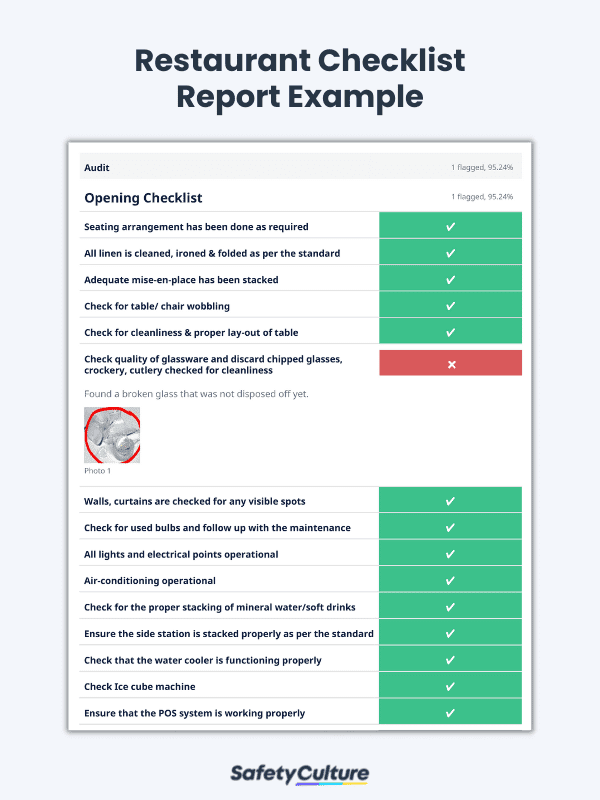
Preview Restaurant Checklist PDF Report
Benefits of Using a Digital Restaurant Checklist
Typical restaurant inspections are done manually with pen and paper checklists. Paper inspections, however, have multiple disadvantages that can be avoided by switching to a good digital checklist.
Here are the top 3 benefits of using a digital restaurant operation checklist:
Save time, money, and space
Inspections are much faster through a digital restaurant checklist since they can easily be customized for efficiency; whereas paper restaurant checklists are rigid and require numerous steps to update, communicate, and roll out to staff. Digital restaurant checklists also help restaurants save money by eliminating paper printing. Paper inspection checklists also take up a lot of space for filing and storage; while digital restaurant checklist reports are stored and automatically sorted in safe and secure cloud storage for easy access.
Inspection reporting is easier than ever
After an inspection, restaurant auditors have to compile their findings to write a comprehensive report. Using a digital restaurant operation checklist makes auditing more efficient by combining inspection and reporting into one task; automatically generating a comprehensive report after an inspection is completed. Revisions and editing are also easier with digital reports, compared to messy and at times illegible on paper reports.
Limitless opportunities for collaboration
Collaboration is limited with traditional paper reports since information is often only shared with an inspector’s direct supervisor or manager. A good digital restaurant checklist operates through a shared platform that encourages collaboration through in-app communication; making assignment allocation and tracking faster and easier.
Still looking for a checklist?
Search, filter, and customize 60,000+ templates across industries and use cases.