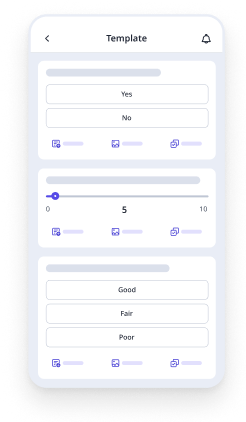
Importance
A compliance risk assessment template provides a consistent and organized framework for addressing regulatory risks within an organization. Using this checklist provides several key benefits:
Identifies compliance exposure early: Using this template enables organizations to proactively identify and address gaps in their regulatory obligations.
Prioritizes resources effectively: Evaluating risks by likelihood and impact enables the organization to allocate limited resources to areas with the highest risk exposure.
Adheres to international standards: ISO 37301:2021, an international standard for compliance management systems, requires regular compliance risk assessments, particularly in response to regulatory environmental changes.
Supports audit documentation: A comprehensive record of an organization’s compliance activities, control evaluations, and mitigation plans helps verify due diligence during inspections or audits.
Reduces enforcement risks: Regular updates from compliance risk assessments can reduce regulatory enforcement severity in the event of a breach.
What Should Be Included in a Compliance Risk Assessment Template?
A comprehensive compliance risk assessment template should include information needed to identify, score and mitigate compliance risks. Here are some of the frequently included components:
Assessment details: It includes the date and time of the assessment, the name of the person who conducted the assessment, the location and the business unit or department under review.
Regulatory environmental analysis: This section outlines the regulatory requirements pertinent to the organization, including Occupational Safety and Health Administration (OSHA) standards and international standards such as ISO 37301:2021. Supporting documents or links to relevant regulatory guidelines and data sheets can be included in this section.
Compliance program evaluation: It verifies whether the compliance training program is currently in place and identifies any gaps or weaknesses. It is typically rated on a scale of one to five for effectiveness.
Risk identification: This part records the non-compliance incidents within the six months, including a description of the incident, its date and any supporting evidence. It also includes the date of the compliance manual updates and the number of audits conducted.
Risk mitigation actions: This component develops an action plan for departments or units with compliance risks and assigns personnel to implement the mitigation plan.
How to Use this Checklist
To conduct a compliance risk assessment template in identifying regulatory obligations and evaluates effective of existing compliance programs, follow these steps:
Provide the necessary details on the title page. This includes the date and time of the assessment conducted, the name of the assessor, the location being assessed, and the business unit or department under review.
Record the regulatory environmental analysis by examining the regulatory requirements applicable to the organization. Attach any supporting and relevant documents if applicable.
Assess the compliance program by confirming the training program is implemented, documenting any identified gaps, and recording initiatives to address them.
Rate each compliance program on a scale of 1 to 5.
Evaluate risk mitigation strategies for high-priority compliance risks and assign them to relevant personnel.
Complete the checklist with a sign-off.
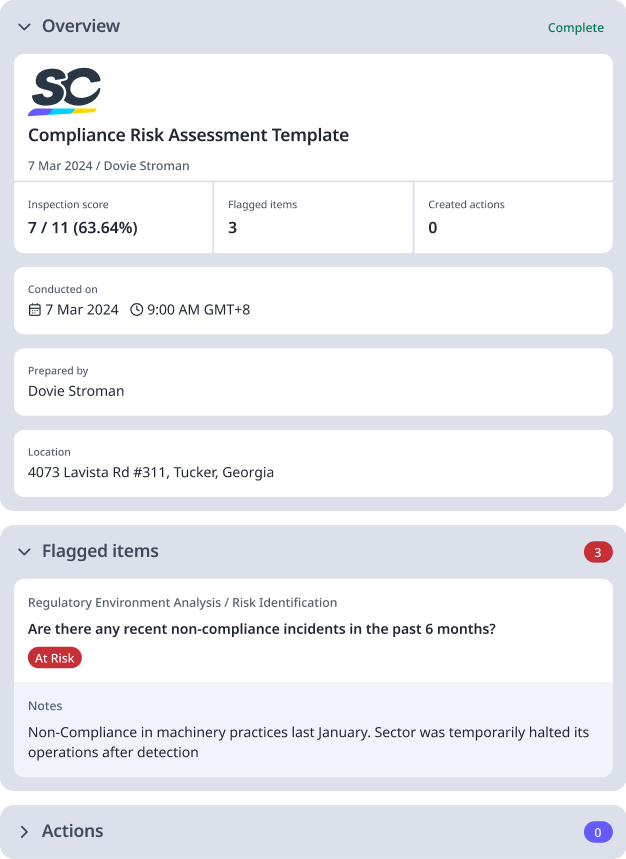
Sample Compliance Risk Assessment Report
For reference, here is a completed compliance risk assessment report:
Preview Compliance Risk Assessment Sample PDF Report