
Best Practices
Modernizing the middle manager experience
Share article
Middle management is becoming a role people avoid due to high stress, invisible work, and low perceived control
The root cause of manager burnout isn’t capability, but broken systems, manual processes, and lack of visibility
Better visibility and streamlined workflows turn management from a burden into a role people actually want.
For the longest time, management was a prize. It meant trust, progress, and influence.
Today, it feels different.
Across frontline industries, management is increasingly viewed as a role to avoid, not aspire to. A stress trap as opposed to a step up. And there's data to back it up.
According to SafetyCulture’s Feedback from the Field report, 70% of middle managers say their role is the most challenging in the organization, and two-thirds would return to an individual contributor role if pay weren’t a factor. To add, more than half say younger workers don’t want to take on management responsibility at all.
This isn’t just a leadership pipeline issue. It’s an operational risk.
Middle managers sit at the center of operations. They’re the ones turning strategy to action by keeping standards consistent, coaching teams, and catching issues before they escalate.
But most of their work is invisible.
Reports from the Feedback from the Field show that this role is reaching a breaking point, with 71% of middle managers saying their frontline teams don’t see or understand the hidden workload they carry . Not many see the follow-ups, reports, and problem-solving behind the scenes. The coordination needed day-to-day. And when managers feel stretched thin, standards slip and risks grow.
Hence, the appeal of the role has slowly started to decline. Management now looks like all responsibility and very little control.
People management, in particular, takes a huge toll. 73% of managers say managing people is emotionally draining. This number climbs especially in industries with high turnover like retail (78%) and hospitality (76%).
Onboarding, coaching, conflict resolutions—all of it matters, but very little of it is visible… or recognized.
So when younger workers look at management, they don’t see influence or growth. They see long days, emotional strain, constant interruptions, and accountability for things they can’t fully control.
Choosing not to step up isn’t laziness. It’s self-preservation.
It’s tempting to frame this as a resilience issue. Or a leadership capability gap. But our report tells a different story.
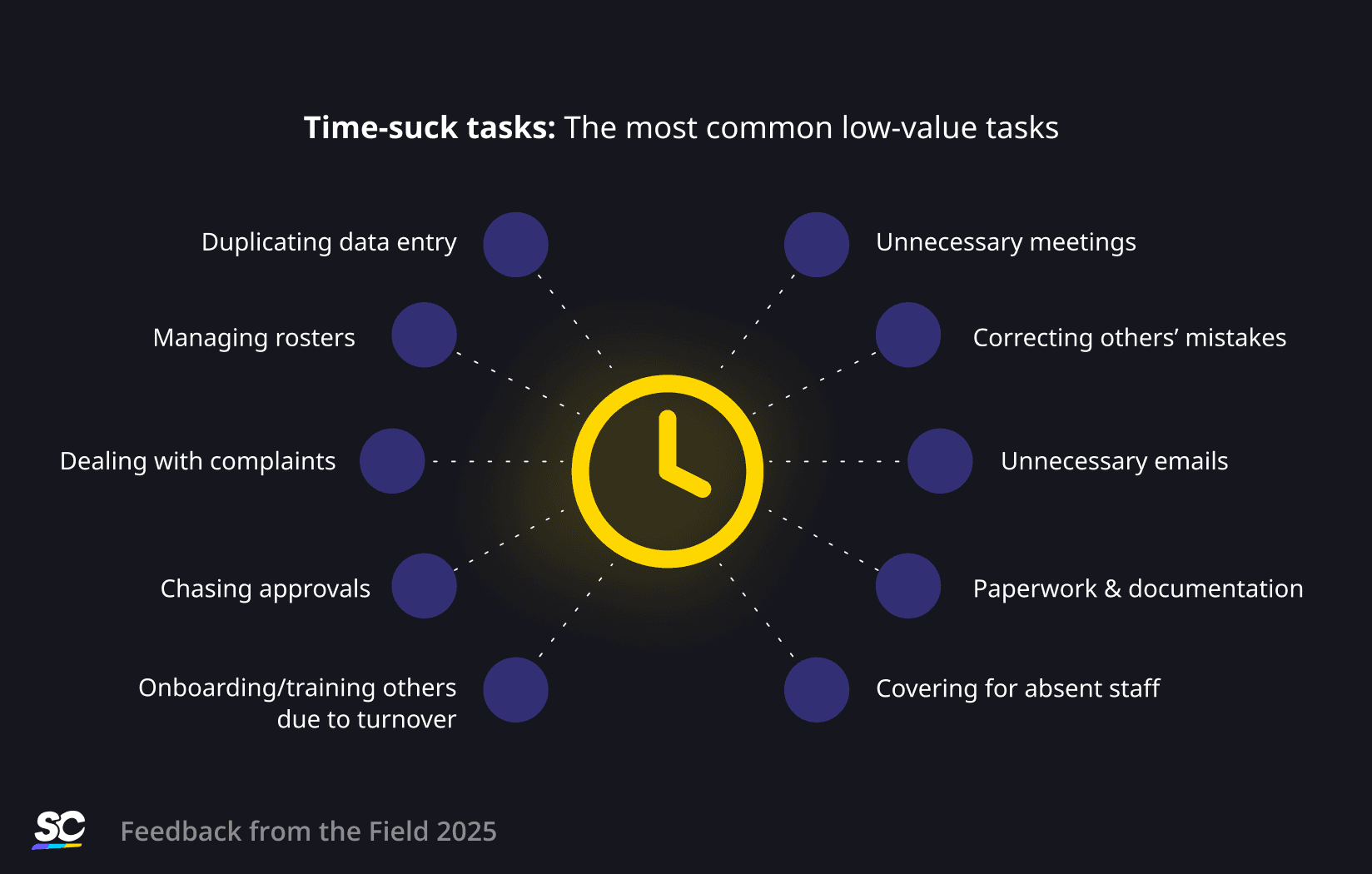
What’s breaking middle management isn’t commitment or capability. It’s manual work, unclear processes, disconnected systems, and constant firefighting.
Middle managers spend hours chasing updates, reconciling spreadsheets, and following up on tasks that should be visible by default. The answer isn’t asking them to “be more resilient”. It’s fixing the environment they’re working in. When systems create friction, any manager or leader can burn out. As the report puts it: fix the system, not the symptoms.
Cultivate a culture of excellence with our digital solutions that enhance efficiency, agility, and continuous improvement across all operations.
When managers have clarity and control, performance improves across the board. Modernizing the middle manager experience doesn’t mean lowering standards or removing accountability. It means removing friction. It’s about simplicity, mobility, and speed.
Modern management looks like:
Less chasing, more visibility
Fewer manual checks, more built-in consistency
Earlier signals, fewer emergencies
It’s not about adding more tools and administrative work. It’s about making existing work simpler and easier to see.
When middle managers have simple and connected systems that allow visibility, their role shifts. It goes from reactive to proactive. Administrative to strategic.
That’s when real improvement starts.
When work is visible and structured, managers can lead to the best of their abilities. Our Feedback from the Field lays out what this can look like on the ground:
Digital audits and issue tracking expose where work gets stuck and how often managers are filling the gaps. This visibility matters for resourcing, prioritization, and recognition for work that usually goes unseen.
Standardized workflows cut down follow-ups. It gives middle managers time back to:
Coach their teams
Improve performance
Focus on ensuring and maintaining quality
Real-time visibility and reporting helps managers see patterns early before quality drops, incidents rise, or teams burn out. It also enables middle managers to act as early as possible.
When teams can raise issues easily, suggest improvements clearly, and see actions taken instantly, management becomes collaborative and stops being a burden. Middle management stops being carried alone. It becomes a structured way of working.
This is where connected operational platforms quietly make a difference. Not by replacing managers, but by amplifying their impact and reducing unnecessary load on their shoulders.
If you want your organization to close the leadership gap, relying on your middle managers’ personal sacrifices alone won’t work. The current trajectory leads to churn and growing operational risk.
Modernizing the manager experiences changes the trajectory of this story, one where high efforts lead to improvement, not just survival. It creates an environment where:
Hard work results in progress
Accountability is matched with visibility
Leadership feels achievable, not overwhelming
Middle management doesn’t need a rebrand, it just needs better systems. When the system works, middle management becomes something people want to step into—and stay in.
Important notice
The information contained in this article is general in nature and you should consider whether the information is appropriate to your specific needs. Legal and other matters referred to in this article are based on our interpretation of laws existing at the time and should not be relied on in place of professional advice. We are not responsible for the content of any site owned by a third party that may be linked to this article. SafetyCulture disclaims all liability (except for any liability which by law cannot be excluded) for any error, inaccuracy, or omission from the information contained in this article, any site linked to this article, and any loss or damage suffered by any person directly or indirectly through relying on this information.


