A Guide to Ensuring Longshoreman Safety On Docks
Discover the importance of longshoreman safety and the practical measures that help ensure workers stay protected on shore and in the water.
Discover the importance of longshoreman safety and the practical measures that help ensure workers stay protected on shore and in the water.
Published 28 Apr 2026
Article by
4 min read
Longshoremen operate in one of the most brutal environments in industrial labor, mostly in ports, docks, ships and cargo terminals. Longshoreman safety refers to the regulations, practices and safety measures made to keep dockworkers safe while they handle cargo at ports, including loading and unloading in such harsh conditions.
Longshore work is one of the most physically demanding and high-risk occupations in the maritime industry, hence why longshoreman safety is crucial. Longshoring involves what can be life-threatening hazards like working with heavy machinery, heights, and deep waters. Without rigorous safety measures in place, the risk of injuries is heightened, especially when longshoremen are working alone.
Programs maintaining longshoreman safety ensure smooth port and maritime operations. Ports and cargo terminals are an essential part of the global supply chain, and without longshoreman safety, accidents can happen that may lead to container terminals getting shut down, vessel departures getting delayed, as well as maritime logistics getting disrupted. The safety of longshoremen is essential because the reliability and efficiency of the entire maritime transportation system depends on them.
In the US, longshoreman safety is shaped by a variety of key regulations from the Occupational Safety and Health Administration (OSHA). All these guidelines work together to help organizations ensure everyone on the dock and aboard any vessel under them can do their jobs securely and safely. Some of these regulations include the following:
Being one of OSHA’s most port-specific rule sets, this guideline addresses the hazards unique to shore-side cargo operations. Included in this arepiers, docks, wharves, container yards, and adjacent storage orrepair areas. It mandates inspectors to conduct timely inspections and maintenance on derricks, Rubber-Tyred Gantries (RTGs), forklifts, yard hostlers, and any other equipment that will be used on the dock or cargo ship to ascertain safe operations.
This OSHA regulation focuses on the loading, unloading, and movement of on-vessel longshoring operations specifically. It encompasses lashing and unlashing, entering cargo holds, and working around ship machinery and moving cargo loads. In relation to this, CFR 1018 dictates the safe use of the ship’s gears, mandates inspections and certifications of ship’s cranes, booms, winches, and rigging.
Ensure visibility over lone workers and manage their quality and safety with our digital solutions, built for and trusted by lone workers and leaders globally.
As stated, longshore work is an immensely physically demanding job that requires the utmost attention to execute. While longshoremen often work together in teams, they may also be required to work alone, further exposing them to other risks.
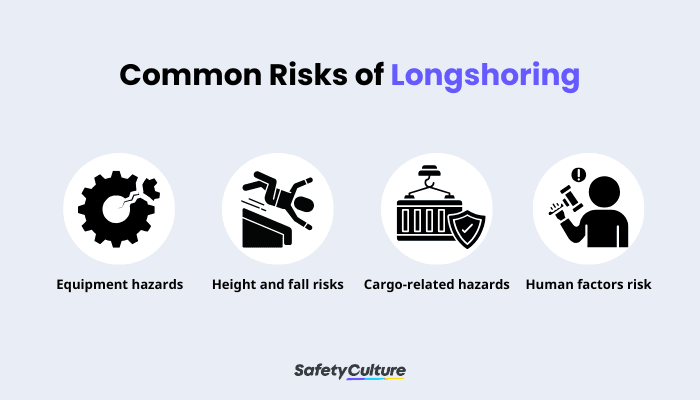
With that said, below are the most common risks longshoremen might face while on the job:
Equipment and machinery hazards: Longshoremen are likely to face equipment-related hazards like crane failures, struck-by incidents from vehicles, and caught-between risks from moving cargo to prevent accidents in busy port environments.
Height and fall risks: As they work on and off ships, longshoremen are highly likely to experience fall-related injuries from ship decks or containers, slips and trips on wet or oily surfaces, and reduced visibility from poor lighting during night operations.
Cargo-related hazards: Longshoremen regularly carry heavy containers on and off ships, making them likely to encounter cargo-related hazards such as unstable or shifting loads, rolling materials like logs or pipes, and stacked containers that may move unexpectedly.
Human factors and operational risk: The maritime industry is an extremely physically taxing sector, making longshoremen highly likely to experience worker fatigue, which can then disrupt communication between ship and terminal crews.
In high-risk longshore operations, it's important to empower teams with solutions that can help them spot hazards early, standardize safety checks, and protect every worker on the dock, whether alone or not. Ideally, teams should use digital tools that are accessible by all, as these can better connect longshoremen with other workers more effectively.
Some tools to consider are:
Lone worker solutions that are accessible on mobile devices, so longshoremen can easily contact supervisors and other team members in times of emergencies
Mobile-ready SOS alarms to alert local authorities of incidents at ports for immediate assistance
Digital safety and pre-shift inspection checklists to ensure consistent and safe operations while on the job
Real-time incident reporting to help longshoremen capture incidents, near misses, or unsafe conditions on the go, and create corrective actions when possible
SafetyCulture is a mobile-first operations platform adopted across the manufacturing, mining, construction, retail, and hospitality industries. It is designed to equip leaders and working teams with the knowledge and tools to do their best work—to the safest and highest standard.
Stay connected with your team and manage lone worker risks through location sharing and discreet panic alerts that can escalate to emergency services. Foster a culture of safety and transparency by enabling constant communication with lone workers, allowing them to perform tasks with configurable durations and check-ins.
✓ Save time and reduce costs ✓ Stay on top of risks and incidents ✓ Manage compliance with safety standards ✓ Enhance communication and collaboration ✓ Monitor worker condition ✓ Make data-driven business decisions