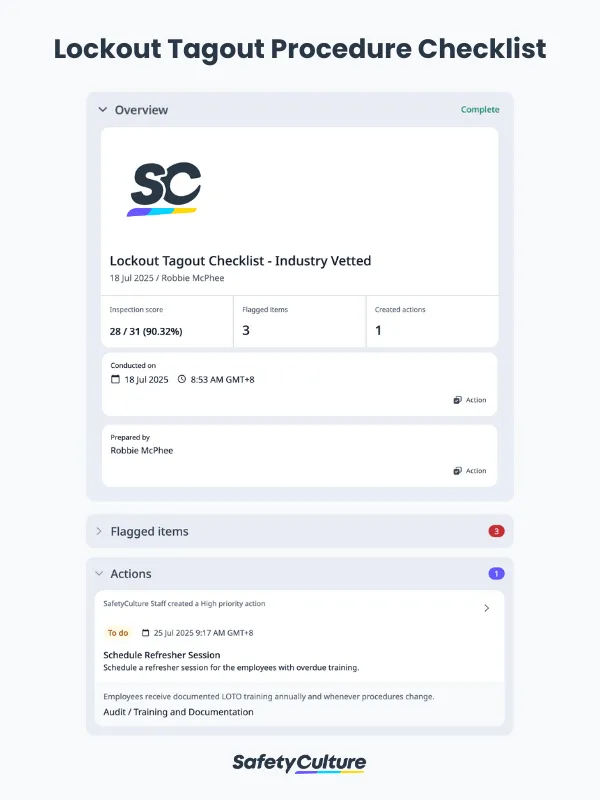
A lockout tagout procedure checklist is used before servicing industrial equipment and heavy machinery to ensure that workers who maintain and repair do not encounter incidents caused by unintended energization and get exposed to harmful energy. Use this checklist to:
Record the nature of work, hazardous energy sources, and the employees involved in the procedures.
Perform a site walkthrough to ensure that the area is cleared from unnecessary tools and check if employees are trained and notified about the procedure.
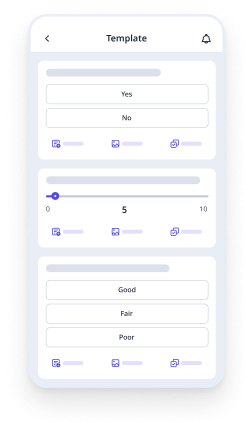
Attach photo/video evidence directly during walkthroughs using a mobile phone or tablet.
Review the quality and efficiency of LOTO devices being used.
Evaluate if the step-by-step procedure was followed when applying and removing LOTO devices.
Confirm that employees have received proper training and documentation for LOTO procedures.
A lockout tagout procedure checklist, also called a LOTO checklist, is a list of steps taken to ensure proper isolation of energy sources when servicing industrial equipment or heavy machinery. This is typically used by safety officers and managers to protect workers against hazards such as accidental energization of equipment or exposure to hazardous energy. Millions of machine operators and workers are exposed to risks each day due to non-isolated energy sources; lockout tagout procedure checklists aim to protect workers from those risks.
What to Include in a LOTO Procedure Checklist
Lockout tagout procedures can vary depending on the industry or type of machine or equipment. Following the Occupational Safety and Health Administration (OSHA) guidelines on lockout tagout procedures by using a procedures template and safety checklist will help ensure that all dangerous machinery and equipment are properly shut off, locked out, and tagged before performing maintenance checks. OSHA estimates that complying with LOTO standards helps prevent 120 fatalities and 50,000 injuries each year.
Here are the main sections of a lockout tagout procedure checklist:
Personal Protective Equipment (PPE) and Safety Measures – This section covers the required protective gear, emergency equipment, and work areas for the LOTO procedure.
Energy Control Procedures – This section maps out the proper way of locking out energy sources before work begins.
Lockout/Tagout Equipment and Devices – This section looks into the condition and status of locks, tags, and labels used in LOTO.
Verification and Testing – This section involves the energy testing and verification process for strict adherence.
Shift Changes and Group Lockout – This section outlines the steps to carry out in the event of group lockouts and changes in worker shifts.
Equipment Startup and Removal of Lockout Devices – This section runs through the process of removing LOTO devices from the equipment.
Training and Documentation – This section wraps up the template through regular check-ins with the current training and compliance measures for LOTO procedures.
7 Steps of Lockout Tagout Procedure
Here are the steps to the proper lockout tagout procedure:
Step 1: Identify and assess – Determine the equipment to shut down, control energy sources, and evaluate hazards.
Step 2: Notify personnel – Inform affected staff about the shutdown, including details, timeframe, and contacts.
Step 3: Shut down equipment – Follow proper procedures to turn off controls and stop all moving parts.
Step 4: Disconnect energy sources – Isolate the equipment by shutting off power breakers or closing valves.
Step 5: Remove residual energy – Neutralize stored energy to eliminate potential hazards.
Step 6: Lock and tag equipment – Secure the equipment with locks and tags displaying identifying information.
Step 7: Verify isolation – Test controls to confirm the equipment does not activate.
It really galvanized the Operations Team. We were able to do a lot more through SafetyCulture than we would have been able to do through other systems or processes. If we didn’t have SafetyCulture, there’s no way we would have got to that level when we had the audit.
How to Perform Periodic LOTO Inspections with a Checklist
A LOTO inspection can only be conducted by a safety supervisor or authorized employee who is NOT involved in the lock out tag out procedure being inspected. It must be done at least annually or more often if necessary.
To conduct a LOTO inspection, the safety supervisor or authorized employee must do the following:
Identify the equipment or isolation point that the LOTO procedure is for, as well as the energy sources connected to said equipment.
Specify the date of and the employees included in the LOTO inspection.
Check if the employee follows the equipment shutdown procedures established in the checklist.
Verify if all energy sources are neutralized, not just switched off at the control panel.
Spot and correct the deviations and inadequacies of the LOTO procedure.
Review the responsibilities of authorized and affected employees for lockout, tagout, and training.
Confirm the completion of LOTO inspection by adding your name and signature.
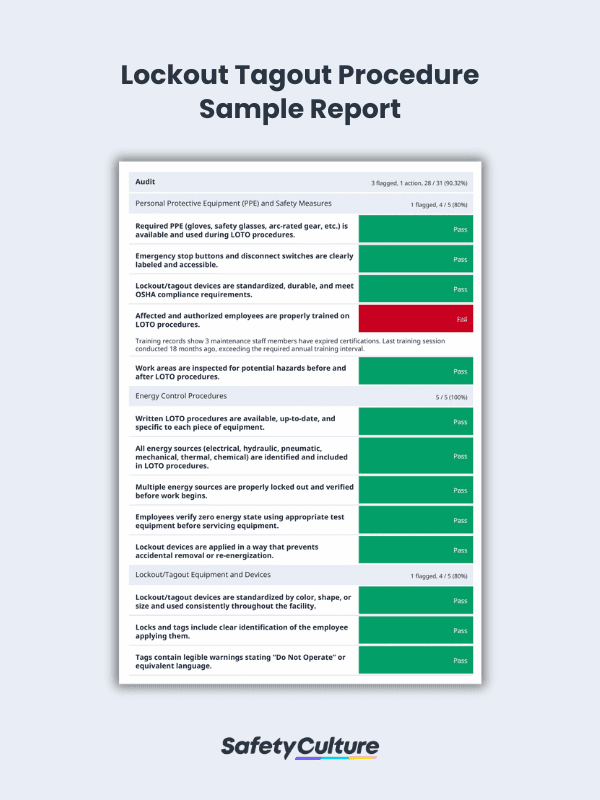
Sample Lockout Tagout Procedure Report
For your reference, here’s an example of a filled-out lockout tagout procedure report in PDF format:
Use this OSHA lockout tagout checklist to assess if lockout tagout procedures are followed by employees before commencing with maintenance checks. Capture photo evidence of noncompliance with safety regulations while the lockout procedure is ongoing. Notify safety managers if problems occur during the inspection for immediate action and resolution.
Use this toolbox talk meeting record before performing the lockout/tagout procedure and servicing equipment. Gather the team and discuss what needs to be done before, during, and what to watch out for in order to solve issues before problems occur. Record what was tackled during the LOTO toolbox talk and have all participating members sign off.
A risk assessment is conducted to determine all risks involved in the operation of machines and equipment. Use this risk assessment to identify hazards and determine controls and risk mitigation that can help conduct an effective lockout tagout procedure.