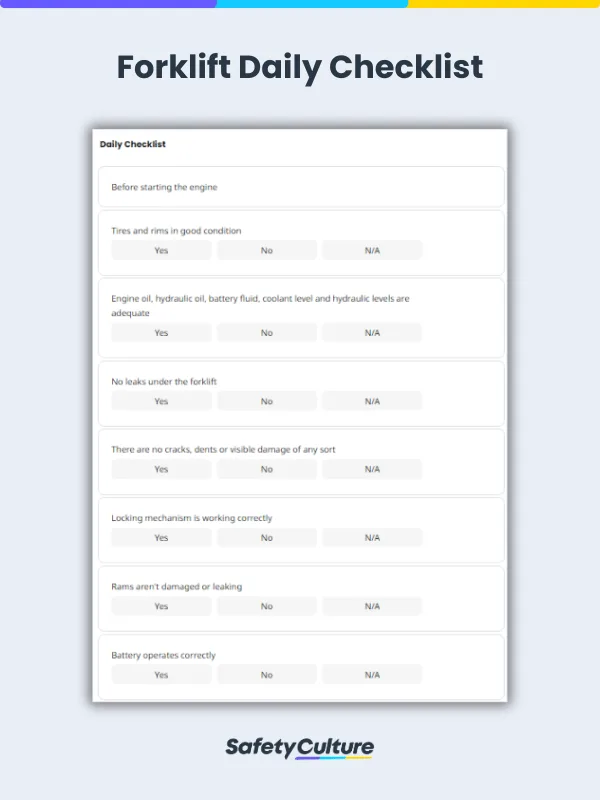
Download and use this free forklift checklist to ensure your equipment is safe, compliant, and ready for daily operation. This easy-to-follow template helps operators inspect key components such as brakes, tires, forks, hydraulics, and safety devices before each shift. It supports regulatory compliance, reduces accident risks, and promotes accountability. This checklist allows users to do the following:
Conduct a forklift inspection before and after starting the engine.
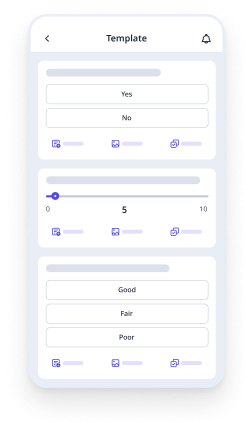
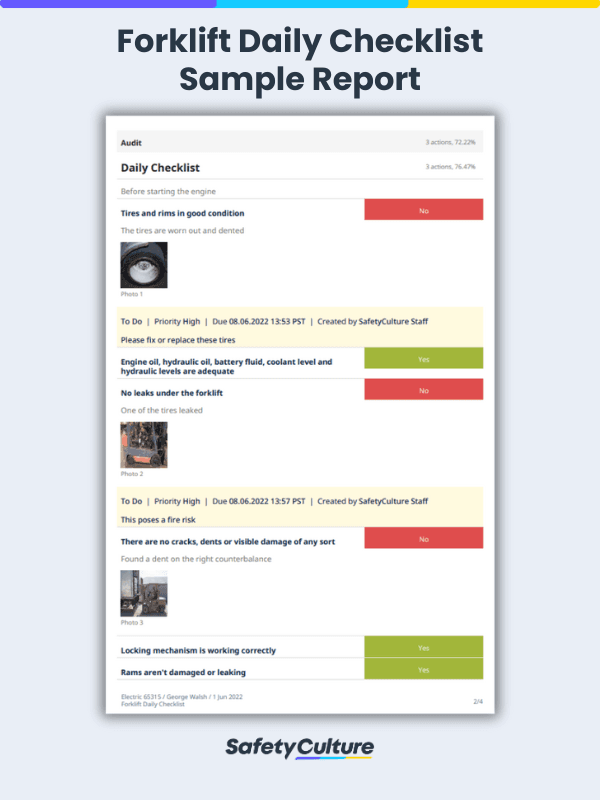
Take photo or video evidence of damaged parts (if any) and add notes for explanation.
Assign corrective measures in case damage or malfunction is identified in the forklift.
Complete a forklift inspection by requiring the inspector’s or user’s digital signature upon sign-off.
A forklift checklist is a tool used by operators to ensure that forklifts are in good working condition before use. Forklift checklists are used in conducting safety inspections and maintenance checks to reduce the likelihood of avoidable injuries and deaths caused by faulty forklifts.
Importance
Implementing a forklift inspection checklist is a crucial safety practice that benefits both employers and employees. Here are some of its key benefits explained in detail:
Enhances Workplace Safety
Performing daily forklift inspections helps identify potential issues—such as faulty brakes, worn tires, or fluid leaks—before they lead to accidents. This proactive approach significantly reduces the risk of injuries caused by mechanical failures. By catching issues early, organizations can prevent hazardous situations, protect workers, and foster a culture of safety.
Reduces Equipment Downtime and Repair Costs
Regularly inspecting forklifts helps detect wear and tear before it leads to costly breakdowns. Doing preventive maintenance based on checklist results helps equipment last longer and cuts down on unexpected repairs. This not only ensures operational efficiency but also lowers long-term maintenance expenses for the organization.
Supports Regulatory Compliance
The Occupational Safety and Health Administration (OSHA) has established several important requirements for forklift operation and safety. For instance, forklift operators are required to be trained and certified by OSHA before they can legally operate in the workplace. Using a standardized checklist before a forklift operation helps operators maintain a safety culture consistently and provide proper documentation of compliance.
Decreases Accident Rates and Improves Employee Confidence
Forklift-related incidents cause about 85 fatal accidents and 34,900 serious injuries annually in the US. Using a detailed checklist can help lower these numbers and make the workplace much safer. When forklifts are inspected regularly with a dedicated checklist, employees can operate them with greater confidence, knowing they are proven to be safe and functional.
Promotes Accountability and Standardized Procedures
Using a checklist establishes a consistent inspection routine, ensuring that no critical components are overlooked. It encourages accountability among operators and maintenance teams, as each inspection can be logged and tracked. Standardizing the process also makes training easier and more effective for new employees.
Toyota Material Handling (TMH)
"We saved more than 600 man-hours in our first year with SafetyCulture. I think any company that can get its return on investment back in year one is going to be pretty happy!"
What to Include in a Forklift Inspection Checklist
The content of a forklift safety checklist should, at a minimum, include all essential parts of the forklift being checked and consider the type of inspection to be done involving the forklift. The most basic forklift checklist covers the following items:
Once the inspection is completed, forklift operators can generate a report to share with anyone relevant for documentation and proactively set tasks in case of any issues found. Here is an example of an accomplished forklift checklist:
A forklift inspection checklist is used for monthly monitoring of the forklift’s condition. It evaluates the overall condition of the forklift and the operator’s operating practices. Use this forklift inspection checklist to ensure that employees comply with the standard operating procedures of forklift use.
Also known as a forklift pre-start checklist, a forklift pre-operational checklist is used to mitigate the risks of operating forklifts. Using a forklift pre-start checklist can also increase forklift uptime. Forklift operators can use this checklist to document and conduct a pre-use forklift inspection. It includes both a visual check and an operational check.
Use this forklift operator evaluation form to evaluate an operator’s performance in forklift control and safety protocols. This checklist helps meet the outlined requirements to certify safe forklift operation as per OSHA CFR 1910.178 (I) (2) (ii)