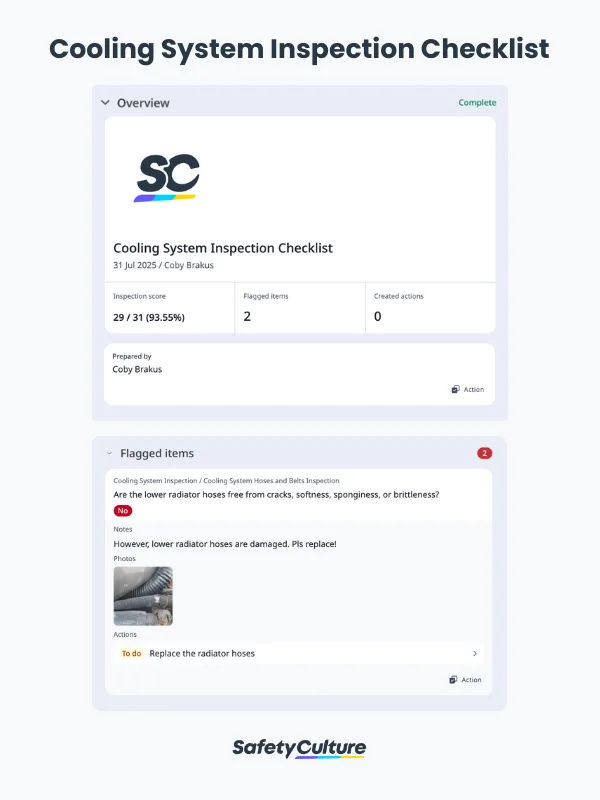
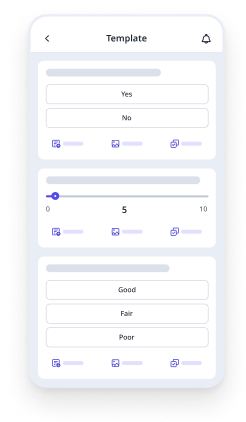
Download this free, editable cooling system inspection checklist to help prevent overheating and minimize downtime. Customize the checklist to match your company’s goals or the type of asset, whether it’s vehicle cooling systems or HVAC units. This template also allows users to:
Track and report issues in real-time so your team can respond quickly and stay on the same page.
Plan and schedule preventive maintenance in advance to ensure nothing gets overlooked.
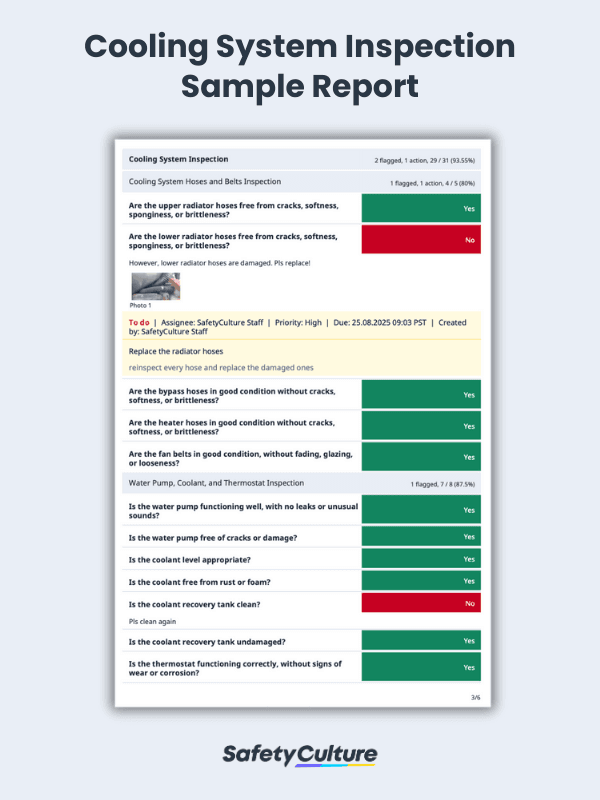
Generates a report that can be exported and shared via a weblink, PDF, Word, or CSV format.
Ensure your whole production line complies with governmental bodies, industry standards organizations, and company policies.
A cooling system inspection checklist is a step-by-step tool that ensures all components of a vehicle’s cooling system are properly checked and maintained, eliminating guesswork during inspections. It provides a structured, systematic process so mechanics don’t miss small but important issues, such as tiny leaks or a faulty radiator cap.
Benefits
Improper coolant management can lead to engine overheating, poor gas mileage, and even complete engine failure. These issues can mean expensive repairs or breakdowns on the road.
A cooling system inspection checklist is designed to help you keep your vehicle’s cooling system running smoothly and avoid major issues. It also supports preventive maintenance and creates a service history that mechanics can refer to during future repairs.
What to Include
An in-depth cooling inspection helps you spot performance issues through testing, visual checks, pressure tests, and temperature measurements. While this checklist can apply to various HVAC cooling systems, it’s primarily focused on vehicle cooling.
The following should be present in a cooling system inspection:
Cooling System Hoses and Belts Inspection
Hoses – Check if the upper radiator hoses, lower radiator hoses, bypass hoses, and heater hoses are free from cracks, softness, sponginess, or brittleness..
Belts – Inspect the fan belts for any loose, fading, or glazing parts; these belts drive the water pump, fans, and A/C compressor..
Water Pump, Coolant, and Thermostat Inspection:
Water Pump – Look for leaks, cracks, or unusual sounds affecting the water pump.
Coolant Level – Check if the coolant levels are optimal, and if the coolant recovery tank is clean without damages.
ThermostatBoards – Examine the thermostat’s physical and functional conditions.
Radiator and System Check:
Radiator Fins – Clear away any rust, dirt, or oil buildup on the radiator fins to maintain optimal airflow and cooling, especially in agricultural vehicles such as plows and tractors that are exposed to dirt-heavy environments.
Radiator Cap – Confirm that the radiator cap is properly sealed and in good condition. See if its spring tension is at the right place without corrosion.
Coolant Temperature – Confirm that the coolant temperature falls within the acceptable range when in use.
Temperature Gauge – Test if the temperature gauge works as it should.
Cooling Fan and System Operation:
Visual and Functional Inspection – Start and run the cooling fan to verify if it operates normally without noise and damage.
Temperature Check – Check if the cooling fan runs at the correct temperature.
System Pressure and Flow:
System Pressure – Confirm that the system applies proper pressure at all times, and keep an eye out for pressure losses.
System Flow – Examine the system for any blockages that could impair the fluid flow through the cooling system.
Final Results:
Documentation – Record any problems found during inspection and schedule corrective maintenance if needed.
Sign-off – Verify the completion of the inspection process with signatures from the inspector and their supervisor.
How to Use a Digital Cooling System Inspection Checklist
A digital checklist is the most efficient way to conduct cooling system inspections. It can be integrated into your business, documented securely in the cloud, accessed and followed by everyone in the company, and aligned with your standard operating procedures (SOPs) as well as industry standards such as ISO 9001 and ISO 14001.
This digital checklist can support you in completing the following steps for cooling system inspections:
Check Coolant Levels – Inspect and record coolant levels at specified intervals. This can be done through a checklist and easily viewed by everyone who needs access.
Monitor Temperatures – Track coolant and system temperatures to ensure they remain stable. Capture data using temperature sensors and analyze trends over time.
Record and Report – Log readings and trigger scheduled maintenance for any unresolved issues.
Thermosash was able to achieve ISO certification in six months using the SafetyCulture platform by centralizing workflows, boosting visibility, enhancing accountability, and streamlining quality control through QA checks and automatic corrective action alerts.
Check if your cooling system components are properly maintained, functional, and compliant. This checklist helps you verify that everything from the water pumps to the coolant is working as it should.
This checklist is designed to help drivers perform essential daily inspections on their vehicles before operating any vehicle. Created in collaboration with Industry Expert Partners, it covers verifying the overall condition of the vehicle, such as its tires, lights, signals, horn, fluid levels, engine compartment, brakes, steering, trailer condition (if applicable), safety equipment, and required documentation.
This checklist, developed by industry experts, is designed to help you stay ahead of maintenance issues in your heating and cooling systems. It ensures your piping is intact and compliant with safety regulations.