
Published 3 Apr 2026
Article by
4 min read
What is a Framing Inspection Checklist?
A framing inspection checklist assists inspectors in assessing the compliance of the property’s framing or basic structure. It’s typically used by qualified city or municipal inspectors and real estate developers to verify that a structure's frame has been built correctly before walls are closed up.
The primary purpose of the checklist is to catch structural deficiencies early, ensuring the building is safe, sound, and ready for the next phase of construction.
Consequences of Missed Framing Inspections
When a framing inspection is missed or skipped, the consequences can be serious and far-reaching. It compromises the integrity of the entire structure and creates building safety hazards that may not surface until years later when walls crack, floors sag, or the structure fails under load.
From a legal and regulatory standpoint, proceeding without an approved inspection can result in stop-work orders, hefty fines, or even a requirement to tear out completed work so inspectors can assess what's behind the walls. This leads to costly rework, project delays, and strained relationships between contractors and clients.
Using a framing inspection checklist directly addresses these risks by bringing structure and accountability to the process, along with some other benefits such as:
Ensures nothing is overlooked: Every critical element, from anchor bolts to roof rafters, is reviewed methodically before work progresses.
Creates consistency: A checklist gives inspectors and contractors a shared reference point, making inspections faster, more reliable, and less dependent on individual memory.
Provides a documented report: Records are invaluable if disputes arise or if the building's history needs to be reviewed during a sale or future renovation.
Shifts the mindset: A checklist moves teams from reactive problem-solving to proactive quality control , embedding accountability into every stage of the build.
What is Included in a Framing Inspection Checklist?
The contents in a framing inspection checklist template may vary depending on the type of building and its size. It can also be affected by local building codes, as some areas require specific requirements to be met to complete a building project. That said, here are the essential items to include in a framing inspection checklist:
Foundation and sill plates: Verify anchor bolts are correctly placed and spaced, and that sill plates are properly sized and firmly secured to the foundation.
Floor and wall framing: Confirm joists and studs are correctly spaced and aligned per approved plans to ensure adequate load distribution and structural stability.
Beams and headers: Ensure all beams and headers over doors and windows are appropriately sized to carry loads above without sagging or transferring excess stress.
Bearing walls and shear walls: Confirm load-bearing walls are correctly positioned and that diagonal bracing or shear panels are installed where required to resist lateral forces.
Blocking, bridging, and connectors: Inspect for proper blocking between joists and studs, and verify all metal connectors, joist hangers, and hurricane ties are correctly installed.
Roof framing: Check that rafters or trusses are correctly sized, spaced, and connected, and that the ridge board is straight, level, and properly supported.
Openings and staircase framing: Ensure rough openings for doors and windows are correctly framed with proper headers, and that stair stringers are sized, anchored, and cut consistently.
Notching, boring, and fire blocking: Confirm utility cuts in structural members stay within allowable limits, and that fire blocking is installed in all required locations.
Fasteners and plan compliance: Verify correct fastener types and spacing throughout, and cross-reference all framing against approved drawings to confirm the build matches what was permitted.
How to Use this Checklist
To ensure accurate data and documentation, it’s important to know how to use this checklist properly. Here’s a step-by-step guide to help you get started:
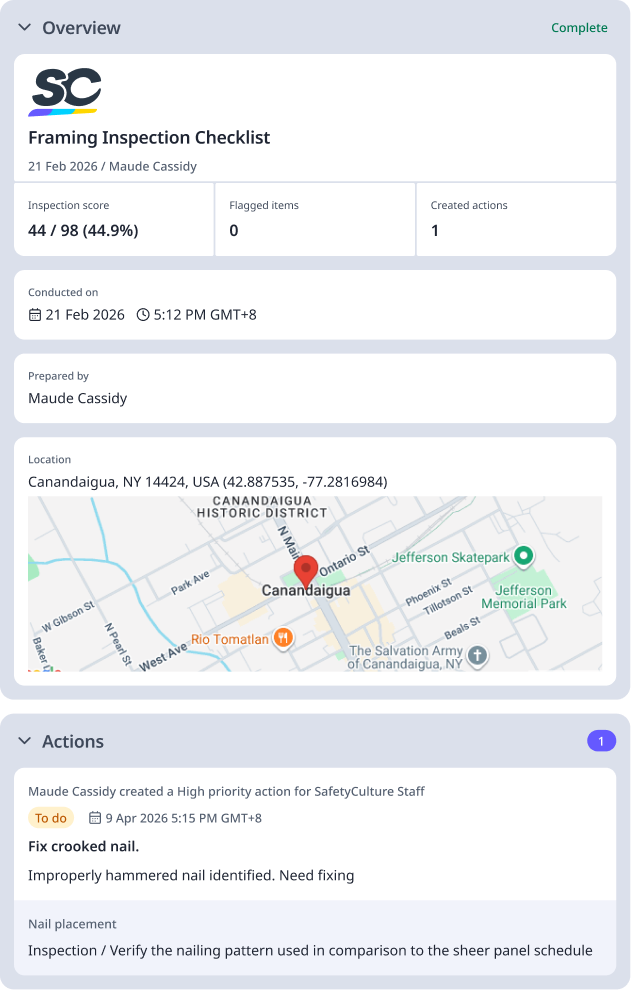
Fill out the basic information on the title page. This includes the date when the inspection took place, the inspector’s name, and the location where the inspection was performed.
Go through all the items listed in the checklist. It covers different aspects of a building frame, from floor plans to the nails used to hold together materials. It’s crucial to take note of even the smallest details for an accurate inspection.
Attach photos and annotations to provide further context to issues of noncompliance. This also helps improve the corrective actions taken to resolve issues.
Complete the inspection with a sign-off.
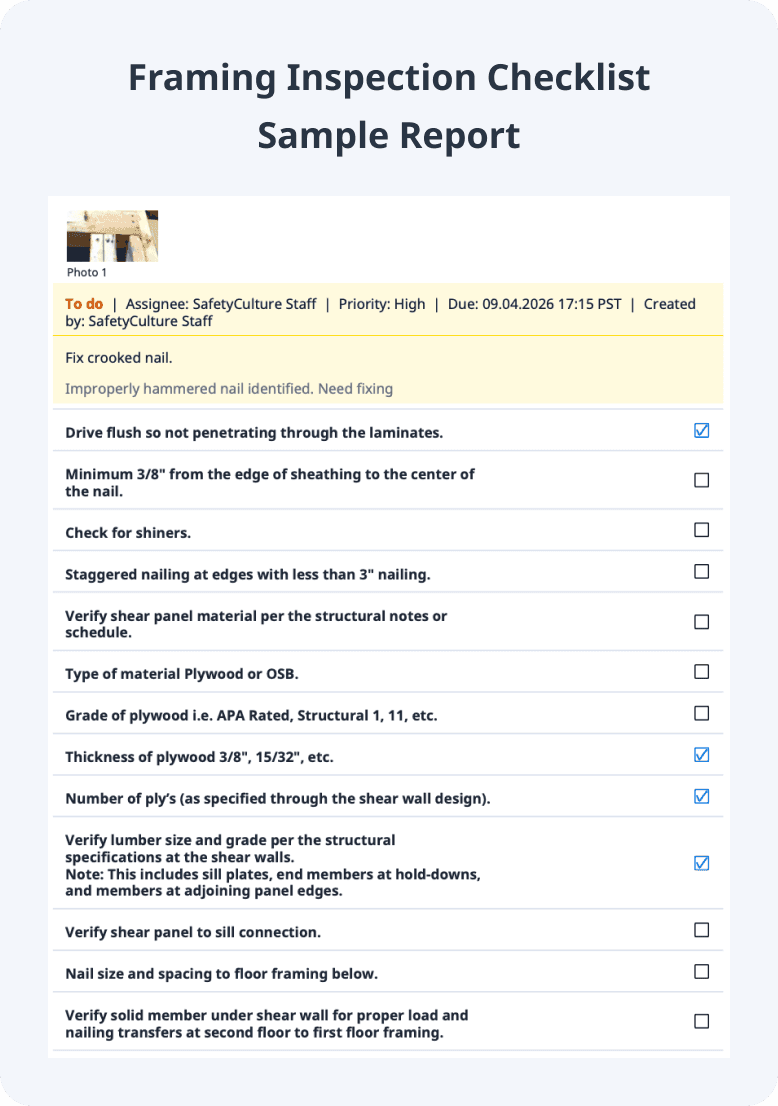
Sample Framing Inspection Report
For reference, here is a sample of a filled-out framing inspection checklist template:

Still looking for a checklist?
Search, filter, and customize 60,000+ templates across industries and use cases.