Guide to Effective Material Handling in Modern Operations
Explore how material handling supports efficient manufacturing, logistics, transportation, and responsible disposal throughout the supply chain.
Explore how material handling supports efficient manufacturing, logistics, transportation, and responsible disposal throughout the supply chain.
Published 5 May 2026
Article by
6 min read
Material handling refers to the systematic movement, storage, control, and protection of products from manufacturing to final disposal. It encompasses material handling equipment, logistics processes, and people management in factories, warehouses, transportation, and waste handling to ensure safe and efficient materials flow, regulatory compliance, and sustainable end-of-life disposal.
Material handling has come a long way from the rudimentary steam engines of the Industrial Revolution. Key milestones, like Ford’s assembly line and the wartime birth of the modern forklift, paved the way for the sophisticated automation we see today. Current material handling systems go beyond simple movement, providing these benefits across the supply chain:
Enhanced workplace safety: The risk of accidents, injuries, and ergonomic strain is also minimized with proper systems and equipment in place.
Lower operating costs: Standardizing processes, labor requirements, equipment maintenance, and energy use reduces wastage and associated expenses for production, storage, and logistics.
Support for sustainability and waste reduction: Improved handling workflows facilitate proper sorting, reuse, recycling, and safe disposal, supporting a circular supply chain and reducing environmental impact.
Regulatory compliance and risk reduction: Process efficiency relies on rigorous compliance. By prioritizing this, organizations avoid operational disruptions and the financial drain of legal penalties.
Improved overall operational efficiency: Efficient material handling drives value throughout the supply chain, enhancing inventory control and recovery processes. Seamlessly moving production inputs, work-in-progress, and finished goods ensures a safe, reliable flow for consistent results.
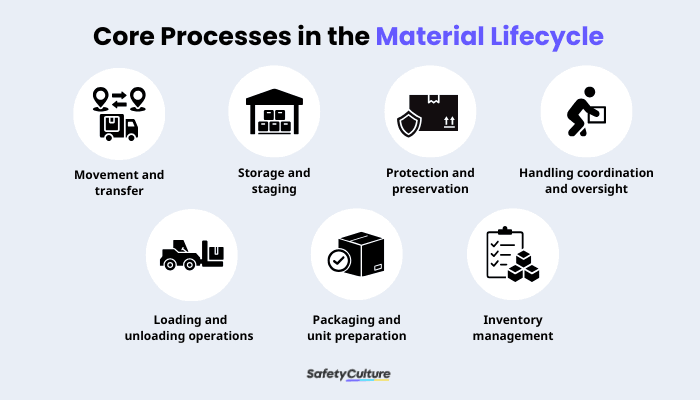
Mapping every phase of the material lifecycle, from raw material intake to final disposal, is essential for operational success. Mastering these ensures production continuity, cost control, and worker safety. These are the core activities and the critical details required:
Core Processes in the Material Lifecycle
The movement of materials between locations (e.g., receiving areas, production lines, storage zones, and shipping points) should be carefully planned by:
Clearing flow paths to avoid congestion and delays
Properly handling equipment suited to the material type and weight
Minimizing rehandling to reduce time, damage, and labor
Organize the placement of materials in designated locations to support production, order fulfillment, or distribution needs. These are integral:
Storage methods should be based on size, weight, and shelf life
Logical layout for easy access and efficient picking
Compliance with safety and space utilization requirements
Measures should be taken to prevent damage, contamination, loss, or deterioration during handling, storage, and transport. Consider these material handling and storage system essentials:
Use suitable containers and protective materials.
Maintain strict climate and humidity controls.
Implement rigorous handling procedures for fragile and hazardous materials.
Plan, monitor, and coordinate material handling activities to ensure accuracy and smooth operations. These elements are necessary for success:
Clear handling procedures and responsibilities
Real-time tracking and material flow documentation
Coordination between departments and supply chain partners
Materials should be safely placed and removed onto or from vehicles, pallets, racks, or production equipment. To achieve these objectives, take note of the following guidelines:
Proper load distribution and securing methods
Use of correct lifting and transfer equipment
Adherence to safety standards to prevent accidents
Poor packaging can cause damage, safey incidents, and waste at every stage. Ensure that materials survive handling and that workers are protected (e.g., from hazardous materials) by:
matching packaging to material characteristics and handling needs;
labeling the goods with proper identification and handling instructions; and
using packaging designed to reduce waste and damage.
Systematically monitor and manage material quantities, locations, and status across operations through these:
Accurate recording of receipts, usage, and movements
Regular checks to prevent shortages or excess stocks
Alignment with production, distribution, disposal plans, and sustainability goals
Regulatory compliance is essential to supply chain stability. From basic warehouse safety to worker certification, these prevent operational disruptions, minimize legal liabilities, and protect personnel. Get to know the most consequential in every region:
Jurisdiction | Agency & Regulation | Focus |
US | Material handling and storage safety: Safe clearances in aisles Stable stacking (height-to-base ratios) Operator certification for powered trucks | |
UK | HSE (LOLER & PUWER) | Safe working loads Thorough inspections |
Australia | WHS Regulation | Hazardous manual tasks Risk assessments for activities that involve lifting, pushing, and pulling |
Canada | OHS Acts | Machine guarding Lockout/Tagout procedures Mandatory safety awareness training |
EU | Machinery Directive (2006/42/EC) | CE Marking for material handling machinery Essential health and safety requirements |
While these practices may appear fundamental, they are indispensable to safe and efficient material handling. Neglecting these can cause operational delays, workplace injuries, and asset damage. Consistent application across every phase of the supply chain is vital.
Plan material flow in advance: Materials should reach the right place at the right time. Prevent congestion or unnecessary movements by designing clear routes, handling sequences, and staging areas before operations begin.
Maintain handling equipment consistently: Mechanical failures can cause accident risks. Routine inspections, servicing, and repairs of forklifts, hoists, and storage systems improve equipment reliability. These also extend equipment life.
Train operators thoroughly: For materials to be handled correctly and consistently across the supply chain, relevant personnel should be knowledgeable about handling procedures and related safety requirements. Training for manual handling, logistics management, and proper inventory is non-negotiable.
Apply correct lifting and handling techniques: Aside from protecting the goods, proper handling protects the workers as well. Minimize strains, sprains, and long-term injuries by using safe manual and mechanical lifting methods based on load weight, size, and shape.
Secure and stack loads safely: Stabilizing loads prevents shifts and collapses that could cause product damage. This also improves warehouse safety and space efficiency. Utilize proper stacking methods, find the most appropriate restraints, and follow load limits.
Implement strong housekeeping standards: Keeping handling areas clean and organized improves visibility, which speeds up handling tasks. Freeing the space from obstructions also reduces the risk of accidents, especially in areas where mechanical lifting equipment is used.
Monitor, report, and address hazards: Actively identify risks, such as unsafe conditions or damaged equipment, to allow early interventions. Immediately report near misses to prevent recurrence. Supporting continuous improvements upholds safety culture.
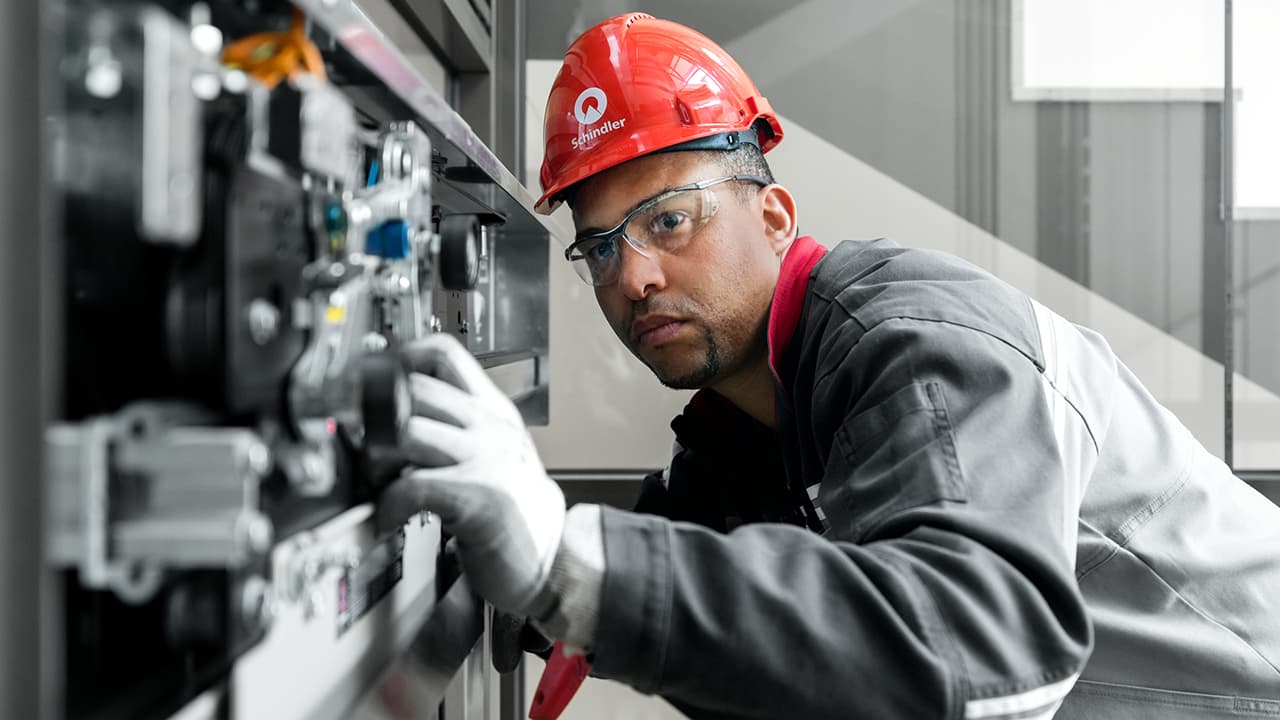
Schindler, a global elevator and escalator manufacturer and service provider, leverages a robust platform to increase workplace visibility, speed up hazard reporting and resolution, and increase safety and quality tracking throughout their operations.

Any time you can get communication and positive safety or quality program participation, that’s going to improve the business. Your safety culture is like your children. They’re always your child, you’re never done raising a child. You’re never done paying attention. You are never done caring. In short, we know there will be failures. This system helps us assure failures occur safely.
SafetyCulture is a mobile-first operations platform adopted across industries such as manufacturing, mining, construction, retail, and hospitality. It’s designed to equip leaders and working teams with the knowledge and tools to do their best work—to the safest and highest standard.
Streamline material handling by enabling real-time inventory tracking, workflow standardization, and data-driven risk assessments. Reduce errors by providing customizable digital checklists for inspections and incident reporting. Empower organizations to uphold compliant and consistent material handling across warehouses and distribution centers through a unified platform.
✓ Save time and reduce costs
✓ Stay on top of risks and incidents
✓ Boost productivity and efficiency
✓ Enhance communication and collaboration
✓ Discover improvement opportunities
✓ Make data-driven business decisions