The Ultimate Guide to Trench Safety
Essential regulations, best practices, and training to keep trenching operations safe and compliant.
Essential regulations, best practices, and training to keep trenching operations safe and compliant.
Published 28 Apr 2026
Article by
6 min read
Trench safety refers to the protocols and measures implemented to protect construction workers from the hazards associated with trenching and excavation work. Due to their confined nature and potential for cave-ins, trenches pose significant risks, making safety precautions essential. Adhering to regulatory standards, such as those provided by the Occupational Safety and Health Administration (OSHA), is vital in minimizing the risk of accidents and ensuring a safe working environment for all personnel involved.
Excavation refers to the removal of earth, rock, or other materials from a site to create a pit, hole, or cavity. This activity can encompass a wide range of sizes and depths and is often the first step in preparing a site for construction, involving large machinery like excavators or backhoes.
On the other hand, trenching is a specific form of excavation that involves digging narrow, elongated depressions in the ground. Trenches are usually deeper than wide and are commonly used to install utilities like pipes, cables, and drainage systems.
OSHA encourages all those exposed to excavations deeper than 5 feet to follow the three Ss of trenching safety. These are:
Slope It: Sloping involves cutting the trench walls at an angle dependent on the soil type and trench depth, creating a slope that reduces the risk of soil collapse. While sloping requires more space, it's very effective in unstable ground.
Shore It: Shoring means installing supports against the trench walls to prevent soil movement and cave-ins. It is usually done using wall plates pushed outward by hydraulic, pneumatic, or mechanical jacks to stabilize the trench walls and prevent collapse.
Shield It: Shielding involves placing protective systems, such as trench boxes or shields, inside the trench to protect workers during a cave-in. Unlike shoring, shielding doesn't prevent the collapse but acts as a physical barrier against the falling soil.
Trenching can be dangerous and potentially life-threatening if safety measures are not followed. In 2023, violations of OSHA's excavation safety standards accounted for 4 percent of all construction citations and 9 percent of total penalties.
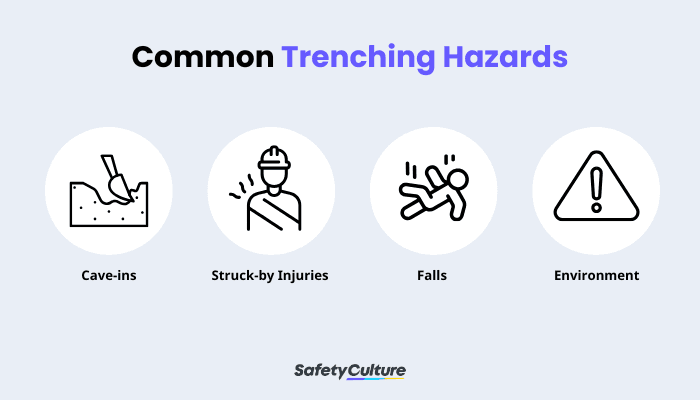
Here are some of the common hazards associated with trenching:
Common Trenching Hazards
Cave-ins: Cave-ins are the most dangerous trenching hazard, as one cubic yard of soil can weigh as much as a small car. By mid-2025, the U.S. had already reported 12 trench collapse fatalities, matching the total from 2024 and marking an increase after earlier declines.
Struck-by Injuries: Struck-by accidents happen when workers are hit by moving machinery, falling tools, or debris near the trench. These incidents are the second leading cause of death for construction workers and the primary source of nonfatal injuries in the industry.
Falls: Fall-related accidents occur when workers near the trench edge lose their balance or step too close to unstable ground. For 14 straight years, OSHA's Fall Protection—General Requirements standard (1926.501) has been the most frequently cited violation in construction.
Hazardous Environmental Conditions: Extreme heat, moisture, and poor air quality inside trenches can expose workers to serious health risks. Proper ventilation, air monitoring, and regular rest breaks help prevent common hazards like heat stress, oxygen deficiency, and toxic gases.
The following trenching safety tips highlight essential precautions to help protect workers and ensure efficient, hazard-free excavation operations. These best practices are fundamental to maintaining construction safety on any job site. Some of these include:
Before beginning any trench work, choose the appropriate excavation technique based on soil conditions, trench size, and environmental factors. Using the correct method minimizes the risk of collapse and enhances worker safety.
Examples of trenching methods include:
Sloping (angling trench walls)
Shielding (using trench boxes)
Benching (cutting steps into the soil)
Shaving (installing trench braces)
Every trenching project is unique, so developing safety plans suited to the specific job site is crucial. Considering environmental and soil conditions, trench dimensions, and nearby hazards ensures a safer workspace. In addition, make sure to:
Keep heavy equipment and materials at least two feet from the edge
Avoid working under suspended loads
Always provide separate entry and exit points
Inspect trenches regularly to spot potential hazards such as oxygen deficiency, standing water, or unstable walls. A trained and authorized "competent person" should handle all inspections and hazard assessments.
Inspections should occur:
Before work starts each day
After weather events
Any time site conditions change
Understanding soil type and stability is essential for preventing collapses and designing safe excavation plans. Each soil category reacts to pressure and moisture differently, influencing the trenching method.
Soil types include:
Type A (most stable, like clay)
Type B (moderately stable, like silt)
Type C (least stable, like sand or gravel)
Stable Rock (solid, naturally occurring material)
Properly maintained machinery reduces mechanical failures and enhances site safety. Only trained operators should handle excavation equipment, and all units should undergo regular servicing.
Safety steps include:
Renting or purchasing from reliable suppliers
Performing routine inspections
Replacing worn parts immediately
Protective systems are essential for preventing cave-ins and safeguarding workers in deep trenches. The system type should correspond to trench depth and soil conditions.
Trenches over 5 feet deep require protective systems approved by a competent person, while a qualified engineer must design those deeper than 20 feet.
Every worker must have quick and safe access to and from the trench. Properly placed ladders, ramps, or steps reduce slips, falls, and entrapment risks.
Keep exits within 25 feet of workers and check trenches for standing water or harmful gases before each shift.
Even with all safety measures in place, emergencies can still occur. A clear and well-practiced emergency response plan ensures quick action when needed.
Key components of an emergency response plan include the following actions:
Establish rescue procedures
Provide first-aid kits
Train workers on evacuation routes
Maintain constant communication during excavation activities
SafetyCulture is a mobile-first operations platform adopted across industries such as manufacturing, mining, construction, retail, and hospitality. It’s designed to equip leaders and working teams with the knowledge and tools to do their best work—to the safest and highest standard. Efficiently manage and streamline health and safety processes across the organization, including incident management, safety audits and inspections, risk assessment, waste management, and more, using a comprehensive manufacturing software solution.
Save time and reduce costs
Stay on top of risks and incidents
Boost productivity and efficiency
Enhance communication and collaboration
Discover improvement opportunities
Make data-driven business decisions