Jones the Grocer
Amid a rapid global expansion, Jones The Grocer is using SafetyCulture Training to keep teams informed, engaged and ready to deliver world-class customer service.
Amid a rapid global expansion, Jones The Grocer is using SafetyCulture Training to keep teams informed, engaged and ready to deliver world-class customer service.
We use SafetyCulture for
Training
Inspections
Finding great food on the go can be challenging — something fresh, convenient, and served by knowledgeable staff is hard to come by.
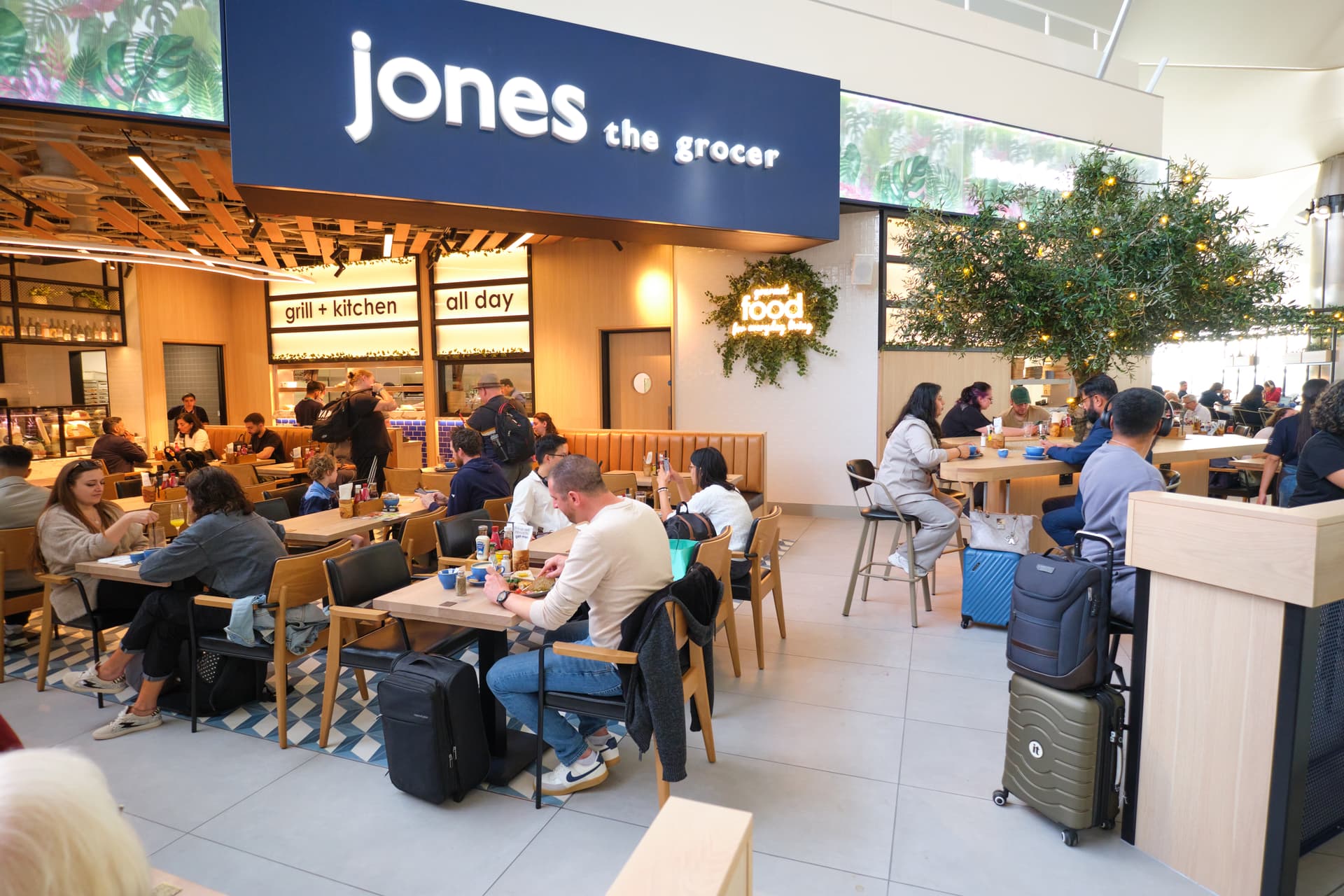
That stereotype is everything that Jones The Grocer, a quick-service restaurant & retail business based in the UAE, is not. With 40 stores globally featuring freshly brewed coffee, charcuterie counters, and even walk-in cheese rooms, they’re a hotspot for global foodies to enjoy a high-quality bite on their travels.
From Europe, to the Middle East, and Asia, their teams serve familiar classics while educating and encouraging customers to try new items and find new favourites. Achieving this requires a team with the knowledge to deliver this experiential service, while also delivering excellence across their entire operations.
The strategy is working, and Jones The Grocer has ambitious growth plans alongside their franchise partners. To scale this strategy, Jones The Grocer has put high-quality training at the centre of everything they do.
We’re really trying to set ourselves apart — to make learning and development not just about compliance, but about growth. Because when people are empowered and capable, that’s when the business thrives.
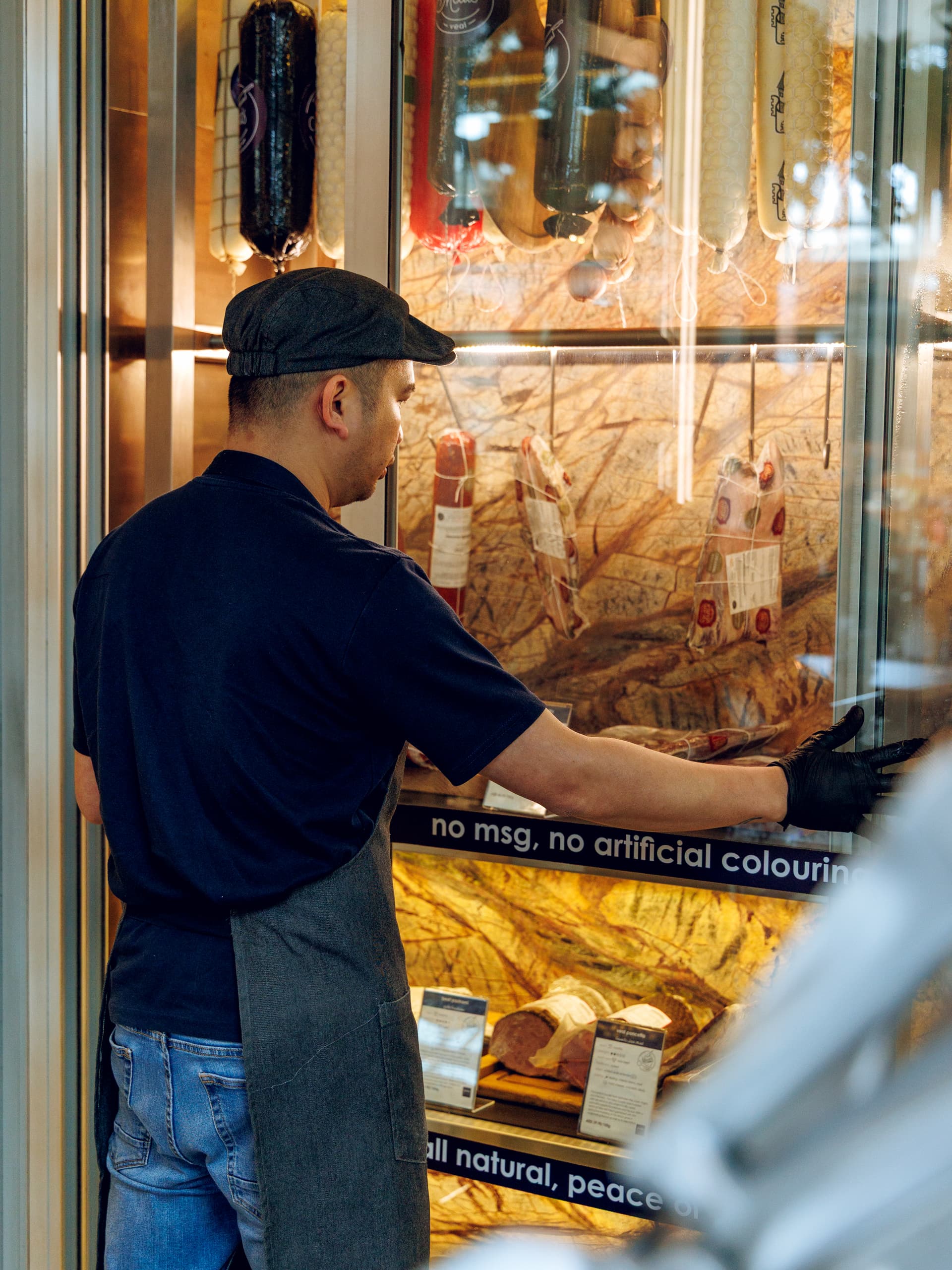
Of course, with scale comes complexity. To manage this complexity, Rebecca turned to SafetyCulture’s training features to deliver world-class learning experiences across the 40 global stores they run.
Operating globally is challenging for any food service business. You need to establish supply chains, manage local regulations, and develop staff you can trust to get the job done to your exacting standards. For Jones The Grocer’s stores in airports, security and travel restrictions make the task even more complex. Each market brings new dynamics — different ownership structures, cultural expectations, and operational realities.
The task in front of Rebecca’s team was clear: How do you ensure that a Jones the Grocer café in London feels as exceptional as one in Dubai?
Before Jones the Grocer adopted SafetyCulture, much of its operations relied on manual processes, inconsistent reporting, and a mix of locally managed training tools. Each market had its own way of tracking performance and compliance, a natural consequence of being a fast-growing franchise network.
We’re a partner-led business. Globally, we’re between 1,000 and 1,500 team members. Because we’re partner-led, it’s critical that every one of those people understands and delivers the Jones experience.
But with every new franchise that came online, maintaining consistency grew harder to manage. Operational checks were often paper-based or tracked in spreadsheets. Training materials were emailed or stored in shared drives, with limited visibility into whether people were completing them or applying them in the field.
As Rebecca described, her team was responsible for building “a centralised set of resources that can be decentralised”; materials that every store could adapt, but that still reflected the same brand values and service standards. Achieving that balance without the right platform was a struggle.
“We were building capability and developing resources, but it was difficult to track adoption or measure whether what we were creating was actually improving performance,” Rebecca said. “The vision was clear - the systems weren’t.”
For a brand built on quality and experience, those gaps posed a real risk — not just to customer satisfaction, but to reputation and growth.
When Rebecca set out to reimagine how training worked across the business, she wasn’t just looking for another e-learning platform. She wanted something that could bring learning to life on the frontline, helping store teams connect what they were learning directly to their daily work.
“I’m trying to position learning and development and organisational development as a strategic lever that will build growth,” she said. “Traditionally, it’s seen as a support function — you get requests, you deliver training — but we’re thinking strategically about how we’re actually building the business.”
SafetyCulture became the foundation of that new approach. It now serves as the central hub for training, audits, and experience standards — connecting franchise partners, head office, and frontline teams through one easy-to-use platform.
“We’re making sure that the tools we have available for our teams are world-class,” Rebecca said. “It means you can take our franchise business and run it just as well as our company-owned.”
Before SafetyCulture, training often relied on printed manuals and static PowerPoint decks; resources that were difficult to update or track. Now, using Training, Rebecca’s team can build interactive, visual micro-learning modules that staff can access directly on their phones or tablets.
New hires complete bite-sized courses covering everything from food safety and hygiene to guest experience standards and brand storytelling. Each module includes photos, video demonstrations, and quick knowledge checks; all designed to fit seamlessly into the flow of work.
We wanted training that felt alive — not like ticking a box. With SafetyCulture, we can build courses that look and feel like Jones the Grocer. They’re visual, quick to consume, and directly linked to what the teams are doing day to day.”

SafetyCulture’s training tools also allow Jones the Grocer to manage global content with local flexibility. Rebecca’s learning design team builds a central library of core brand standards; everything from coffee preparation to customer service etiquette. Using SafetyCulture’s simple course creation tools, her team can rapidly identify and adapt their training to comply with local regulations or menu variation.
The way training is linked across the platform has been particularly powerful. When a manager completes a store audit and identifies a gap, they can immediately assign a refresher module or training task within the same platform.
This turns feedback into action, closing performance gaps quickly and embedding improvement into daily operations.
“What’s been most valuable is that we can link everything together,” Rebecca explained. “If someone needs more support, we don’t wait for the next training cycle , we assign learning straight away, and we can track completion in real time.”
We can finally show the value of learning. It’s not just something nice to have — it’s driving consistency, efficiency, and brand strength. That’s a completely different conversation with leadership.”
Perhaps the most powerful change has been cultural. SafetyCulture has helped unify Jones the Grocer’s far-flung teams around a shared purpose and a common language of quality. Whether in Dubai, Mumbai, or London, employees use the same tools, follow the same standards, and understand what “good” looks like.
“It’s made us feel like one global team,” Rebecca said. “There’s a real sense that we’re all working toward the same goal — delivering the Jones experience, no matter where we are.”
For Rebecca and her team, that’s the ultimate win: a learning ecosystem that doesn’t just support growth, but enables it.
“Jones is really embracing it as a growth strategy, not just something we have to do,” she said. “It’s about building the business through people and capability.”
Since adopting SafetyCulture, Jones the Grocer has seen a shift that goes well beyond digitising checklists or hosting training online. What began as a way to streamline learning has evolved into a cultural transformation.
At the store level, the change has been immediate and visible. Frontline teams, from chefs and baristas to store managers have embraced SafetyCulture because it puts learning directly in their hands. After a recent menu refresh, which saw over 70% of items change, Rebecca and her team were able to fully upskill teams and launch the new menu in just 3 weeks - their fastest turnaround ever- thanks to an 85% adoption rate on their training.
Instead of waiting for head office to run refreshers or chasing outdated documents, staff can now pull up bite-sized learning modules on their phones. A barista can revisit a video on milk texturing before the morning rush; a chef can review plating standards during prep; a floor manager can assign a quick refresher on guest engagement right after a service.
“It’s removed barriers,” Rebecca said. “People don’t need to wait for someone else to train them or print materials. If they want to get better at something, it’s right there in the palm of their hand rather than rather than taking days to schedule a face-to-face session, find the printed materials and run a training session with a leader or field trainer role”
The result is a workforce that’s more proactive, more confident, and more connected to the brand’s standards. Teams have started taking ownership of their own growth — seeing learning as part of their job, not an interruption to it.
“We’re seeing more initiative from our teams,” Rebecca explained. “They’re not waiting for direction, they’re taking responsibility for their own development, and that’s incredibly powerful.”

For senior leaders, SafetyCulture has created something that used to feel impossible — real-time visibility across every site, every day.
Operations leaders can now see which locations are completing checks, where standards are slipping, and how training engagement correlates with customer experience metrics. That level of insight has made the business more agile and responsive.
“Our leaders no longer need to rely on anecdotal feedback or end-of-month reports,” Rebecca said. “They can see what’s happening in real time, which means we can support stores faster and celebrate wins as they happen.”
The data has become a powerful storytelling tool inside the business. Leaders can now identify top-performing teams, highlight best practices, and replicate those successes across the network, reinforcing a culture of recognition and improvement.
For Rebecca personally, the shift has been transformational. Before SafetyCulture, much of her time went into manual coordination, content management, and chasing compliance — ensuring stores were aligned, tracking down completion records, and trying to measure progress across spreadsheets and reports.
Now, that operational lift is automated. Training progress, audit completion, and feedback flow into the same dashboard. Instead of spending her time managing the system, Rebecca spends it developing the strategy behind it.
“It’s given me back the time to actually focus on building the business,” she said. “I can spend more time coaching leaders, improving the experience, and thinking about where learning fits into our long-term growth.”
This shift has also given her a stronger voice at the executive table. With measurable results and clear data, Rebecca can now demonstrate the direct link between learning, engagement, and commercial outcomes — helping shape decisions at a strategic level.