Discover how engineers and teams can detect and resolve equipment issues before they impact production performance. Use this free condition monitoring checklist as a preventive maintenance tool to extend equipment life, enhance operational reliability, and maintain a safe manufacturing environment.
This checklist also supports the following:
Helps identify related equipment or process issues that could affect overall plant safety and efficiency, such as worn machine components, loose fittings, or fluid leaks.
Enables clear, detailed documentation of equipment condition, guiding maintenance decisions and verifying that upkeep tasks are properly completed.
Assists quality and safety inspectors in routine facility audits or pre-shift inspections to confirm machinery and processes are within operational standards and to record any damage or deviations for compliance purposes.
Ensures adherence to industry safety standards, regulatory requirements, and company maintenance protocols.
Provides operators and technicians with practical guidance on monitoring signs like unusual noises, vibrations, temperature changes, and shifts in equipment performance.

A condition monitoring report is a tool used to assess and document the condition of machines, equipment, and systems in industrial settings. The report covers gathering and analyzing data to detect early indicators of faults or gradual wear. By identifying anomalies in operating conditions early, maintenance and repair activities can be strategically planned, reducing the risk of unexpected failures and costly damage. This method of reporting not only enhances equipment reliability but also heightens overall manufacturing efficiency and productivity.
Importance of a Condition Monitoring Report
A condition monitoring report is essential because it provides valuable real-time insights into machine and equipment health and performance, allowing organizations to identify issues and signs of wear and tear early, helping avoid accidents from happening. This predictive maintenance tool helps to achieve the following:
Detect and identify issues early: Enable early identification of faults or wear in equipment before failures or significant damage occur, therefore avoiding operational downtime and repairs.
Extend asset lifespan: Prevent excessive wear and costly replacements by maintaining the equipment through regular reporting.
Improve efficiency and productivity: Ensure smooth machine operation and prevent production disruptions.
Provide predictive data: Allow teams to make informed decisions, plan maintenance work, and allocate resources more effectively.
How Going Digital Helps
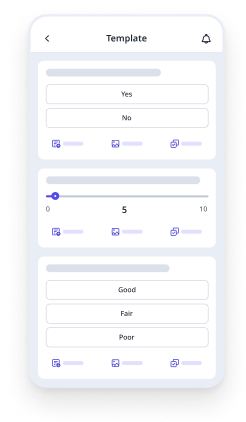
A digital checklist enhances the effectiveness and value of condition monitoring reports by providing a quicker, more transparent, and streamlined way to complete and document every task. Here are the key advantages it offers:
Real-time data collection and analysis: Allows automatic and continuous data collection from equipment sensors and delivers up-to-date insights regarding the machine condition
Predictive maintenance capability: Shifts from reactive maintenance to predictive maintenance through integrating the report with Internet of Things (IoT) and Artificial Intelligence (AI) that can take simple snapshots to predictive analytics that forecast when maintenance should be performed.
Improved accessibility and visualization: Enables timely decision-making regardless of location through accessing the report remotely on various devices
What to Include in the Report
A condition monitoring report in a manufacturing setting should provide a detailed assessment of the health and performance of machines and equipment.
A condition monitoring report should include:
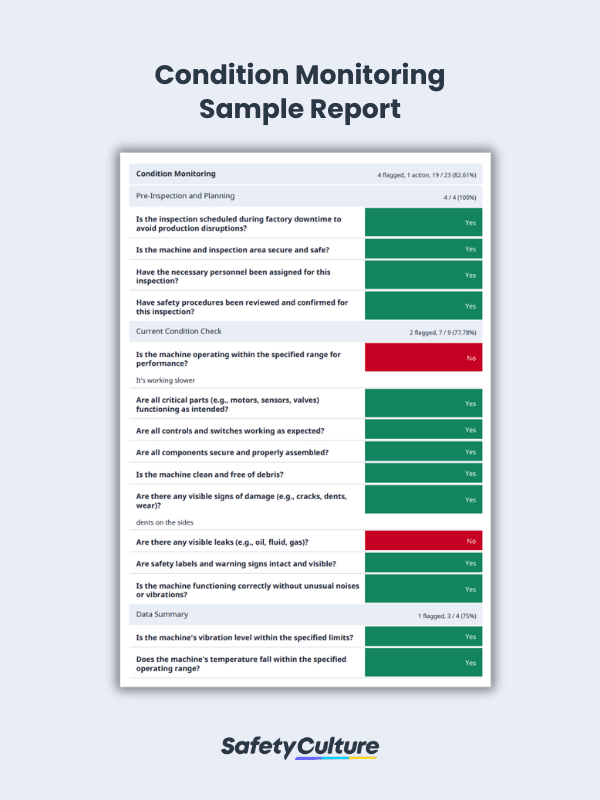
Pre-Inspection and Planning: Schedule inspections during factory downtime and confirm the machines and area to be inspected to avoid production disruptions.
Machine Identification and Background: List all machines and systems to be monitored, including:
Manufacturer
Model and year
Technical specifications
History of past maintenance
Current Condition Check: Note the results from the equipment inspection and log the current condition of the machine, as well as define baseline performance of each machine, such as:
Vibration
Temperature
Pressure
Other relevant data, depending on the machine use
Data Summary: Show data findings from the sensors, trends in the key parameters, and any anomalies detected.
Check and update alarm mechanisms: Record any alerts issued by the system and recalibrate if needed.
Maintenance Recommendations: Recommend corrective or preventive measures based on the observed data. Some examples include the following:
Plan maintenance activities
Schedule necessary repairs
The visibility over our data is brilliant. I can easily pull the data, show it to directors, and tie problems to real costs, risks, and time. That’s how we make incremental improvements every day.
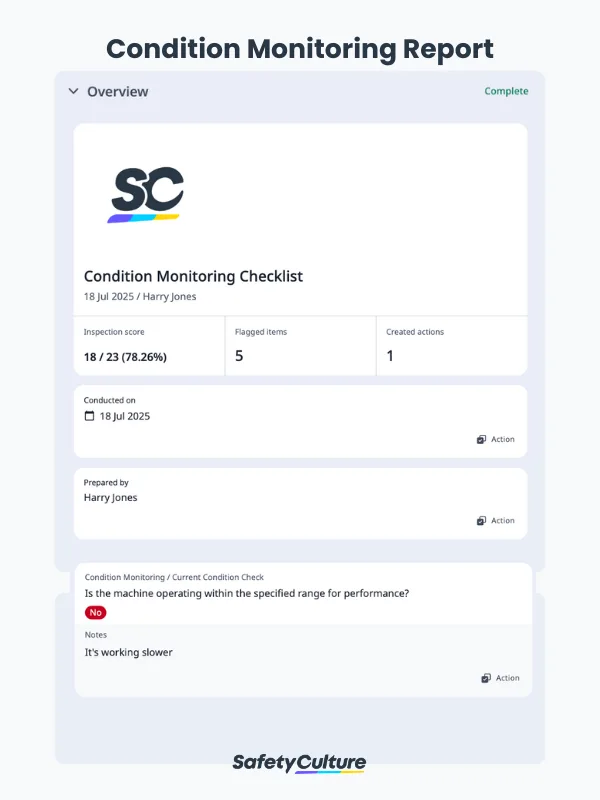
This condition monitoring report offers a clear and effective method to track and manage the health and performance of equipment across different areas of the facility. It breaks down data collection and analysis tasks into straightforward, easy-to-follow steps to display the status of monitored assets at a glance, enabling quick identification of anomalies or maintenance needs.
This commercial condition survey template can be used by chartered surveyors, architects, and engineers to assess a building and generate a condition survey report to aid construction, repair, and renovation plans.
A Facility Condition Assessment (FCA) template is a tool for evaluating a building’s condition, assets, and systems. Used by architects, engineers, and construction professionals, it helps accurately assess facilities and support repair and maintenance planning.
This checklist ensures thorough monitoring of materials during receiving. Verify details, visual condition, documentation, traceability, and proper storage to optimize warehouse intake.