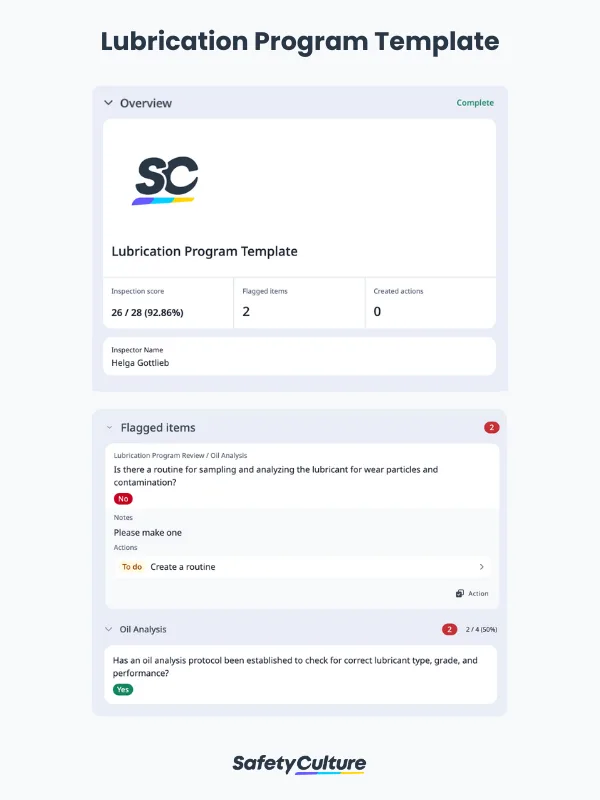
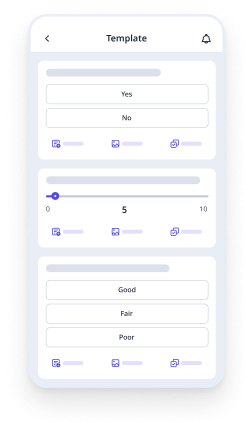
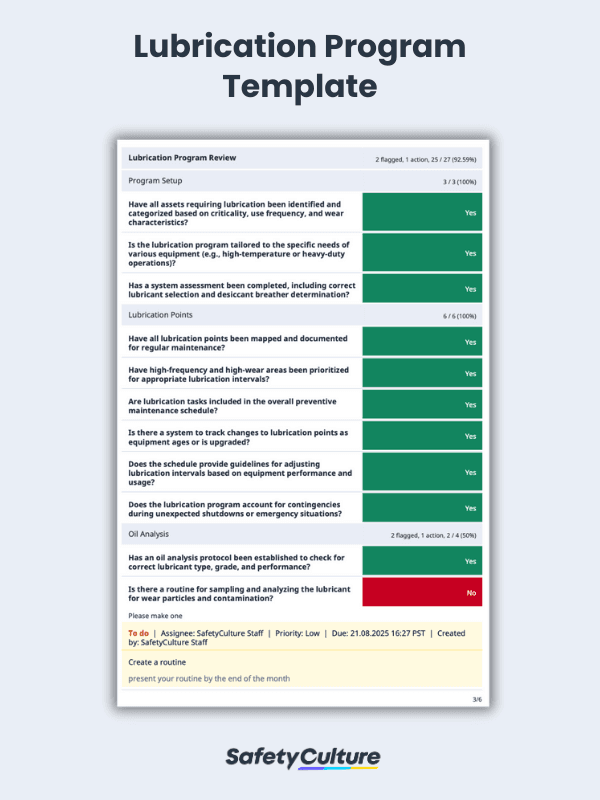
This free lubrication program template can help standardize your maintenance procedure and reduce equipment wear. It walks you through the entire process of building an effective lubrication program—from lubricant selection to application. In addition, this template allows users to do the following:
Document and store data for future maintenance needs.
Utilize vibrational sensors to find lubrication hotspots.
Mark and tag each of your assets to easily track repairs.
Ensure your assets comply with safety regulations and company policies.
A lubrication program template is a strategic tool that helps companies optimize lubrication processes based on industry best practices. It serves as a step-by-step guide, covering which type of lubricant to use, which machines or components require it most, and how often it should be applied.1 The main purpose is to achieve lubrication excellence for optimal equipment performance, reliability, and longevity.
Importance
A poorly lubricated machine, especially one that’s critical to your operations, can break down right when you need it most. This leads to unplanned downtime, taking time away from your operations, leading to unexpected repair bills. Missed lubrication inspections might seem minor, but over time, they can escalate into serious problems.
A case study showed just how effective a proper lubrication program can be. One plant saved $200,000 in the first year alone, then over $160,000 annually for the next three years, totaling $680,000 in savings. All they did was achieve lubrication excellence. They took the time to study best lubrication practices, created a lubrication plan, certified their team, identified important lubrication points, and never missed an inspection. It’s a simple investment that paid off big.
What to Include in a Lubrication Program Template
A lubrication program template helps protect your most critical assets, so it’s important that technicians and engineers follow standard operating procedures (SOPs) to keep machines running smoothly and consistently.
A complete lubrication program should include the following:
Pre-Planning – Identify which assets need lubrication the most and assess the overall system, from choosing the right lubricant to determine if desiccant breathers are needed.
Lubrication Points – Map out all critical lubricant points on each asset, especially where frequency and wear are highest.
Oil Analysis – Check if the lubricant in use is the correct type and grade. The wrong oil can lead to serious equipment damage over time.
Technician Certification and Training – Ensure that technicians and anyone responsible for lubrication are properly trained and certified.
Proper Personal Protective Equipment (PPE) and Safety – Use gloves, goggles, and other required protective equipment to avoid exposure to hazardous substances during lubrication tasks.
Regulatory Compliance – Confirm that lubrication procedures align with safety standards from agencies like the Occupational Safety and Health Administration (OSHA) and any applicable industry-specific guidelines (e.g., ISO 9001).
Logging and Documentation – Log date, time, and person for each lubrication event.
How to Implement this Template
Proper asset lubrication is more than just applying grease on every gear. There’s a standardized process technicians should follow. Inconsistent or incorrect lubrication can lead to accelerated equipment wear, unexpected downtime, and higher maintenance costs.
Lubrication Standards for Machinery:
Schedule a maintenance check – Inspect your equipment if it’s overheating, making unusual noises, or vibrating excessively to determine if lubrication is needed. Use a digital checklist to schedule and manage upcoming maintenance tasks.
Define lubrication points and hotspots – List all lubrication points and how often each should be serviced, depending on usage and load. Consider using vibration sensors to detect friction-prone areas.
Perform the lubrication process – Apply the correct type and amount of lubricant at the recommended intervals. A digital checklist can help ensure tasks are completed, and videos can be attached for verification.
Record the results – Log the date, time, and technician responsible for each lubrication activity. Digital tools can automatically generate time-stamped records for traceability and audits.
Digitizing inspections and records with SafetyCulture makes documentation instantly accessible for audits and streamlining traceability exercises.
Promote workplace safety and meet OSHA regulations with this comprehensive machine safety audit. Check for proper PPE use, sanitation, fire protection, and the safe condition of ladders, doorways, and other critical areas for full safety compliance.
Commissioning is the final step in pump installation to ensure everything is working correctly and safely. This pump commissioning checklist covers key tasks—from proper lubrication to valve inspections—to confirm the system is ready for operation.