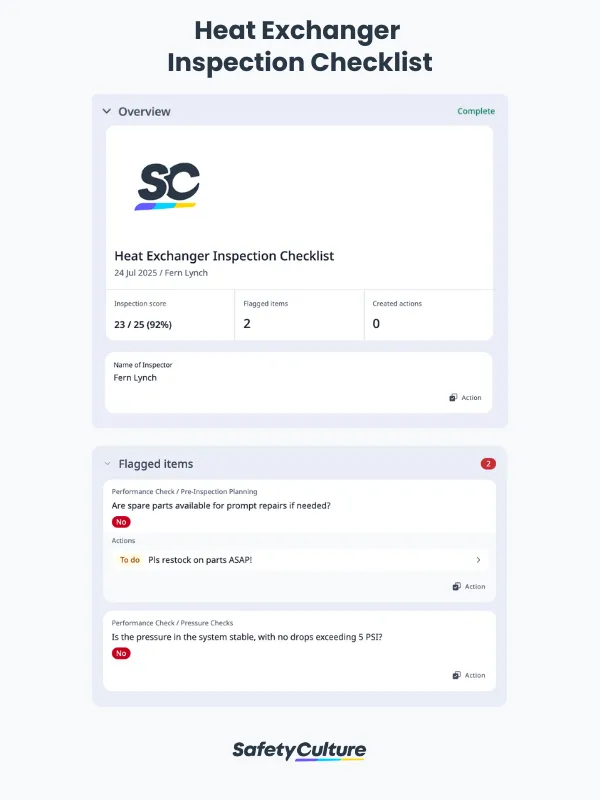
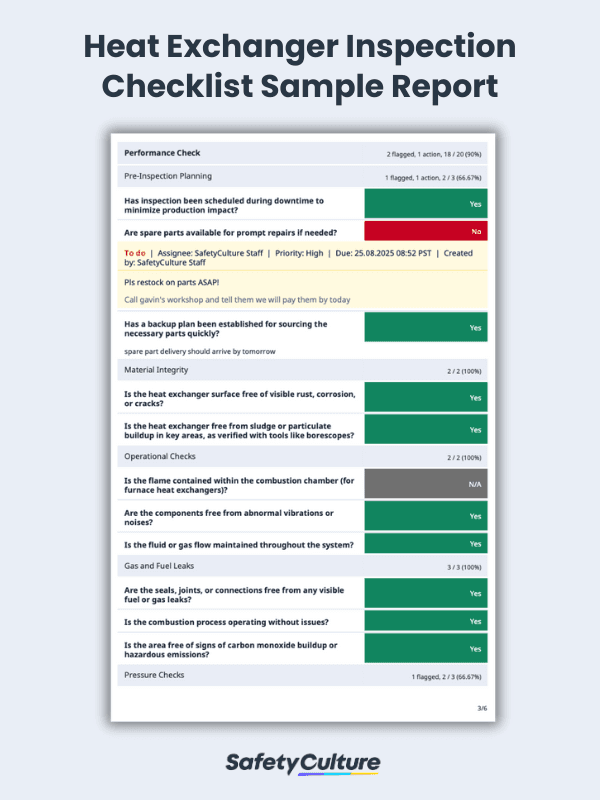
Download this free heat exchanger inspection checklist to thoroughly evaluate the critical components of your equipment’s heat and temperature management system. Moreover, this template enables you to:
Document and store data for future maintenance needs.
Utilize temperature sensors for precise temperature checks.
Share findings with relevant personnel in real-time.
Ensure heat exchanger systems comply with safety regulations and company policies.
A heat exchanger inspection checklist helps ensure the heat exchanger system for the equipment is functioning efficiently and transferring heat optimally. It aids in detecting issues such as leaks, corrosion, fouling, pressure drops, and overall damage, while also helping to maintain compliance with industry rules and regulations.
Benefits
In an equipment or HVAC system, the process of pulling hot air through cooling coils to get cold air back relies heavily on a fully functioning heat exchanger. If the heat exchanger is damaged and leaking, the system can lose refrigerant, making it unable to cool the air properly. This can cause problems when you need to maintain precise temperatures, prevent equipment from overheating, or keep indoor spaces cool and safe.
A heat exchanger inspection checklist helps the maintenance team stay on top of preventive maintenance. They can spot early signs of damage or blockage, backed by photo or video evidence, then record everything and store it for future reference. If a problem is found, they can instantly trigger and schedule maintenance in real time while staying compliant with quality management regulations.
Types of Heat Exchangers for Inspection
Heat exchangers vary widely in form and scale, with each type created to address specific operational needs across different industrial applications. Whether it’s precise temperature control for a pharmacy or heavy-duty cooling for industrial use, there’s a type tailored for the job.
Since heat exchangers come in different types, a careful, thorough inspection is key to spotting problems early and keeping everything working well.
What to Include in a Heat Exchanger Inspection Checklist
Heat exchanger issues may start small, but missing a single component can lead to major system failure. Regular inspections help maintain the safety, performance, and efficiency of these components.
A complete heat exchanger inspection should include the following:
Pre-Inspection and Planning – Schedule around downtime and confirm spare parts availability.
Material Integrity – Check for rust, corrosion, cracks, sludge buildup, or flaws using tools like borescopes.
Operational Checks – Make sure all parts function properly. For instance, in a furnace heat exchanger, the flame should stay contained within the combustion chamber.
Gas and Fuel Leaks – Inspect seals and connections for leaks, combustion issues, or signs of carbon monoxide buildup.
Pressure Checks – Watch for pressure drops; anything more than 5 PSI may indicate an issue.
Gauge Accuracy – Verify that thermometers and pressure gauges are working correctly.
Scheduled Maintenance – Ensure logs are up to date and preventive maintenance is regularly planned.
Related Components – Inspect blower fans, motors, belts, airflow systems, dampers, filters, vents, flue passages, and safety switches.
Personal Protective Equipment (PPE) Compliance – Ensure proper use of PPE during inspections and operations.
Regulatory Compliance – Confirm inspection steps follow regulatory guidelines for pressure systems, combustion, and maintenance safety from agencies like the Occupational Safety and Health Administration (OSHA).
Thermosash Group uses SafetyCulture Sensors to track asset performance and identify preventative maintenance needs, helping them avoid costly repairs and keep operations running smoothly.
Practice preventive maintenance across all your HVAC systems. Spot damaged or failing components, from replacing old air filters to cleaning the condenser coil, for better heating and cooling performance.
Keep your system running at the right temperature with a heat pump maintenance checklist—from verifying the compressor’s amp draw to checking refrigerant levels for precise performance.