Published 22 Jul 2026
Article by
3 min read
What is an HVAC maintenance checklist?
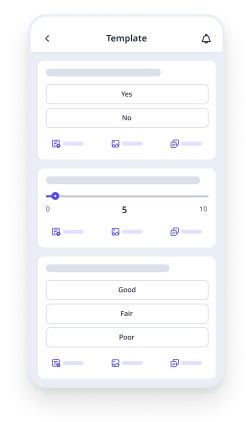
An HVAC maintenance checklist template gives you a structured way to inspect and maintain heating, ventilation, and air conditioning systems in commercial and residential properties. It keeps preventive maintenance consistent, so systems run efficiently, downtime stays low, and equipment lasts longer. Regular use also reduces the risk of the safety issues that come with neglected refrigerant systems, electrical components, and gas furnaces.
What is HVAC maintenance?
HVAC maintenance is the periodic inspection of heating, ventilation, and air conditioning systems in commercial or residential properties. Regular maintenance extends equipment life, cuts down on repairs, and prevents costly breakdowns. Most HVAC contractors and property managers run preventive inspections quarterly or biannually, with an extra check before peak summer or winter usage.
What equipment is checked during HVAC preventive maintenance?
To keep your HVAC system running efficiently, your checklist should cover:
Air conditioner
Heat pump
Electric heater
Gas furnace
Dual fuel heat pump furnace
What to include in an HVAC maintenance checklist template
HVAC maintenance involves cleaning, removing debris, replacing filters, and testing components. Contractors also check for leaks and corrosion, since these often signal a bigger problem that needs attention before it turns into a breakdown.
Mechanical and airflow components
General inspection — check for unusual noises, vibrations, or odors
Air filters — inspect and replace or clean as needed
Ductwork — clean for dust, mold, or leaks
Cooling system — inspect and clean condenser and evaporator coils
Heat pumps and furnaces — check burners, heat exchangers, and flue for cracks or corrosion
Electrical and control components
Electrical components — tighten connections and inspect wiring for wear, corrosion, or overheating
Refrigerant system — check refrigerant levels and flag if adjustments are needed
Thermostat — confirm it's working correctly and recalibrate if needed
Condensate drain system — clear the line to prevent clogs
How to do HVAC maintenance: a step-by-step guide
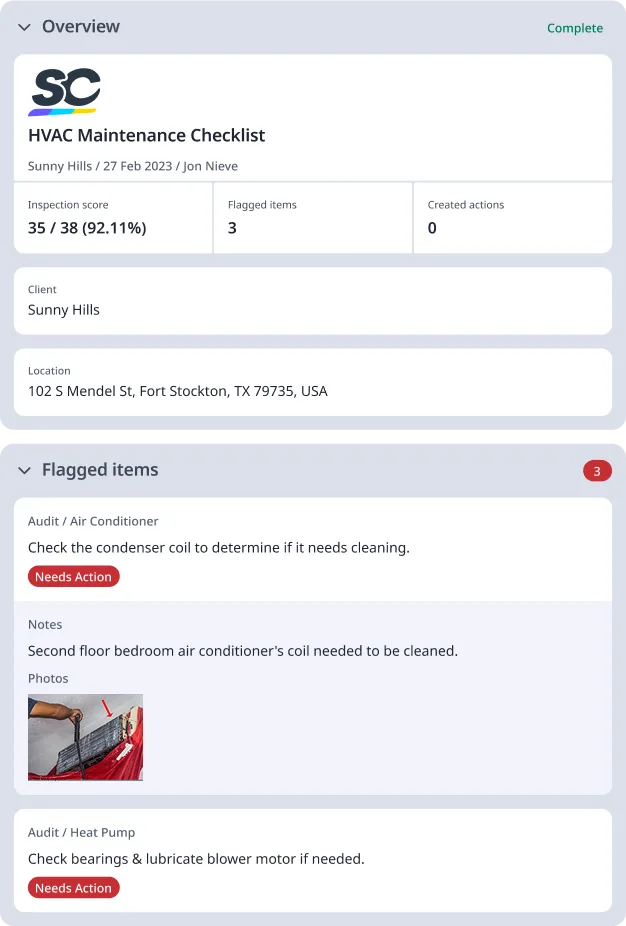
Check equipment individually — go through the air conditioner, heat pump, electric heater, gas furnace, and dual fuel heat pump furnace one at a time, and note any items that need action.
Change filters regularly — replace filters every 30–90 days to protect performance and reduce your energy bill.
Clear the area around the unit — remove leaves, debris, and any mold or algae buildup around the unit. This keeps buildup from affecting performance over time.
Check refrigerant lines monthly — confirm they're not torn, loose, or leaking. A cooling system inspection helps you maintain a consistent temperature.
Watch for unusual odors or noises — these often signal a problem worth addressing early, before it becomes a bigger repair.
Inspect fan blades every couple of months — flag any dirt, damage, or wear for your technician during the next scheduled visit.
Replace detector batteries — swap batteries in carbon monoxide detectors at the same time as smoke alarms, so nothing gets missed.
Most HVAC contractors recommend a full system check in spring and fall, right before units face their heaviest seasonal load. This timing lines up with the seasonal-load approach reflected in ASHRAE standards for preventive maintenance. If you manage systems across multiple sites, it's worth standardizing this schedule across every location instead of leaving it up to each site, since that makes it much easier to spot which units are falling behind.
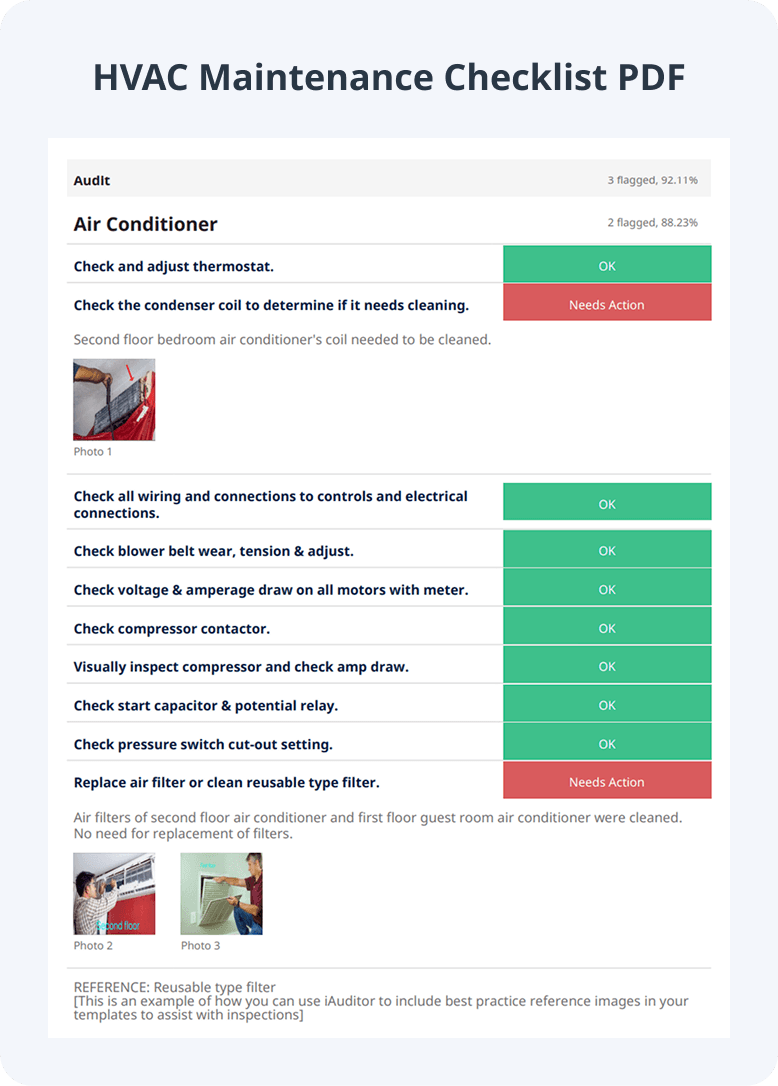
HVAC Maintenance PDF Example
Digital maintenance reports are important to keep so that it's easier to track all the maintenance work done on an HVAC system. Here's an example of an HVAC maintenance report in PDF format:

Still looking for a checklist?
Search, filter, and customize 60,000+ templates across industries and use cases.