Importance
A contact tracing form helps healthcare facilities have all the critical information and manage disease investigations effectively. This standardized document ensures that healthcare compliance teams align with standards as they help map out disease exposure and history. The form helps staff:
Support outbreak investigation: A structured form captures exposure data and contact details needed to identify transmission chains accurately.
Maintain regulatory compliance: Proper documentation supports adherence to reporting standards set by authorities like the WHO and national public health bodies.
Protect patient confidentiality: A standardized form limits unnecessary data collection and creates a clear, auditable record of how sensitive patient information is handled.
Speed up contact notification: With all key details, contact tracers can reach out to exposed individuals faster and reduce delays.
Strengthen audit readiness: Completed forms serve as documented evidence during public health audits and compliance reviews.
Achieve cross-team consistency: A shared template ensures all staff capture the same information, regardless of shift or facility.
What Fields are Required?
A contact tracing form needs to capture enough information to identify the case, document exposure history, and follow up with close contacts. Forms must have the following fields:
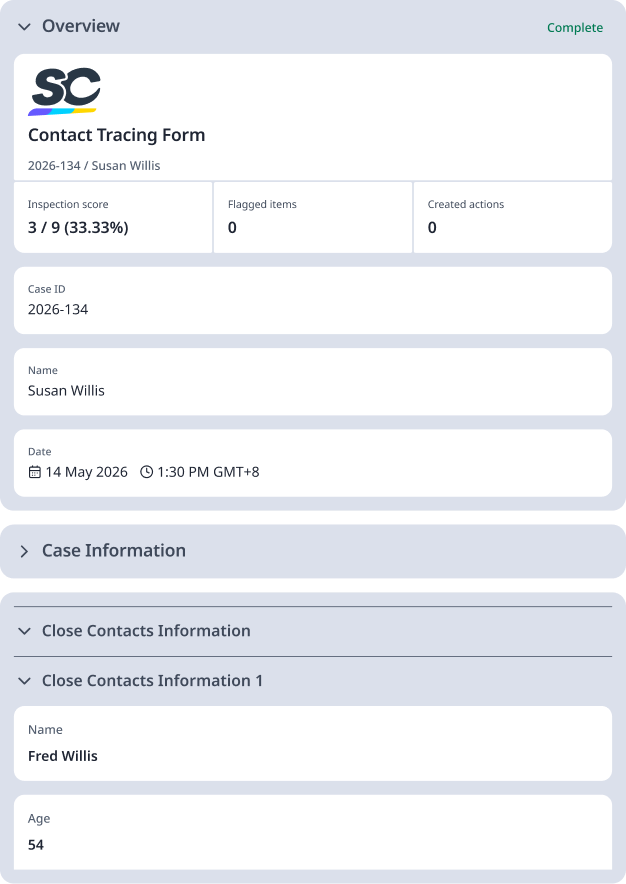
Case and administrative details: Includes case ID, date, location, the name of the person who completed the form, and the assigned contact tracer.
Patient personal information: Captures first name, surname, age, contact numbers, email, and home address.
Symptoms and clinical data: The section to list down current symptoms and date of onset to support clinical assessment and infection control documentation.
Location and movement history: A field to document locations visited, including date, arrival time, and departure time for each.
Close contact details: Covers the name, age, relationship to the case, last contact date, address, and contact number of each identified contact.
Emergency contact information: The segment to fill in the case's emergency contact, such as full name, relationship, contact numbers, email, and address.
How to Use a Contact Tracing Form?
Healthcare compliance managers and assigned contact tracers should follow these steps when using the form:
Fill in the case and administrative details at the top of the form, including the Case ID, date, location, and the name of the person completing it.
Record the patient's personal details.
Document all current symptoms and when the patient began experiencing them.
Log all relevant locations traveled to and the important details of those visits
Record all identified close contacts with their personal and contact details.
Add emergency contact information.
Include any final remarks or clinical notes in the comments field, then assign the case to the appropriate contact tracer.
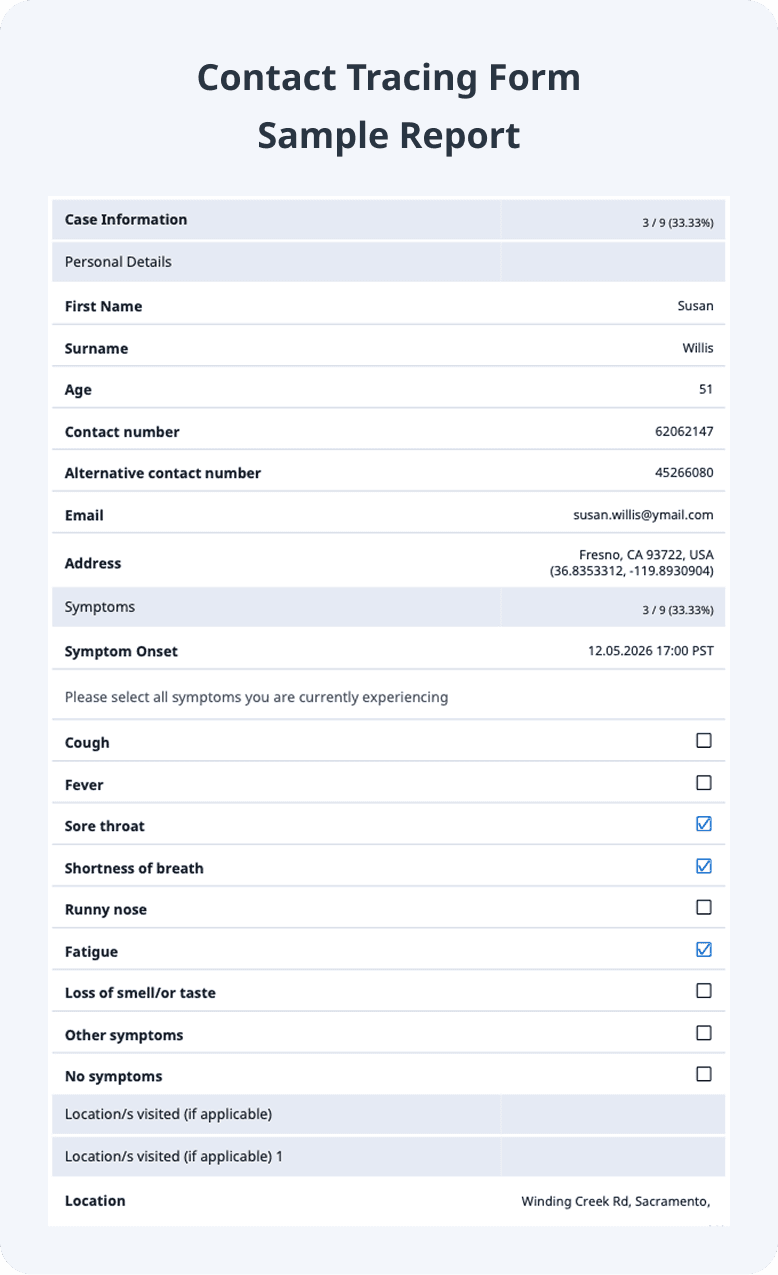
Sample Contact Tracing Report
Here’s an example of a filled and completed contact tracing form:
Preview Contact Tracing PDF Report