Use this agriculture inspection checklist to assess farm operations across production practices, worker safety, and food handling against regulatory standards. This checklist helps farms verify that every area of the operation runs cleanly.
This checklist is also used for:
Logging production practices and product handling checks
An agriculture inspection checklist is a structured tool used to evaluate the safety and hygiene of a farm’s operations. It standardizes checks for production practices, animal handling, worker hygiene, and equipment safety. This ensures consistent inspections where nothing gets missed. The checklist is valuable for documenting findings, flagging issues, and keeping records ready for regulatory review.
Importance
Using an agriculture inspection checklist gives farm managers and compliance officers a reliable way to assess operations and stay ready for compliance inspections. Whether preparing for an audit or running an internal review, it helps teams confirm that their farm safety practices meet current standards by ensuring that the checklist:
Supports regulatory compliance: A structured guide helps teams align practices with farming safety standards, such as OSHA 29 CFR 1928 and ISO 22000 , without guesswork.
Standardizes inspection procedures: Using a standardized checklist allows every farm area to receive the same quality of assessment, regardless of who is conducting the check.
Protects worker health and safety: Comprehensive checks confirm that protective wear, hazardous substances, and equipment are properly managed to reduce on-farm incidents.
Keeps food safety risks in check: The checklist covers production practices, animal handling, and product storage to help identify contamination risks before they become violations.
Maintains audit-ready documentation: Completed checklists serve as records that prove due diligence during regulatory inspections or farm audits.
Reduces the risk of compliance failures: Regular inspections avoid the costly fines, production stoppages, and reputational damage that come with non-compliance.
What Should Be Included in an Agriculture Inspection Checklist?
A complete agriculture inspection checklist covers all the critical areas of a farm operation to ensure safety and compliance. The guide should be built around these core sections:
Production practices and product handling
This section confirms that water sources, irrigation controls, manure management, and harvesting practices meet food safety requirements. It also checks that products are properly handled, stored, and protected from contamination after harvest.
Animal handling and transportation
Assessments should cover livestock living conditions, slaughter hygiene, and meat storage standards. Meanwhile, transportation inspections confirm that products are loaded safely and kept at the right temperatures during transit.
Workplace conditions and hazardous substances
Evaluations should confirm that workers have clean water, proper training, and safe working conditions. Checks must also cover farm hazards, such as hazardous substances, chemical spills, and improper protective equipment.
Pesticides and equipment safety
This section verifies that pesticide use follows label instructions and that equipment is properly guarded, inspected, and operated by trained workers. Ladder safety and mobile equipment checks are also included.
Worker hygiene
A farm inspection checklist must review hygiene practices across the workforce. This includes handwashing, clothing standards, wound coverage, and policies on working while sick.
How to Use the Checklist
Completing an agriculture inspection checklist should follow these steps:
Fill in the basic details of the inspection. This includes the farm site, inspector name, date, and location.
Go through each section of the checklist and mark items as compliant or non-compliant. Note down issues, like unhygienic conditions and poor handling, and provide explanations where needed.
Attach photos to document conditions on-site, especially for flagged items or failed checks.
Assign corrective actions to address any non-compliant findings, such as equipment guard replacements and slaughter hygiene retraining.
Add comments where additional context is needed to explain observations or outcomes.
Complete the checklist with a sign-off.
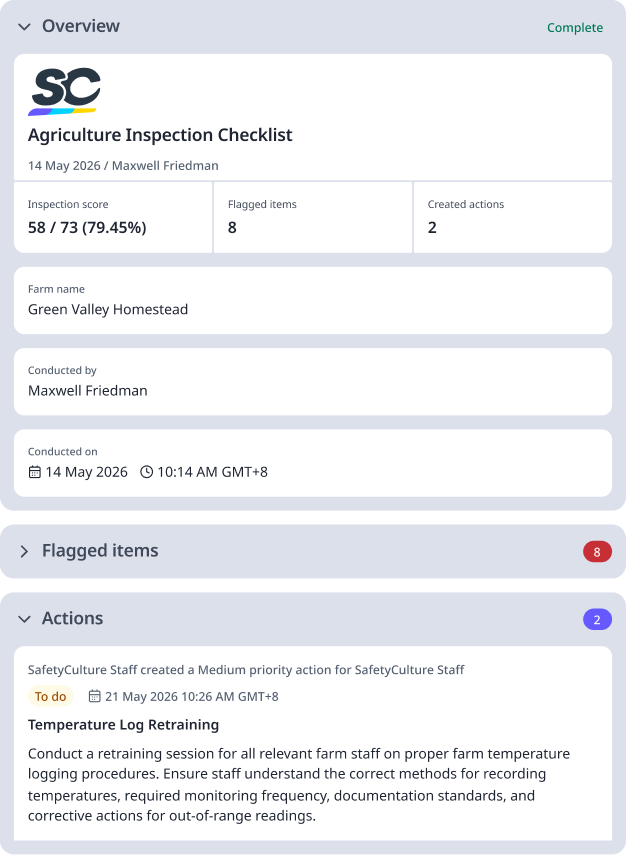
Sample Agriculture Inspection Report
Here is an example of a completed agriculture inspection checklist:
We chose SafetyCulture to make sure we are not only addressing hazards as they are identified, but also fully investing in safety training, equipment, and technology to drive continuous improvement.
This farm health and safety audit checklist is tailored for use for dairy farms. Use this checklist to assess health and safety systems and procedures, and provide a report on what is working well and recommendations on areas to improve. You can use and customize this template depending on your industry needs.